A heartbreaking rescue on a Texas beach has revealed just how fragile the survival of one of the world’s rarest sea turtles can be.

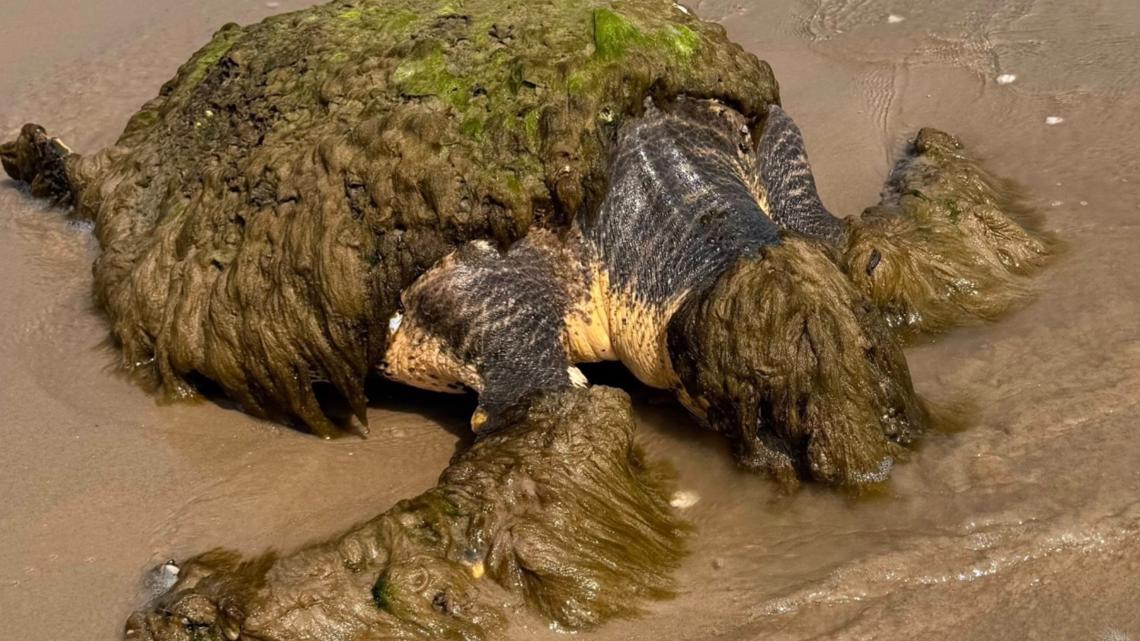
The turtle was found stranded near Galveston with its shell and body almost completely covered in thick layers of algae, barnacles and sediment. The unusual buildup was more than a sign of neglect — it was evidence that the animal had likely been struggling to swim for an extended period.
Christopher Marshall of the Gulf Center for Sea Turtle Research (GCSTR) explained that when a sea turtle loses its normal swimming ability, marine organisms can rapidly colonize its body. The added weight and drag make swimming even harder, creating a dangerous cycle that can quickly push a weakened turtle toward death.
After the rescue, the turtle was taken into an emergency veterinary care system involving the Houston Zoo and Texas A&M. The partnership treats more than 100 sea turtles each year before transferring animals to specialized rehabilitation facilities.
But this case was particularly serious.
“This turtle is in critical condition,” Marshall said, highlighting that the danger extended far beyond the thick coating covering its shell.
For the rescuers, the next stage is a race against time. Its survival depends on whether the turtle’s weakened body can recover from the cascade of problems that left it stranded.
For one of the rarest creatures in the ocean, every hour now matters.