A terrifying predator once ruled the ancient oceans with a bite powerful enough to tear through its prey in seconds. Now, a nearly seven-foot-long skull discovered along England’s Jurassic Coast is revealing just how formidable this prehistoric sea monster may have been.
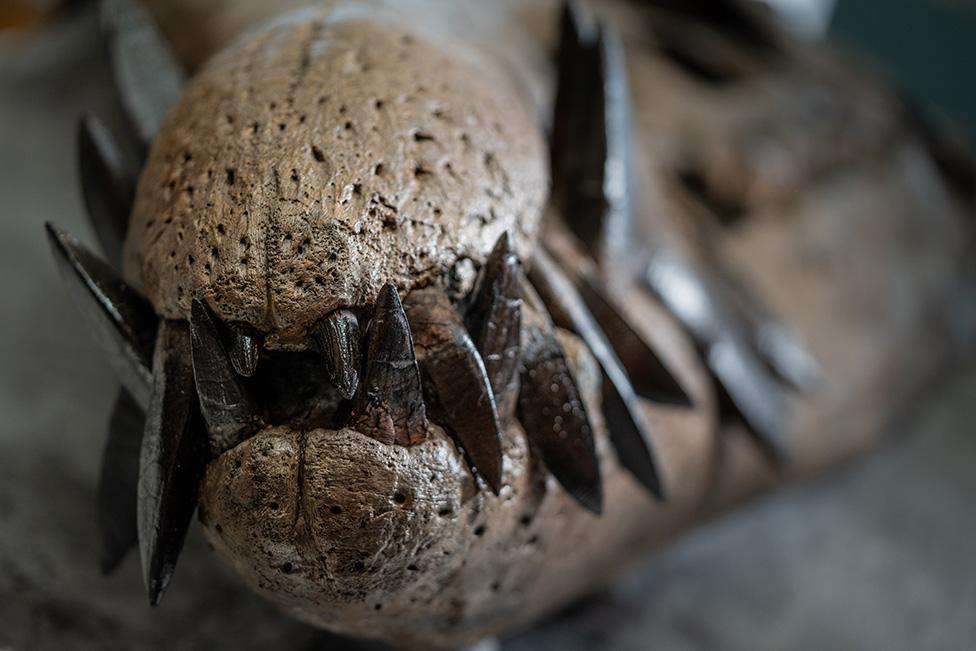
The fossil belonged to a pliosaur, a powerful marine reptile that lived during the age of dinosaurs. With a massive head, streamlined body and four powerful flippers, pliosaurs were built to hunt swiftly through the water, making them among the ocean’s most formidable predators around 150 million years ago.
The skull contains approximately 130 long, razor-sharp teeth. Fine ridges along the backs of the teeth may have helped them grip and tear flesh, allowing the animal to inflict devastating wounds on its prey.
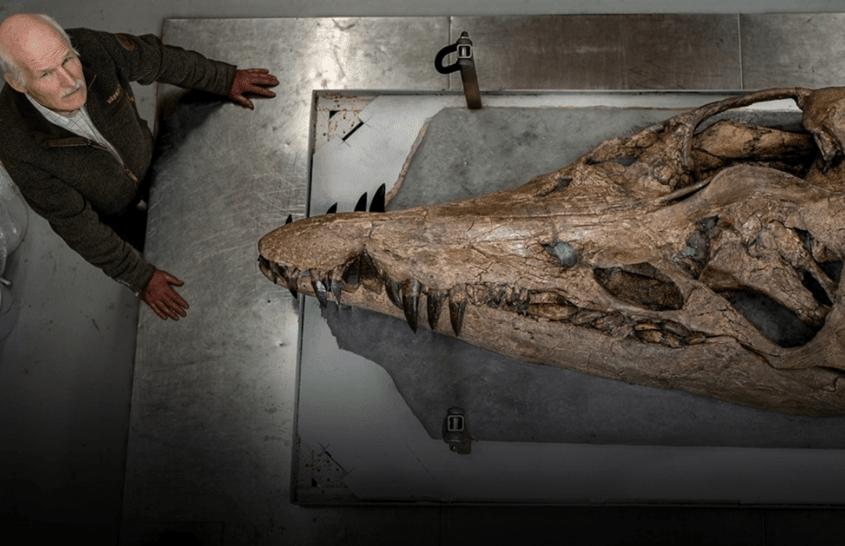
The remarkable discovery began when fossil enthusiast Phil Jacobs spotted the tip of the creature’s snout among beach stones on the coast of Dorset, southern England. What appeared to be a small fragment turned out to be part of something far more extraordinary.
Using a drone, researchers located the rest of the enormous skull embedded in a nearby cliff face. Recovering it required a complex operation, with paleontologists abseiling down the steep cliff to excavate the fossil.

The discovery offers an exceptional glimpse into the anatomy of a predator that dominated prehistoric marine ecosystems. Its enormous skull and formidable teeth provide clues to how pliosaurs captured and killed their prey.
After remaining hidden in the ancient rocks for millions of years, this extraordinary fossil is helping scientists piece together the story of one of the most fearsome hunters ever to swim the oceans.