Nearly half a billion years ago, long before dinosaurs appeared, a group of tiny marine creatures may have traveled together across the ancient seafloor. Their journey ended abruptly, but the fossils they left behind preserve a remarkable formation that scientists believe could reveal the early origins of collective animal behavior.
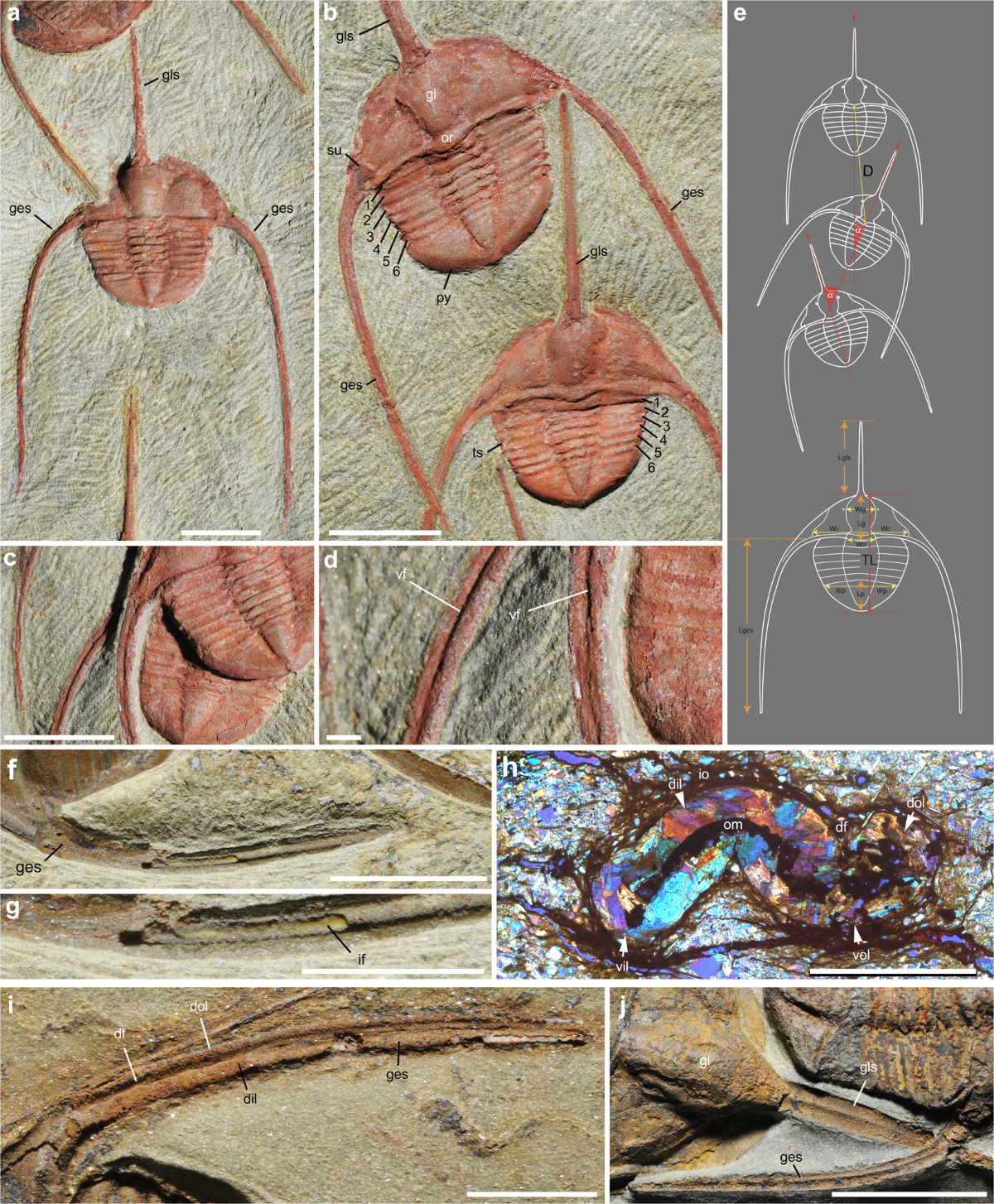
The fossils, discovered in Morocco, belong to Ampyx priscus, a species of trilobite that lived approximately 480 million years ago during the Ordovician Period. These ancient arthropods measured just 16 to 22 millimeters long and had distinctive spines projecting from the front and rear of their bodies.
What makes the discovery extraordinary is how the animals were arranged. Rather than being scattered randomly, multiple trilobites were preserved in neat, single-file lines, with their bodies facing the same direction and their long spines touching those of their neighbors.

Researchers led by Jean Vannier proposed that this unusual pattern was unlikely to have formed through random currents alone. Instead, the trilobites may have been moving together when a sudden event, such as rapid burial by storm-driven sediment, preserved them in place.
But why would these ancient creatures form a line?
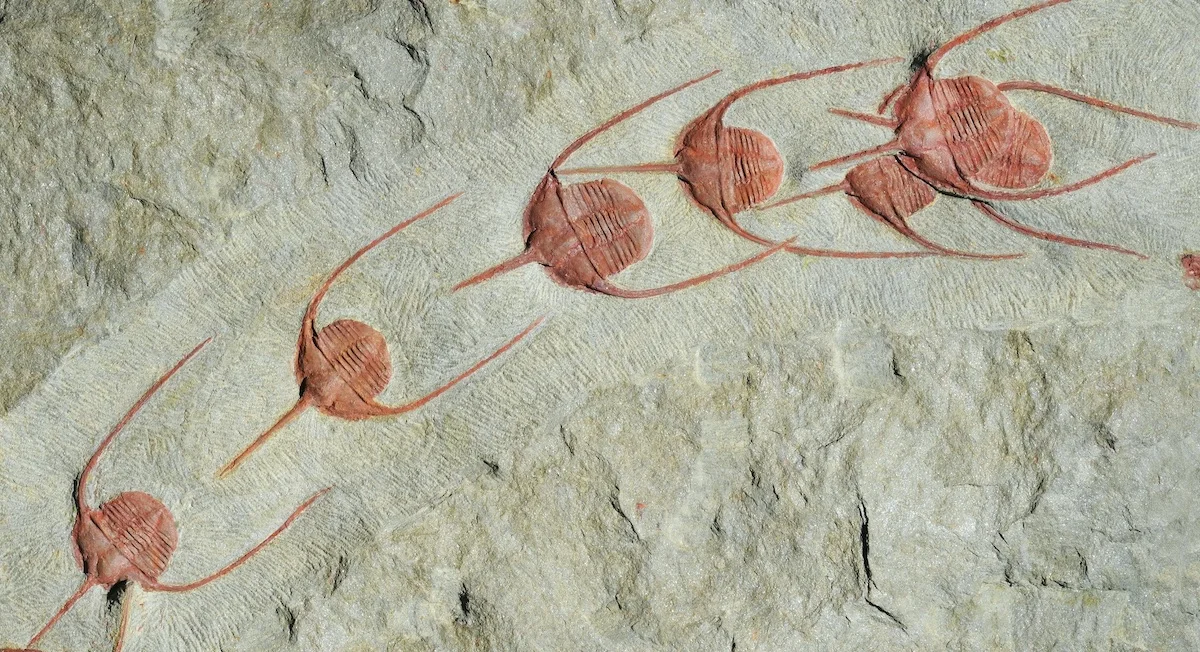
One possibility is that they migrated collectively to escape environmental disturbances and reach calmer, deeper waters. Their projecting spines may have helped them maintain physical contact and stay aligned as they moved along the seafloor.
Another theory suggests the formations could have been linked to seasonal reproduction, with mature individuals traveling toward spawning grounds. Because Ampyx was blind, researchers hypothesize that touch and chemical signals may have helped the animals coordinate their movements.
Similar group formations occur in some modern arthropods, including spiny lobsters.
Published in Scientific Reports, the findings suggest that coordinated group behavior may have emerged remarkably early in animal evolution. These tiny trilobites may have left behind more than a fossil trail—they may have preserved a fleeting glimpse of ancient life working together.