A 12-million-year-old crocodile fossil has emerged from one of Peru’s most famous fossil-rich deserts — and scientists say the remarkably preserved specimen offers a rare glimpse into a predator that once prowled ancient coastal waters.

The young marine crocodile was discovered in late 2023 in Peru’s Ocucaje Desert, around 350 kilometres south of Lima. Measuring roughly three metres long, the fossil was found in exceptionally good condition.
But it was the animal’s age — and its unusual anatomy — that caught scientists’ attention.
According to vertebrate palaeontologist Mario Gamarra, who led the reconstruction, this is the first juvenile specimen of the species ever discovered. The animal died before reaching its full adult size.
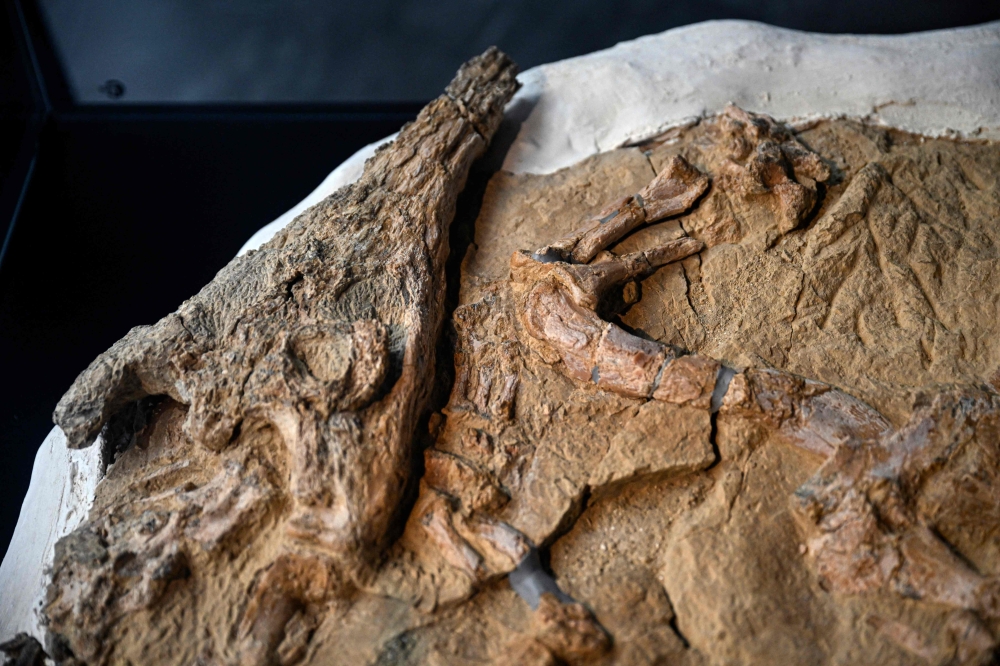
Unlike modern crocodiles and alligators, this ancient predator had an elongated snout and jaws adapted for catching fish. Scientists believe it was entirely piscivorous, meaning fish made up its diet.
Its closest living relative is thought to be the Indian gharial, a crocodilian famous for its extremely narrow, elongated jaws.
The discovery was made jointly by Peru’s Geological, Mining and Metallurgical Institute and La Union school.

The Ocucaje Desert has already yielded a remarkable collection of Miocene fossils, including dwarf four-legged whales, dolphins, sharks and other marine creatures.
Together, these discoveries are helping scientists reconstruct a vanished world — one where enormous marine predators once hunted through waters that covered parts of what is now Peru.