Around 150 million years ago, a young long-necked dinosaur living in what is now Montana may have struggled to breathe, cough and survive a mysterious illness.
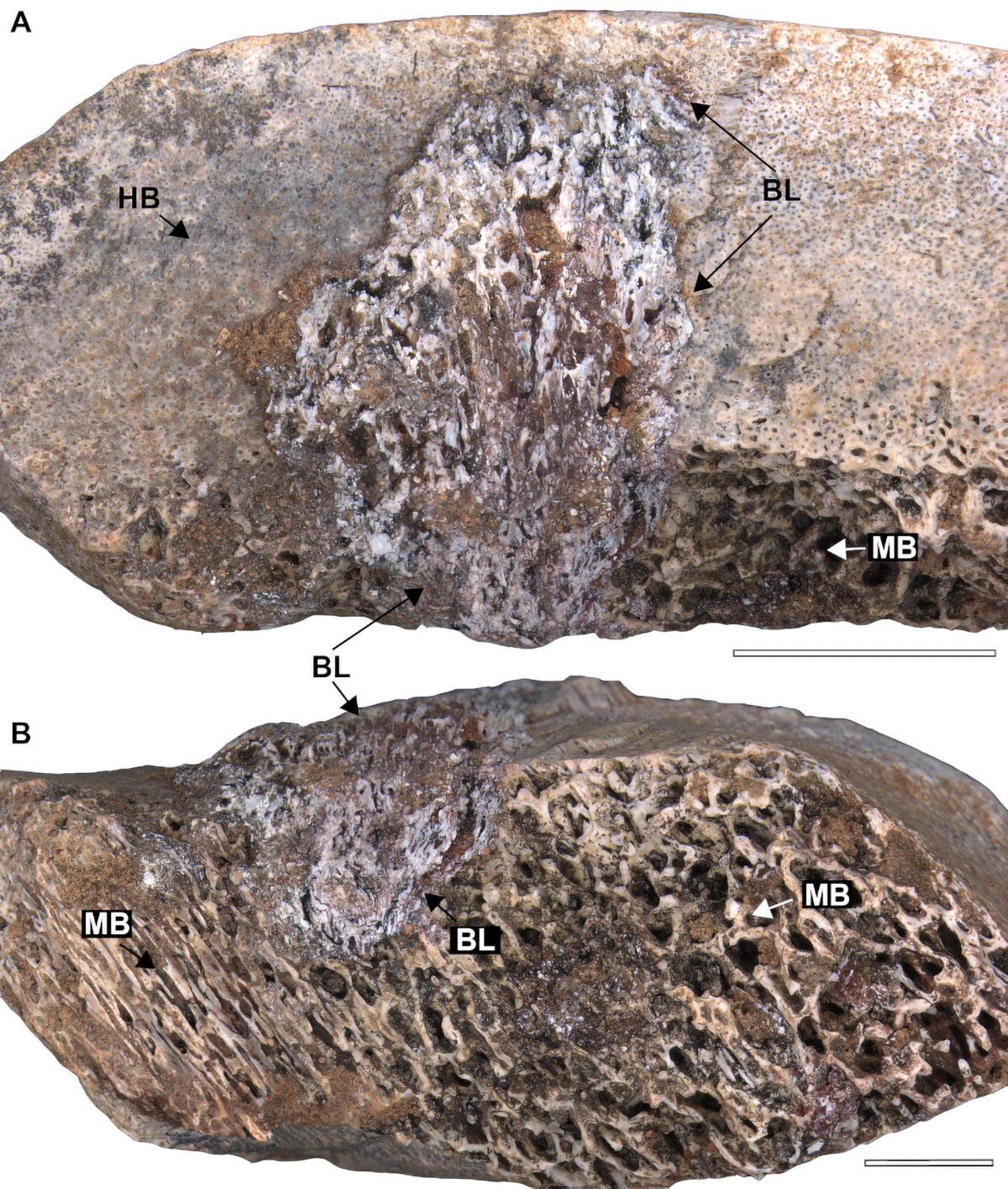
Scientists have nicknamed the unfortunate animal “Dolly” — and her fossilized remains are revealing something almost never seen in the dinosaur fossil record.
Dolly was a previously unknown species of sauropod, a group of enormous plant-eating dinosaurs known for their long necks and tails. Around 60 feet long and weighing an estimated four to five tons, she was between 15 and 20 years old when she died.
But three of her neck vertebrae contained something extraordinary.
/https://tf-cmsv2-smithsonianmag-media.s3.amazonaws.com/filer_public/ec/bd/ecbda9d4-0597-40ab-9675-7f7fe5b9e0eb/woodruff-et-al-2022-fig-4-life-restoration-scaled.jpeg)
Researchers discovered unusual, broccoli-like growths on the bones. Their location suggests the infection may have spread from air sacs connected to Dolly’s lungs into the surrounding bone.
Scientists believe Dolly suffered from a respiratory infection resembling aspergillosis, a fungal disease that can affect modern birds and reptiles and can sometimes become fatal.
If the infection was responsible for her death, Dolly may have spent her final days feverish, lethargic and struggling to breathe.
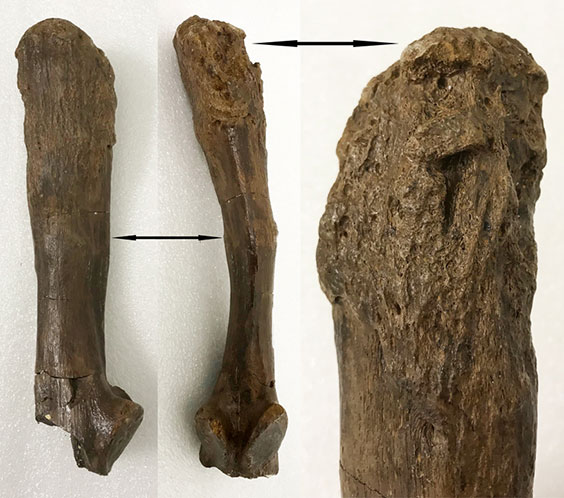
The discovery is particularly important because soft tissues rarely survive fossilization. Yet Dolly’s damaged vertebrae provide clues about an anatomical system hidden inside dinosaurs for millions of years.
Like modern birds, sauropods possessed highly complex respiratory systems containing lungs and thin-walled air sacs that extended into parts of the body and bones.
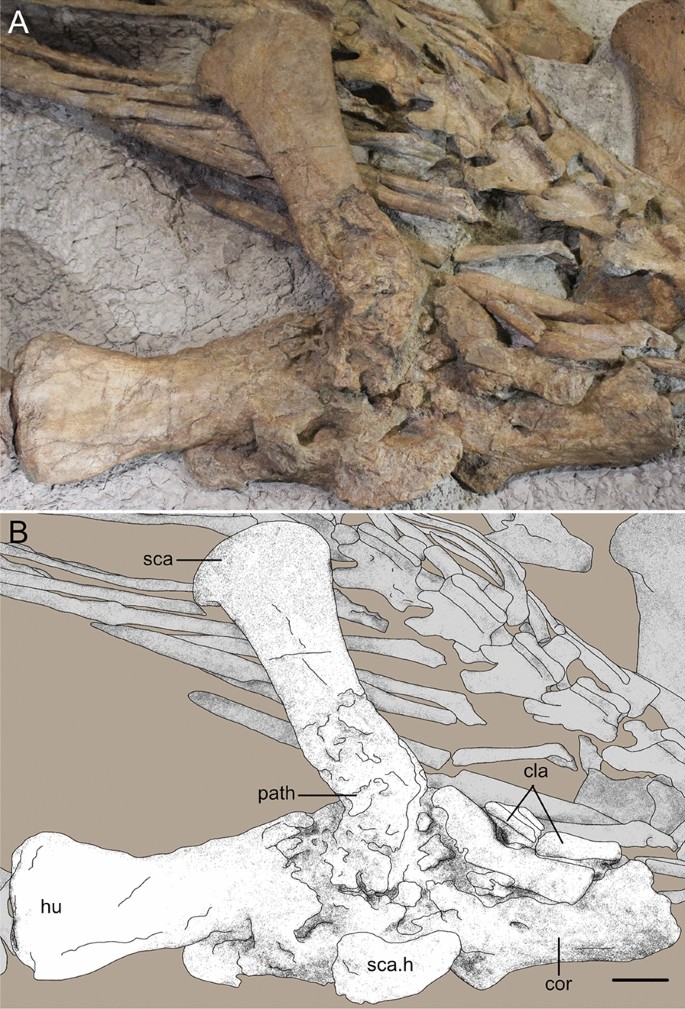
Dolly’s tragic illness therefore offers scientists something extraordinary: a glimpse not only into how a dinosaur may have suffered, but also into how it breathed.
After 150 million years, the bones of one sick dinosaur are telling a remarkably human-like story of disease, survival — and death.