Pep Guardiola Opens Up About Shock Retirement Possibility: “It Will Be Difficult to Come Back” as Former Manchester City Boss Reveals the Personal Cost of Football
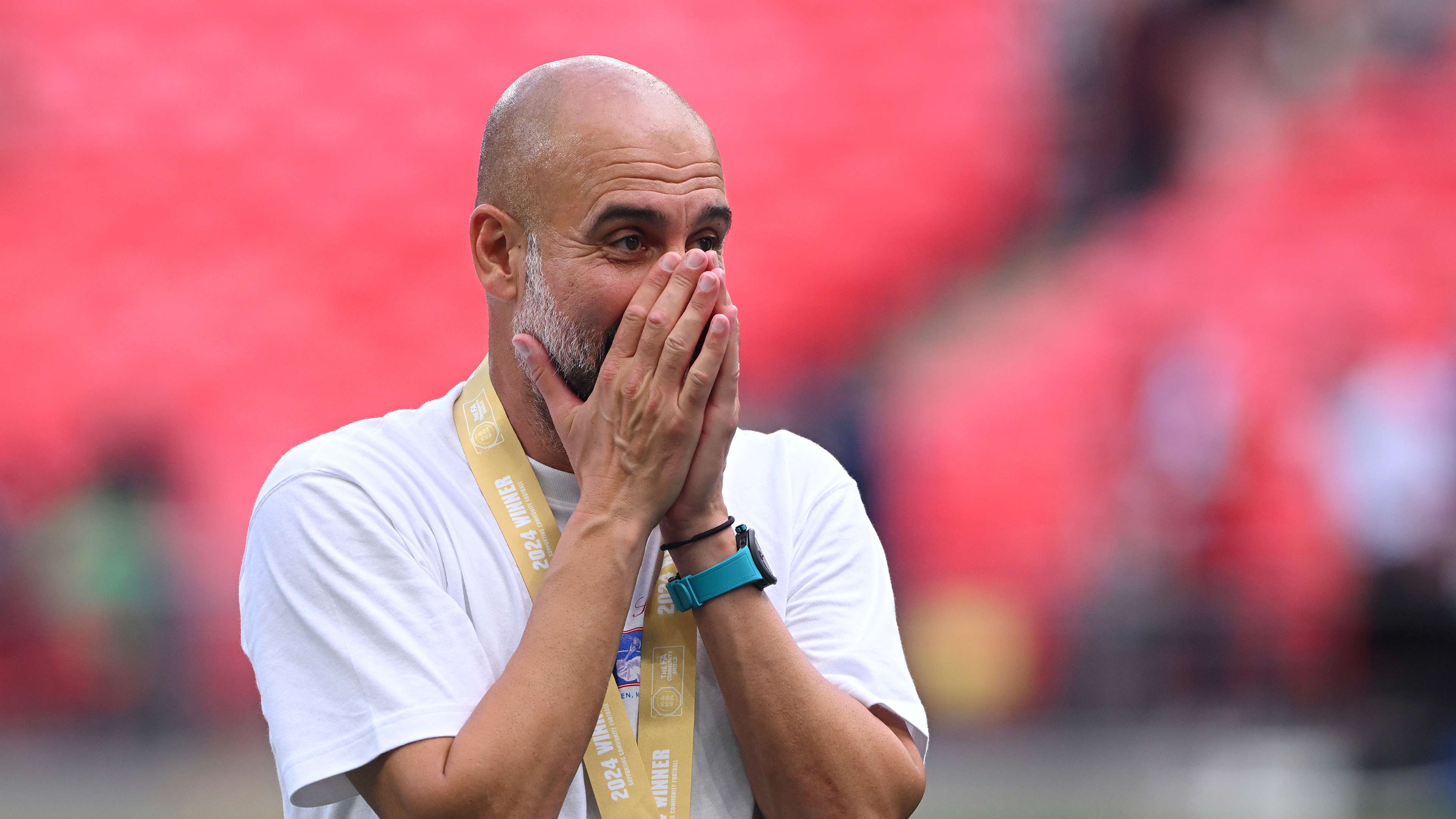
Pep Guardiola has spent much of his career chasing perfection, collecting trophies and reshaping the way elite football is played. But after a decade of extraordinary intensity at Manchester City, the legendary manager is confronting a different challenge: discovering who he is away from the touchline. In a revealing appearance in Amazon’s new documentary, A Beautiful Obsession, Guardiola admits that returning to management could be difficult—and leaves the football world wondering whether his break might become something more permanent.
For years, Pep Guardiola’s life has revolved around football. Training sessions, tactical meetings, match preparation and the relentless pressure to win have shaped almost every part of his professional existence.
Now, the man who helped redefine Manchester City’s modern era appears ready to step away from that familiar world.
Guardiola’s latest comments offer a rare glimpse into the emotional demands of a career spent operating at the highest level. Rather than announcing a dramatic comeback or discussing his next destination, the Spanish coach is talking about something far more personal: rest, perspective and the need to rediscover himself.
“I don’t even know myself what I’m going to do,” Guardiola admitted in A Beautiful Obsession. “It will be difficult to come back – that is my feeling today.”
Those words are significant. They do not amount to a formal retirement announcement, but they reveal genuine uncertainty about what comes next. For a manager whose name has been synonymous with ambition and relentless preparation, the possibility of walking away from football for an extended period represents a striking change.
The Emotional Cost of a Decade at Manchester City
Guardiola’s time at Manchester City was defined by extraordinary expectations. Every season brought another title challenge, another tactical debate and another demand to maintain standards that few clubs have ever sustained.
Success became part of the club’s identity. But behind the trophies and celebrations was a manager expected to make thousands of decisions, manage enormous pressure and constantly search for the next improvement.
That responsibility can become consuming.
In the documentary, Guardiola acknowledges that he needs to step back and reconnect with parts of his life that have been pushed aside by the demands of football.
“I need to refresh many things that happened in my personal life,” he explained. “I need to find myself a little bit in different things. I need to sit and zone out for a bit. That is one of the main targets.”
It is a revealing admission from someone whose public image has often been associated with control, intensity and an almost obsessive attention to detail.
For supporters, it may be difficult to imagine Guardiola without a football project. Yet his comments suggest that the next chapter may have very little to do with tactics, formations or transfer plans.
Sometimes, the biggest decision for a successful manager is recognizing when to stop.
The Addictive Nature of Winning
One of Guardiola’s most interesting reflections concerns the relationship between success and the desire to keep competing.
Winning can create an extraordinary emotional reward. Seeing a team execute a plan, dominate an opponent and deliver a performance that reflects months of preparation can become a powerful motivation.
Guardiola openly acknowledges that feeling.
“It’s the joy and the pleasure to see my team play good,” he said. “That’s the motto and the target when I wake up every single day.”
But he also recognizes the danger of becoming unable to live without that sensation.
“It’s so addictive, older managers retire and they want to come back and then back again. They cannot live without it.”
That observation touches on a familiar pattern in elite sports. Retirement can remove the pressure of competition, but it can also take away the structure, adrenaline and sense of purpose that have defined a person’s daily routine for decades.
For Guardiola, the challenge may not simply be leaving the dugout. It may be learning to enjoy a life in which the next match is no longer the central event of the week.
His comments suggest that he understands this challenge—and wants to approach it deliberately rather than rushing toward another job.
Txiki Begiristain’s Advice: Discover Life Beyond Football
Guardiola’s long-standing relationship with former Manchester City director of football Txiki Begiristain provides another important perspective.
The two men worked closely together during one of the most successful periods in City’s history. Their professional partnership was built on shared football principles, trust and a common vision for the club.
But Begiristain’s advice, as described in the documentary, is not about building another winning team. It is about finding happiness outside the sport.
“I’ve wanted to explain this to Pep – that you can lose 3-0 but life goes on and there are amazing moments that you can live with your friends,” Begiristain said.
He also warned that remaining surrounded exclusively by football people could make it harder for Guardiola to escape the pressures of management.
“But if he meets only football people and football is all he knows, he’s going to be in the same rollercoaster that he’s been living. He needs time to get out and be really out.”
The message is powerful precisely because it comes from someone who understands Guardiola’s professional world.
Begiristain knows the demands of elite football. He has seen the preparation, the celebrations and the disappointment that follow every result. His advice reflects an understanding that stepping away requires more than simply taking a few weeks off.
It means creating space for different experiences, different conversations and relationships that are not defined by the next fixture.
Italy’s Approach and the Paolo Maldini Revelation

Guardiola’s future has naturally attracted interest from major football organizations.
According to the account surrounding his decision, the Italian Football Federation explored the possibility of bringing him into the national-team setup. Paolo Maldini, who was serving as technical director at the time, reportedly revealed that Guardiola was tempted by the opportunity.
Their meeting in Barcelona was said to have included discussions about tactical formations, suggesting that the idea was more than a casual conversation.
For Italy, the possibility of appointing a coach with Guardiola’s reputation would have represented a major statement of ambition. His experience at Barcelona, Bayern Munich and Manchester City made him an attractive figure for a national team seeking a distinctive football identity.
But the opportunity ultimately did not change his priorities.
Guardiola chose rest over another high-pressure position. That decision reinforces the central message of his documentary appearance: even the most prestigious job in football may not be enough to outweigh the need for personal space.
It also makes the question of his eventual return more intriguing. If he is unwilling to rush into an international role, what would it take to convince him to manage a club again?
Is This the Beginning of Guardiola’s Final Chapter?

The football world is accustomed to discussing Guardiola’s next tactical innovation. Now, the conversation has shifted toward his life beyond the touchline.
His comments should not be interpreted as a definitive retirement announcement. He has expressed uncertainty about returning, not confirmed that he will never manage again.
That distinction matters. A genuine break could eventually restore the motivation that made him one of the most influential coaches of his generation. Alternatively, he may discover that life outside the relentless demands of elite football offers a fulfillment he does not want to leave behind.
Either possibility deserves respect.
Guardiola has already built a legacy that will be discussed for generations. His influence extends beyond trophies, shaping coaching ideas, player development and the tactical language of modern football.
But perhaps his most important next decision will not involve a formation or a club.
It will involve deciding what kind of life he wants when football is no longer demanding every waking hour.
For now, Pep Guardiola appears to be choosing time, distance and self-discovery. And if the man who spent so many years chasing perfection decides that he no longer needs another dugout, will the football world be ready to accept that his next chapter may be his most personal one yet?