MANCHESTER, England — Twenty minutes ago, a hushed media room in Manchester fell dead silent as words were spoken into the microphones that made every phone in the building light up at once. For decades, whenever Sir Alex Ferguson stepped before cameras in the north-west of England, reporters braced for dry wit, fierce loyalty to his players, or blistering defiance aimed at rivals and referees. This time, the room was charged with something far heavier—a mix of dread, reverence, and urgent curiosity over what, exactly, had just been confirmed about the health of the 84-year-old icon.
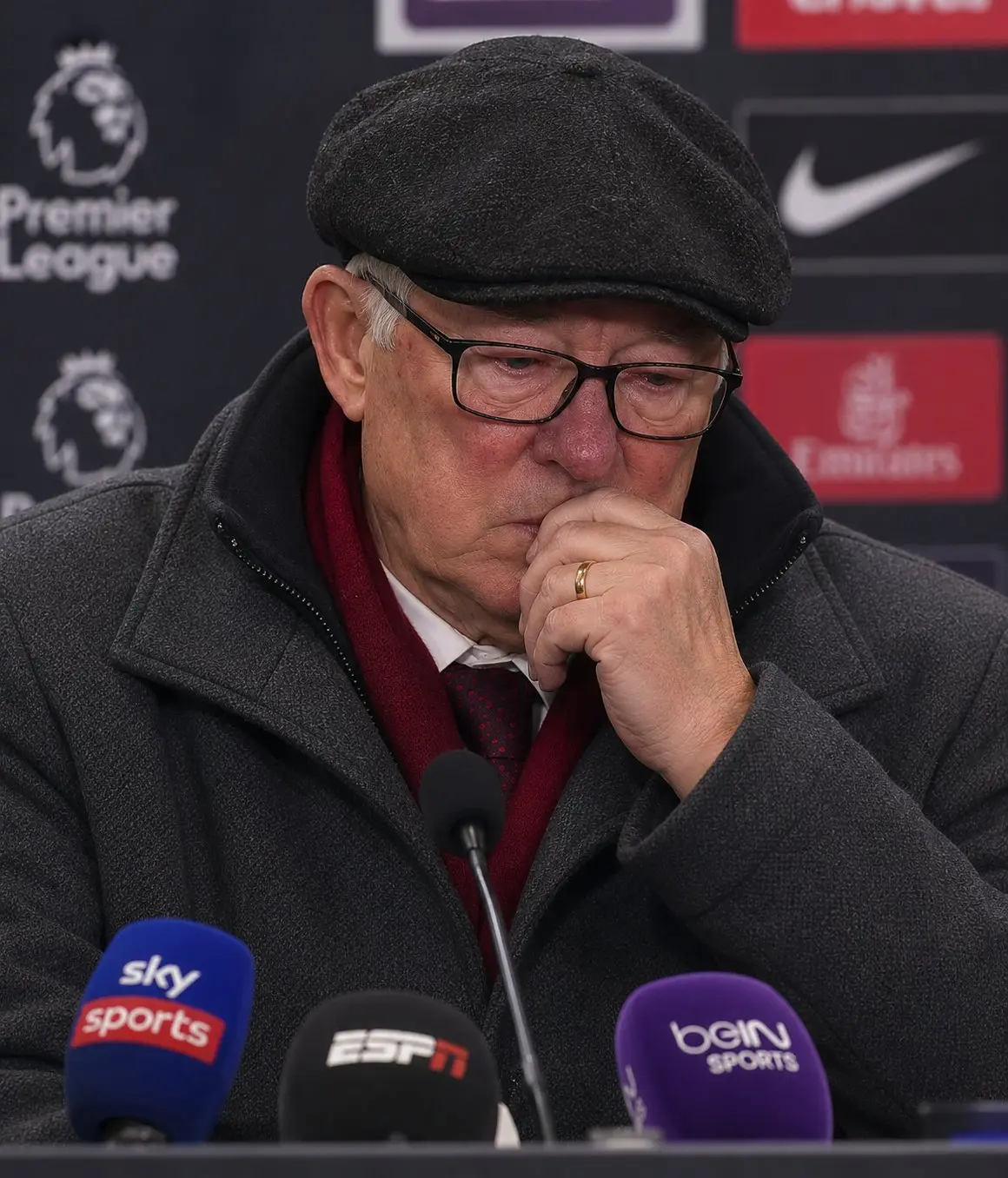
A Room Holding Its Breath
Inside the Manchester briefing, the atmosphere felt less like a routine football update and more like a high-stakes medical bulletin. Every throat-clearing sounded amplified. Every pause between sentences stretched into a lifetime for supporters who still remember the shock of May 2018—when a sudden brain haemorrhage nearly claimed his life—and who watched closely earlier in May 2026 when he was taken from Old Trafford for precautionary hospital checks ahead of a high-stakes clash with Liverpool.
Even then, the story had twisted in ways no one expected. Following that May 2026 scare, word emerged that he had been speaking at length just a day earlier about Scottish football and horse racing, and that swift medical caution allowed him to return home to continue his recovery. Later, in October 2026, he spoke candidly about the sheer terror he felt returning to the Old Trafford stands after his 2018 health battle—admitting he had once lost his voice and had to rebuild it word by word with a therapist writing down birds, animals, and rivers.
That history sat like a shadow over every syllable spoken in Manchester twenty minutes ago. When someone has stared down life-threatening illness and kept showing up anyway, any word about his condition carries weight far beyond the touchline.
The Weight of a Viral Ellipsis
Out on the streets outside, rain slicks the pavement as the alert continues to ripple through group chats and sports timelines. A headline ending in three dots is a masterclass in suspense—it turns ordinary minutes into an agonizing countdown. For a few seconds while a feed buffers or a speaker pauses to sip water, every possible word seems to hang in the air: stable, resting, undergoing tests, cleared, speaking out…
Reporters in the room leaned forward, pens poised and voice recorders holding their breath, waiting to hear whether the confirmation meant relief, caution, or a turning point no one had seen coming. In football, injury news usually revolves around a hamstring or a suspension before a weekend fixture. When the name is Sir Alex Ferguson, every update touches memory, identity, and time itself—a reminder that even giants who conquered 38 trophies with United and outlasted generations of rivals are bound by the same fragile clock as the rest of us.
What Comes Next in the Final Seconds
As the press briefing moved toward its closing moments, the tension in the room didn’t dissolve—it tightened. Spokespeople and medical voices chose their phrasing with surgical care, knowing that a single word parsed out of context could spark panic or false certainty across the globe within seconds.
Yet as the final questions were asked and the cameras stayed locked on the podium, one truth stood out above the noise: whatever was confirmed twenty minutes ago in Manchester did not arrive in a vacuum. It arrived in front of a city—and a sporting world—that refuses to look away, hanging on every measured word as the full picture comes into focus.
The video below shows Sir Alex Ferguson speaking at a press conference, capturing his presence and delivery in front of the media.