⚾ Kazuma Okamoto Rescued the Blue Jays From a 4-0 Hole—But CJ Van Eyk’s Eighth-Inning Collapse Handed Boston a 6-4 Win and Exposed Toronto’s Real Culprit

There are losses that never offer hope.
There are losses that waste a comeback.
And then there are losses where the wrong player becomes the face of defeat.
Toronto’s final-score image centers Kazuma Okamoto after a 6-4 loss to Boston.
But Okamoto hit the three-run homer that revived the Blue Jays.
Toronto later tied the game in the eighth.
The real collapse came immediately afterward, when one controversial bullpen choice turned four Boston hits into two decisive runs.
The box score names a losing pitcher.
The complete story reveals why the blame cannot stop with him.
For several innings, the Toronto Blue Jays appeared to be drifting toward another quiet defeat.
Then Kazuma Okamoto changed the atmosphere at Fenway Park with one swing.
Toronto erased a four-run deficit.
The game became tied.
The visitors suddenly had a chance to complete a comeback that had seemed impossible only minutes earlier.
Then the bullpen gave everything back.
The final-score graphic tells part of the emotional story.
It places Okamoto in the foreground with his eyes lowered beneath his helmet.

Toronto’s four runs appear beside Boston’s six.
It is the familiar image of a star walking away from a disappointing result.
But Okamoto is the wrong face to use if the goal is to identify the person who cost Toronto the game.
He was the man who gave the Blue Jays a chance to win it.
The trouble began before his comeback swing.
Toronto opened the first inning by wasting a major opportunity.
Ernie Clement reached on Patrick Sandoval’s fielding error.
George Springer and Alejandro Kirk later walked.
That loaded the bases with two outs.
Davis Schneider struck out without bringing anyone home.
The Blue Jays threatened again in the fourth.

Kirk and Daulton Varsho reached safely, placing two runners aboard with one out.
Luis Urías popped out.
Myles Straw lined out.
Another opportunity disappeared.
The most painful early failure came in the fifth.
Vladimir Guerrero Jr. singled with one out.
Okamoto followed with a double that moved Guerrero to third.
Toronto had two runners in scoring position and its experienced middle-of-the-order hitters coming to the plate.
Springer popped out in foul territory.
Kirk flew out to right.
Toronto remained scoreless.
Boston was far more efficient.
Anthony Seigler opened the bottom of the first with a solo home run against Trey Yesavage.

Seigler singled to begin the third before Ceddanne Rafaela launched a two-run homer.
Yesavage still struck out nine batters across four innings.
However, he required 93 pitches and surrendered three earned runs on five hits, including two home runs.
Braydon Fisher allowed Boston’s fourth run in the sixth when Andruw Monasterio delivered a sacrifice fly.
The Blue Jays entered the seventh trailing 4-0.
That was when the player featured in the final-score image took control.
Clement was hit by a pitch.
Guerrero followed with a single.
Okamoto stepped in against Greg Weissert with one out.
He connected.
The ball sailed toward center field.
Clement scored.
Guerrero scored.
Okamoto circled the bases behind them.
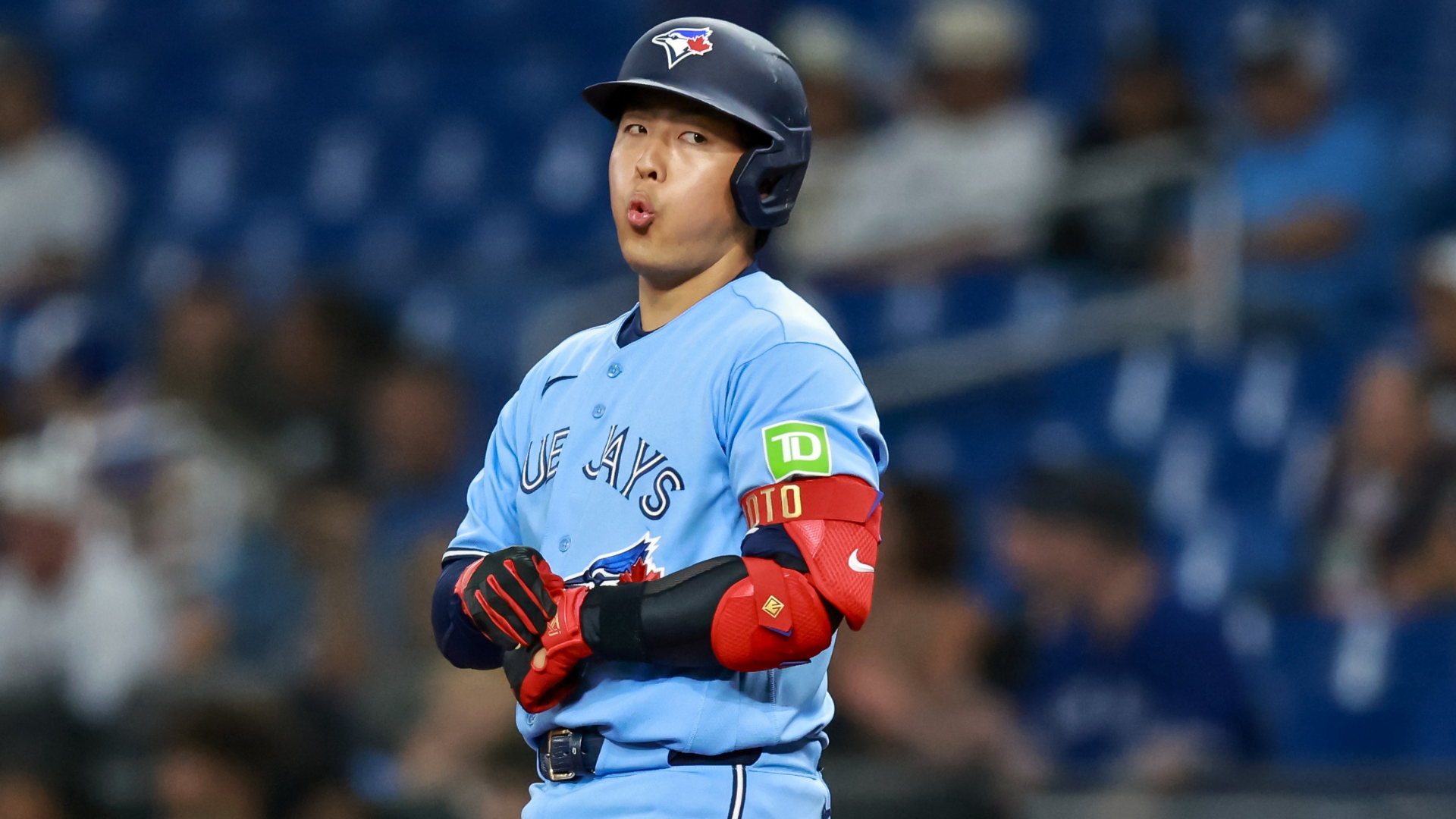
His 23rd home run of the season transformed a four-run deficit into a 4-3 game, according to MLB’s official Statcast highlight.
Toronto completed the comeback one inning later.
Nathan Lukes led off the eighth with a double.
Varsho collected his third hit of the game and moved Lukes to third.
Andrés Giménez lifted a sacrifice fly into center field.
Lukes crossed the plate.
The game was tied 4-4.
Toronto had finally answered every Boston run.
That should have been the moment when the Blue Jays placed the game in the hands of a trusted high-leverage reliever.
Instead, manager John Schneider called for CJ Van Eyk.
Van Eyk was making only his second major-league appearance.
He was being asked to protect a tie at Fenway Park immediately after Toronto had completed an emotional four-run comeback.
The assignment unraveled almost instantly.
Jarren Duran opened the bottom of the eighth with a single.
Van Eyk retired Monasterio on a foul pop for the first out.
Romy Gonzalez then lined an 87.6-mph cutter into left field for a double.
Duran scored.
Boston led 5-4.
Seigler followed with another double to left.
Gonzalez scored.
The advantage became 6-4.
Rafaela then collected Boston’s fourth hit against Van Eyk before Schneider finally brought Adam Macko into the game.
Van Eyk faced five batters.
Four recorded hits.
He retired only one.
He allowed two earned runs and was charged with the loss in the official 6-4 final.
The numbers make Van Eyk the clearest individual culprit.
The decisive run came against him.
The insurance run came against him.
His eighth-inning line was brutal: one-third of an inning, four hits and two earned runs.
But placing the entire defeat on a rookie reliever would ignore the larger decision.
Van Eyk did not assign himself to the eighth inning of a tied divisional game.
Toronto’s staff placed a pitcher with almost no major-league experience into the highest-pressure moment of the night.
That makes Schneider’s bullpen management part of the verdict.
The lineup must also accept responsibility.
Toronto recorded nine hits and three walks.
The Blue Jays stranded 10 runners.
They failed to score through six innings despite repeatedly placing runners aboard.
Okamoto’s homer changed the game, but it also concealed how many opportunities Toronto had already wasted.
Even after Boston retook the lead, one final chance remained.
Guerrero walked to open the ninth against Aroldis Chapman.
Okamoto struck out.
Springer flew out.
Kirk struck out on a foul tip.
Chapman secured his 24th save.
Toronto fell to 47-57.
So who was the “villain” of the 6-4 loss?
Statistically, it was CJ Van Eyk.
Strategically, Schneider must share the blame for exposing an inexperienced pitcher in the decisive inning.
Collectively, the offense helped create the conditions by leaving 10 runners on base.
But it was not Kazuma Okamoto.
He went 2-for-5 with a double, a home run and three RBIs.
He turned a lifeless 4-0 deficit into a one-run game.
The Blue Jays tied it.
Then four hits against one reliever destroyed the comeback.
One heroic swing.
One questionable bullpen decision.
One devastating eighth inning.
And one final-score image that does not show Toronto’s real culprit.