What if scientists could reconstruct the final hours of the dinosaurs — not from ancient legends, but from fossils buried for 66 million years?

In North Dakota, researchers investigating a remarkable fossil site called Tanis have uncovered an extraordinary collection of prehistoric remains that may preserve evidence of the catastrophe that ended the age of dinosaurs.
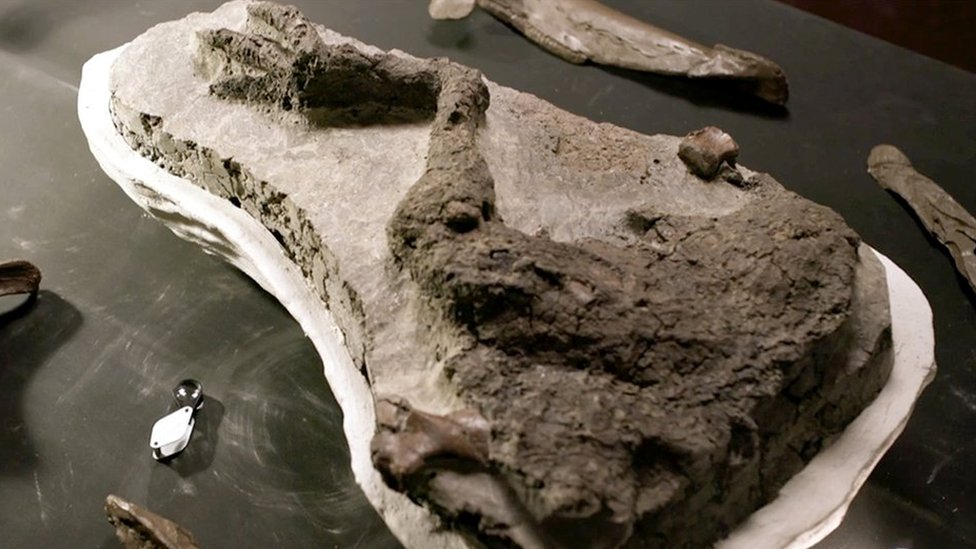
Among the discoveries are a leg from a Thescelosaurus, preserved dinosaur skin believed to belong to a Triceratops, fish, a turtle and even a pterosaur embryo inside an egg.
But the most astonishing clues may be hiding in the fossils of ancient fish.
Scientists reported finding tiny, glass-like particles embedded in the gills of fish preserved at Tanis. These particles are believed to have originated from molten rock thrown into the atmosphere by the asteroid impact that devastated Earth at the end of the Cretaceous Period.
The impact, around 66 million years ago, triggered environmental upheaval that ultimately led to the extinction of all non-avian dinosaurs.
Robert DePalma, who led the Tanis excavation, described the site’s extraordinary detail as almost like watching events unfold in a movie. The fossils appear to preserve a snapshot of a landscape caught in the aftermath of the catastrophic event.
Yet scientists continue to investigate exactly how the site formed and how closely its deposits are tied to the moment of impact.
If the interpretation is correct, Tanis offers something rarely found in paleontology: not simply evidence of animals that lived millions of years ago, but clues to a disaster that changed life on Earth forever.
Could these fossils bring us closer than ever to understanding what happened on the day the dinosaurs disappeared?