Even the skies offered no guarantee of safety during the Age of Dinosaurs. A remarkable fossil discovery suggests that a flying reptile may have met its end not at the claws of a land predator, but in the jaws of an ancient armored fish.
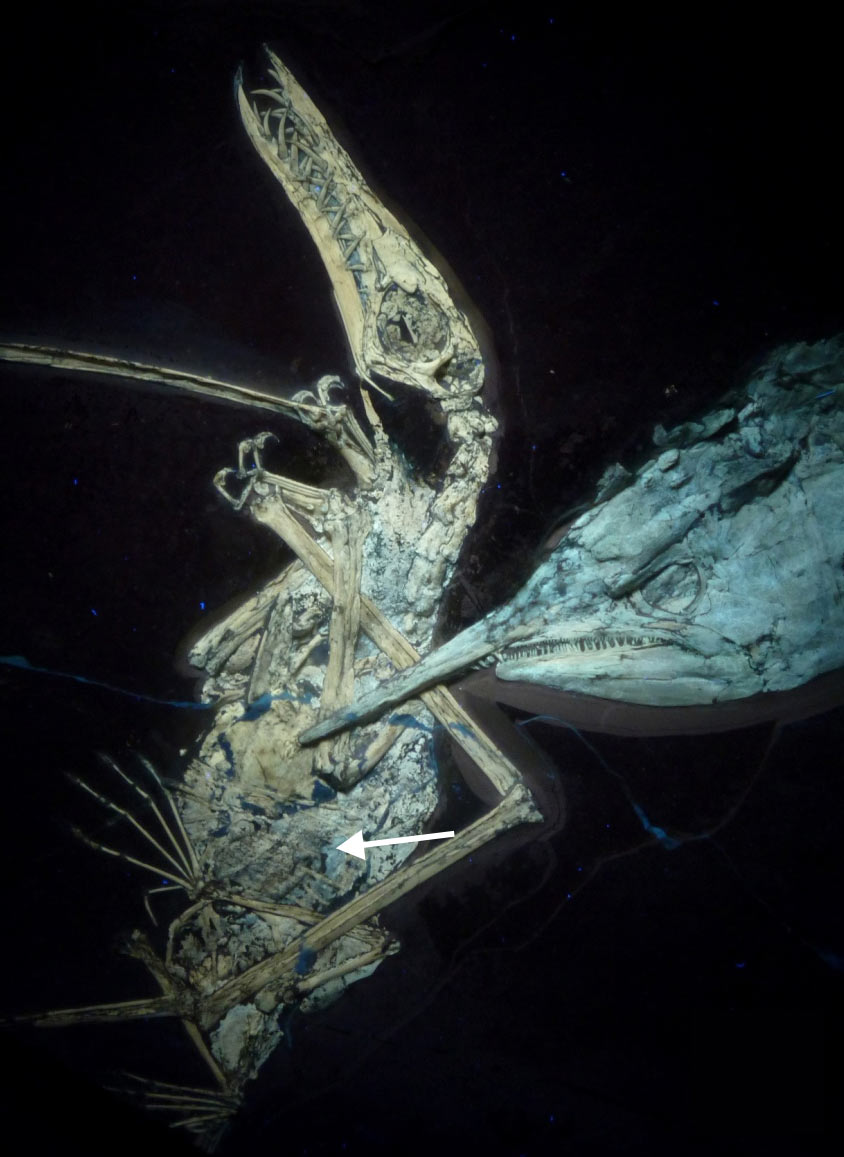
Pterosaurs ruled prehistoric skies for millions of years, using their wings to soar above ancient landscapes. Yet these flying reptiles were not untouchable. Fossils reveal that they faced threats from a variety of carnivores, and a series of extraordinary specimens now offers evidence of a potentially deadly encounter beneath the water.
The pterosaurs involved had wingspans of approximately 27 inches, or 70 centimeters. Their fossilized remains were found positioned close to the mouths of their fish predators, which measured around 25 inches, or 65 centimeters, long. This unusual arrangement led researchers to suspect that the fish had seized the reptiles by their delicate wing membranes.
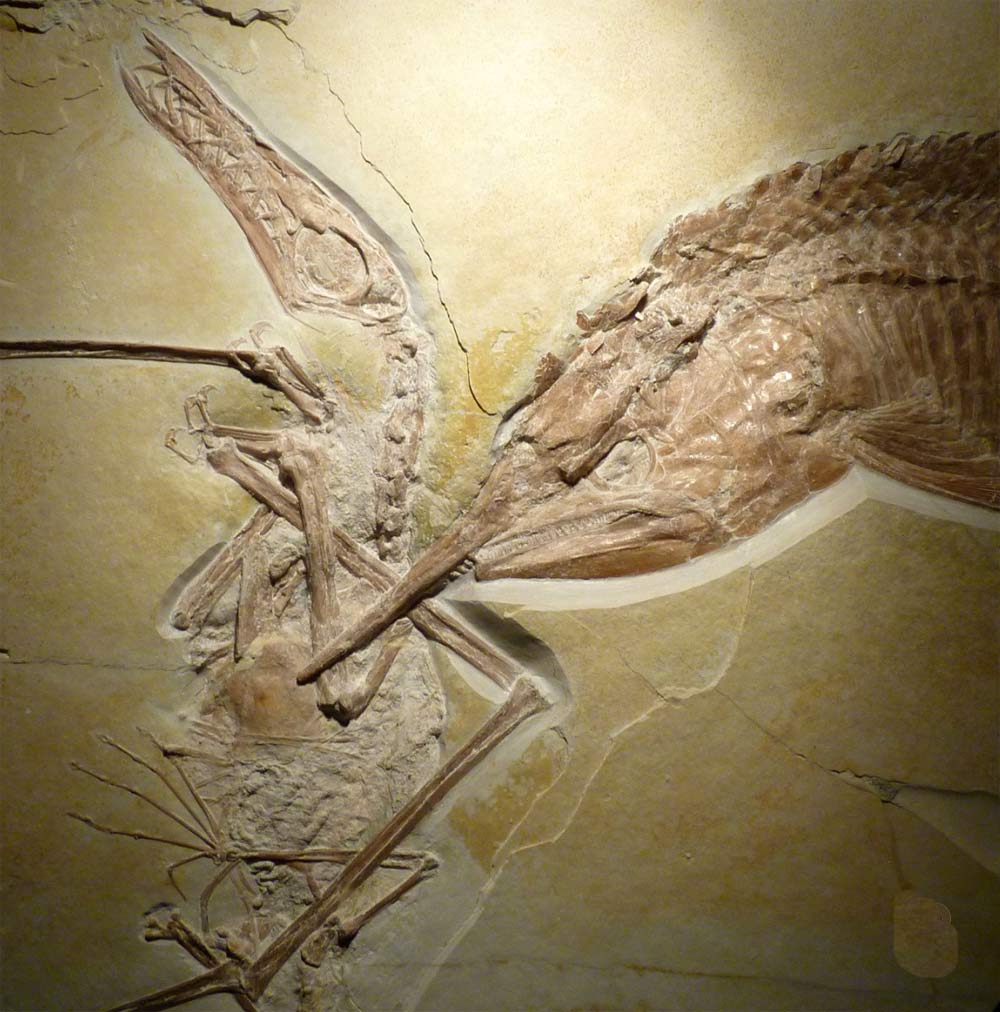
In one particularly striking specimen, a pterosaur wing bone appears trapped between the fish’s jaws—an extraordinary detail that may preserve the moment of an attack.
Another fossil provides an even more intriguing clue. A tiny fish was preserved in the pterosaur’s throat, apparently swallowed headfirst. This suggests the flying reptile may have still been alive when it was captured, rather than already dead when the armored fish encountered its body.
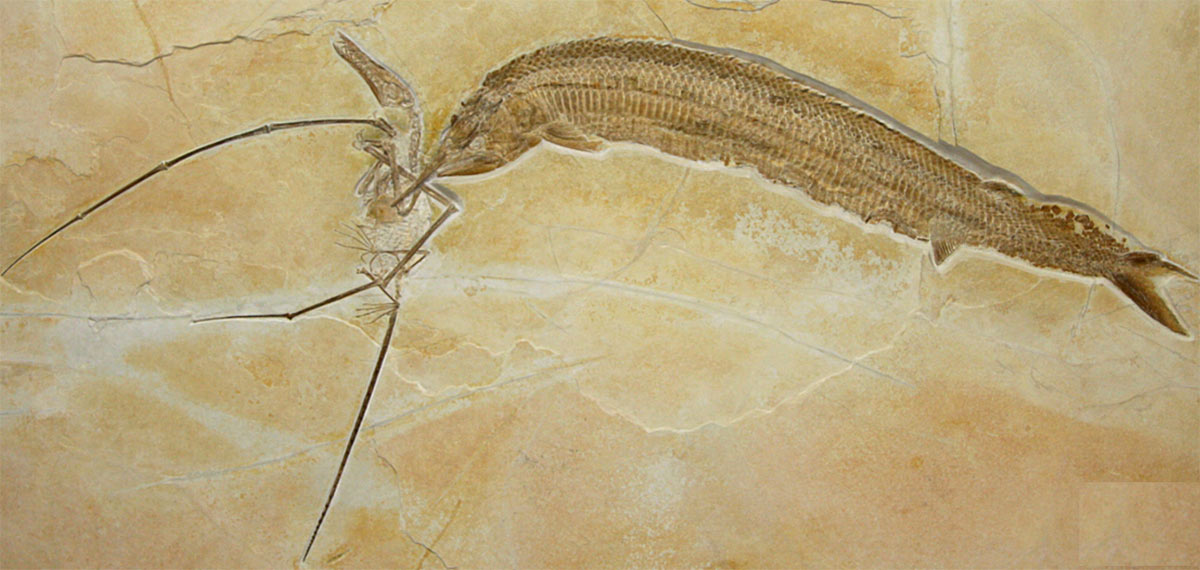
Scientists have proposed that the attack occurred in a toxic Jurassic lake, where conditions could have made survival difficult for animals living in or around the water.
Although the fossils cannot reveal every detail of the encounter, they offer a rare glimpse into prehistoric predator-prey relationships. Even creatures built for the skies could become vulnerable when they ventured too close to the water.