🚨 BREAKING NEWS: TORONTO MAPLE LEAFS WIN 4–2, BUT THE REAL EXPLOSION COMES AFTER THE FINAL BUZZER — JIM HILLER’S BRUTAL RESPONSE TO PETER DeBOER LEAVES THE NHL WORLD SPEECHLESS!
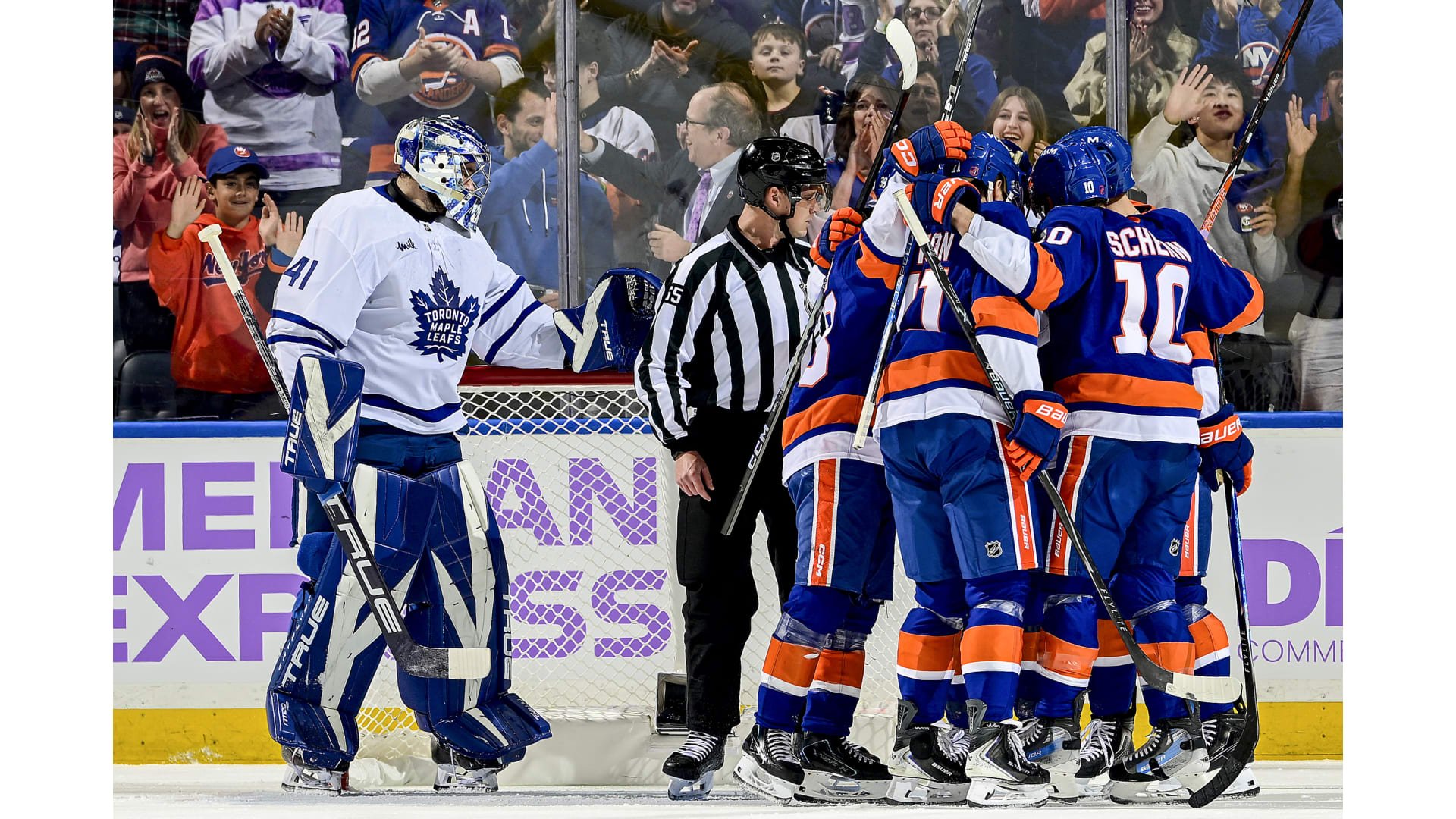
TORONTO, ONTARIO — The final scoreboard showed Toronto Maple Leafs 4 – New York Islanders 2, but the most explosive moment of the night didn’t happen on the ice.
Advertisement
It happened behind a microphone.
What began as a routine postgame press conference quickly transformed into a heated war of words between two NHL head coaches, as New York Islanders coach Peter DeBoer launched a blistering attack on Toronto’s reputation, its superstar talent, and the enormous attention surrounding the franchise.
But just when the confrontation appeared to have reached its boiling point, Toronto Maple Leafs head coach Jim Hiller delivered a ruthless response that left the imaginary press room frozen.
Advertisement
And his final words were even more devastating than the scoreboard.

A 4–2 Victory That Was Only the Beginning
From the opening faceoff, Toronto entered the fictional matchup determined to make a statement.
The Maple Leafs played with intensity, attacked with confidence, and demonstrated the offensive firepower that has made them one of hockey’s most recognizable franchises.
Auston Matthews once again stood at the center of Toronto’s identity, representing the skill, leadership, and competitive determination expected from the team’s biggest superstar.
The Islanders refused to surrender easily.
They battled through difficult stretches, competed for loose pucks, and attempted to disrupt Toronto’s offensive rhythm.
But when the final buzzer sounded, the scoreboard delivered its verdict.
Toronto Maple Leafs 4. New York Islanders 2.
For Toronto supporters, it was the kind of result worth celebrating.
For the Islanders, it was a painful defeat.
Yet the real controversy was only beginning.
Peter DeBoer Unleashes a Furious Postgame Attack
Moments after the game, DeBoer entered the fictional media room with visible frustration.
Advertisement
His expression was tense.
His answers were unusually sharp.
And when a reporter asked whether Toronto’s star power had made the difference, the Islanders coach appeared to reach his breaking point.
“Let’s not kid ourselves,” DeBoer began, his voice shaking with frustration.
“Toronto didn’t win simply because they wanted it more.
They have an experienced roster, elite offensive talent, and a superstar like Auston Matthews who can change the entire game in an instant.”
He continued without hesitation.
“They have enormous expectations, passionate fans, and a tradition that puts pressure on every opponent.
Hockey isn’t supposed to be about who gets the biggest spotlight.
It’s supposed to be about passion, sacrifice, and athletes who fight for every single shift.”
Then came his most controversial remark.
“We’re out here building something real with players who compete for the love of the game, not for headlines or recognition.”
The room fell silent.

Reporters exchanged stunned glances.
The fictional confrontation had suddenly become much bigger than one hockey game.
DeBoer’s comments appeared to suggest that Toronto’s success depended more on celebrity status and established talent than genuine competitive spirit.
And that implication would not go unanswered.
Jim Hiller Fires Back With an Ice-Cold Response
When Hiller was informed of DeBoer’s remarks, he initially appeared calm.
He adjusted his microphone, looked directly toward the reporters, and waited several seconds before speaking.
Then he delivered a response that completely changed the atmosphere.
“PETER, THE SCOREBOARD DOESN’T CARE ABOUT YOUR EXCUSES.”
The imaginary press room went silent.
Hiller continued.
“You want to talk about passion? You want to talk about sacrifice?
Then maybe you should spend less time questioning our players’ character and more time figuring out why your team just lost 4–2.”
His expression remained serious.
“Nobody handed us those four goals. Nobody gave us the victory because we play in Toronto.
We earned it by competing, by trusting each other, and by doing what was necessary to win.”
But he wasn’t finished.
“You talk about Auston Matthews like being talented somehow means he doesn’t work hard.
That’s disrespectful to every player who has sacrificed years of his life to reach this level.”
Hiller leaned closer to the microphone.
“Having superstars isn’t a crime. Losing to them isn’t an excuse to insult their character.”
The response cut directly through DeBoer’s argument.
And suddenly, the focus shifted from Toronto’s victory to the extraordinary tension between the two benches.
Auston Matthews Becomes the Center of the Controversy
For Hiller, the fictional criticism of Matthews appeared to cross a line.
Toronto’s captain carries immense expectations every time he steps onto the ice.
His talent attracts attention.
His leadership invites scrutiny.
And his performance is analyzed by one of the most passionate fan bases in professional hockey.
But Hiller refused to accept the suggestion that Matthews’ superstar reputation diminished his dedication.
“Auston doesn’t get to this level because people recognize his name,” Hiller declared.
“He gets here because he works when nobody is watching. Because he pushes himself when he’s exhausted.
Because he understands what representing this organization means.”
Then came another pointed warning.
“If you think talent and hard work can’t exist together, maybe you don’t understand what makes great players great.”
The fictional statement represented more than a defense of Matthews.
It was a defense of Toronto’s entire roster.
A Rivalry Suddenly Turns Personal
What made the exchange so extraordinary was the contrast between the two coaches.
DeBoer portrayed the Islanders as determined competitors fighting against a franchise surrounded by enormous publicity.
Hiller rejected that narrative completely.
For him, professional hockey was not about deciding which team deserved more admiration.
It was about performance.
Execution.
Responsibility.
And winning.
A team could possess the biggest stars in the league and still be required to earn every victory.
The Maple Leafs had done exactly that in this imagined contest.
And Hiller was determined to make sure nobody diminished their achievement.
The Final Statement That Ends the Argument
As the fictional press conference approached its conclusion, one reporter asked Hiller whether he had any final message for DeBoer.
The Toronto coach paused.
Then he delivered one last devastating remark.
“Peter can keep talking about headlines, reputation, and everything he thinks is wrong with Toronto.
But there’s one thing he can’t talk his way around.”
Hiller glanced toward the scoreboard visible on a nearby monitor.
“WE SCORED FOUR. THEY SCORED TWO. IF HE WANTS A DIFFERENT STORY, HE SHOULD TRY WINNING THE GAME.”
With that, he stood up and walked away.
No further explanation.
No apology.
No attempt to soften his words.
The imaginary confrontation was over.
And while Toronto’s 4–2 victory had already provided plenty of excitement, the postgame exchange gave the fictional NHL showdown an unforgettable final chapter.
Because on this night, the Maple Leafs didn’t just win on the ice — their coach made sure they had the final word off it, too.