SHOCKING: Mike Vrabel’s Patriots Make Final Decision on Stefon Diggs as New England Reshapes Its Roster

FOXBOROUGH, Mass.
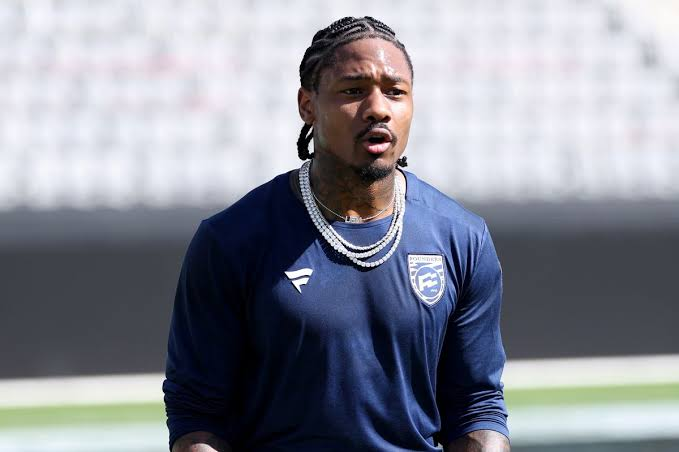
— The New England Patriots made one of their most surprising offseason decisions when they released veteran wide receiver Stefon Diggs, bringing his time in Foxborough to an end after only one season with the organization.
New England officially announced the move on March 11, 2026.
Diggs was released alongside linebackers Anfernee Jennings and Jahlani Tavai, while veteran center Garrett Bradbury was traded to the Chicago Bears for a 2027 fifth-round draft selection.
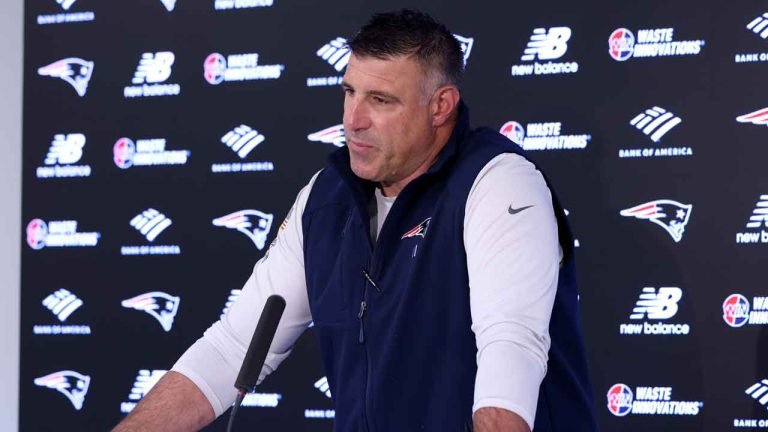
The transaction represented a significant restructuring of the roster under head coach Mike Vrabel and the Patriots’ personnel department.
Although dramatic claims circulated about internal disagreements and locker-room problems, the Patriots did not connect Diggs’ departure to misconduct, disciplinary action or a dispute with teammates.
There is also no credible evidence that quarterback Drake Maye, cornerback Christian Gonzalez or another respected New England player reported Diggs to Vrabel’s coaching staff.
The confirmed facts point toward a football and roster-management decision rather than an irreversible punishment resulting from an internal confrontation.

That distinction is important because Diggs was not an insignificant member of the 2025 Patriots.
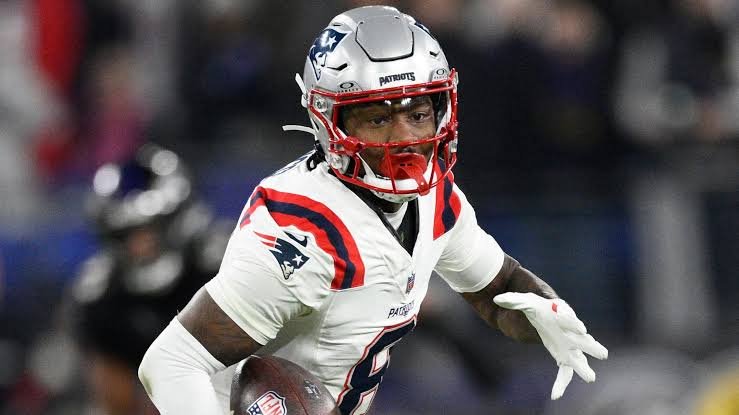
He led New England with 1,013 receiving yards during the regular season, finishing ahead of tight end Hunter Henry and wide receiver Kayshon Boutte.
Maye, meanwhile, threw for 4,394 yards as New England’s starting quarterback, making his connection with the veteran receiver an important part of the Patriots’ offense.
Diggs had originally joined New England as an unrestricted free agent in March 2025.
Before arriving in Foxborough, he had played for the Minnesota Vikings, Buffalo Bills and Houston Texans.
He entered the Patriots chapter of his career with more than 10,000 receiving yards, 70 touchdowns and multiple seasons with at least 100 catches.
His established reputation and production made the release particularly notable.
Teams rarely move on from their leading receiver without attracting widespread attention, especially when that player possesses Diggs’ experience and name recognition.
However, the Patriots’ subsequent decisions provide important context.
One day after releasing Diggs, New England signed former Green Bay Packers receiver Romeo Doubs.
The Patriots later completed a major trade with the Philadelphia Eagles to acquire A.J.
Brown, a three-time Pro Bowl selection who had surpassed 1,000 receiving yards in six of his first seven NFL seasons.
Those moves suggest that New England was not simply removing a veteran receiver.
The organization was rebuilding the position around a different combination of size, age, contract structure and long-term offensive fit.
Brown now joins a receiver group that includes Doubs, Boutte, DeMario Douglas and veteran Mack Hollins.
Maye remains the centerpiece of the offense, while players such as running back TreVeyon Henderson and tight end Hunter Henry provide additional options around him.
The arrival of Brown also changes the interpretation of the Diggs decision.
Rather than carrying two high-profile veteran receivers with potentially overlapping roles, the Patriots chose to move forward with Brown as their primary established target.
That conclusion is an inference based on the timing of New England’s transactions; the team has not publicly described the move in those exact terms.
Vrabel’s approach has consistently emphasized competition, preparation and rebuilding standards at the beginning of each season.
At the opening of the Patriots’ 2026 training camp, he explained that the team needed to start again, identify what it did well and rebuild its foundation rather than rely entirely on the previous season.
That philosophy helps explain why even productive veterans cannot assume their positions are permanent.
NFL organizations must balance past performance against salary considerations, future development, schematic fit and the availability of alternative players.
Diggs’ release therefore reflects the difficult nature of professional roster construction.
His 2025 production demonstrated that he could still contribute at a high level, but New England evidently determined that its offense would be better served by a different receiving structure entering 2026.
The decision also places greater responsibility on the Patriots’ current leaders.
Maye is entering his third NFL season as the unquestioned starting quarterback.
Gonzalez has become one of the most important players on New England’s defense, while veterans such as Henry, Christian Barmore, Mike Onwenu and Morgan Moses provide experience across the roster.
Maye and Gonzalez were also selected to the 2026 Pro Bowl following their performances during the previous campaign.
There is no factual basis, however, for portraying any of those players as the person responsible for Diggs’ departure.
Unless verified reporting or an official statement emerges, claims that a Patriots star secretly approached the coaching staff about serious internal disputes should not be presented as established fact.
For New England, the larger question is whether the revamped receiving unit will improve an offense that already showed considerable progress with Maye.
Brown brings physicality, postseason experience and a history of consistent production.
Doubs offers another experienced target, while Douglas and Boutte remain younger players with opportunities to earn meaningful roles.
For Diggs, the release represents another transition in a distinguished NFL career.
His time with the Patriots was brief, but it included a 1,000-yard season and a prominent role in New England’s passing game.
His exit may have surprised supporters, yet it should be understood as a confirmed personnel move—not evidence of a scandal.
The Patriots have closed the Diggs chapter and committed themselves to a new offensive direction.
Whether that decision proves successful will depend on Brown’s impact, Maye’s continued development and Vrabel’s ability to turn a reshaped roster into a cohesive contender.
The final decision was unquestionably significant.
But the verified story is one of strategic change, roster evolution and the unforgiving realities of the NFL—not an unconfirmed locker-room betrayal.