The Toronto Blue Jays may have finished one of the most disappointing seasons in franchise history, but the organization does not appear prepared to sit quietly and wait for 2027. Instead, early offseason reports are pointing toward an increasingly intriguing possibility: Toronto could once again turn its attention to Japan in search of the offensive firepower it desperately lacked throughout 2026.
Two names have suddenly emerged as potential targets — Seiya Suzuki and Teruaki Sato.
The possibility is significant because the Blue Jays finished the 2026 campaign with a 79-83 record and last place in the American League East, a stunning reversal after reaching the World Series the previous year. Toronto’s offense was one of the biggest problems. The club finished last in MLB in home runs and runs scored, creating an obvious need for impact bats this winter.
Now, Toronto’s search for a solution could lead directly back to Japan.
According to reports, the Blue Jays are expected to pursue Suzuki if he reaches free agency, while the organization is also expected to check in on Sato if the Hanshin Tigers post him for MLB teams. That does not mean either player is close to signing with Toronto, but the interest itself is noteworthy — particularly after Kazuma Okamoto became one of the few bright spots of the Blue Jays’ 2026 season.

Suzuki would represent the more established Major League option.
The Chicago Cubs outfielder is coming off the best statistical season of his MLB career. In 2026, Suzuki hit .270 with a .368 on-base percentage, a .473 slugging percentage, 26 home runs and 86 RBIs across 143 games. His .841 OPS would have comfortably led Toronto’s qualified hitters, while his home-run total would have ranked second on the Blue Jays.
That production explains why Toronto’s reported interest makes so much sense.
Suzuki also fits an immediate roster need. Toronto is expected to have an opening in the outfield following George Springer’s expiring contract, and MLB’s own offseason outlook previously identified Suzuki as a potential top target for a corner-outfield position. The Blue Jays already have a substantial amount of money committed for 2027, but MLB estimated that the club could have roughly $80 million of room compared with its 2026 payroll level.
More importantly, Suzuki would not require the same transition period as an NPB player making his MLB debut. He has already spent five seasons in the majors and owns a career .269/.351/.472 slash line with 113 home runs. His 2026 season also produced 5.1 WAR, according to Baseball-Reference.
Then there is Sato.
And this is where the story becomes even more fascinating.

The 27-year-old Hanshin Tigers star is viewed as one of the premier offensive talents available from Japan. In 136 NPB games during 2026, Sato reportedly hit .315/.392/.620 with 37 home runs, 100 RBIs and a 1.012 OPS. He is a left-handed power hitter who could immediately address the type of run-production problem that repeatedly hurt Toronto this season.
Sato’s situation is different from Suzuki’s because he is not simply entering conventional MLB free agency. If Hanshin posts him as expected, MLB clubs would have the opportunity to pursue him through the posting system. His reported 45-day posting window could begin in early November, potentially allowing him to choose an MLB destination before the offseason becomes complicated by the expiration of baseball’s collective bargaining agreement.
The upside is obvious. The risk is equally important.
Sato’s power is undeniable, but he also struck out 156 times in 584 plate appearances this season. Questions remain about his long-term defensive position as well, with third base and the outfield among the possibilities and some evaluators believing first base could eventually become his best fit.
For Toronto, however, those concerns may be secondary to the need for offense.
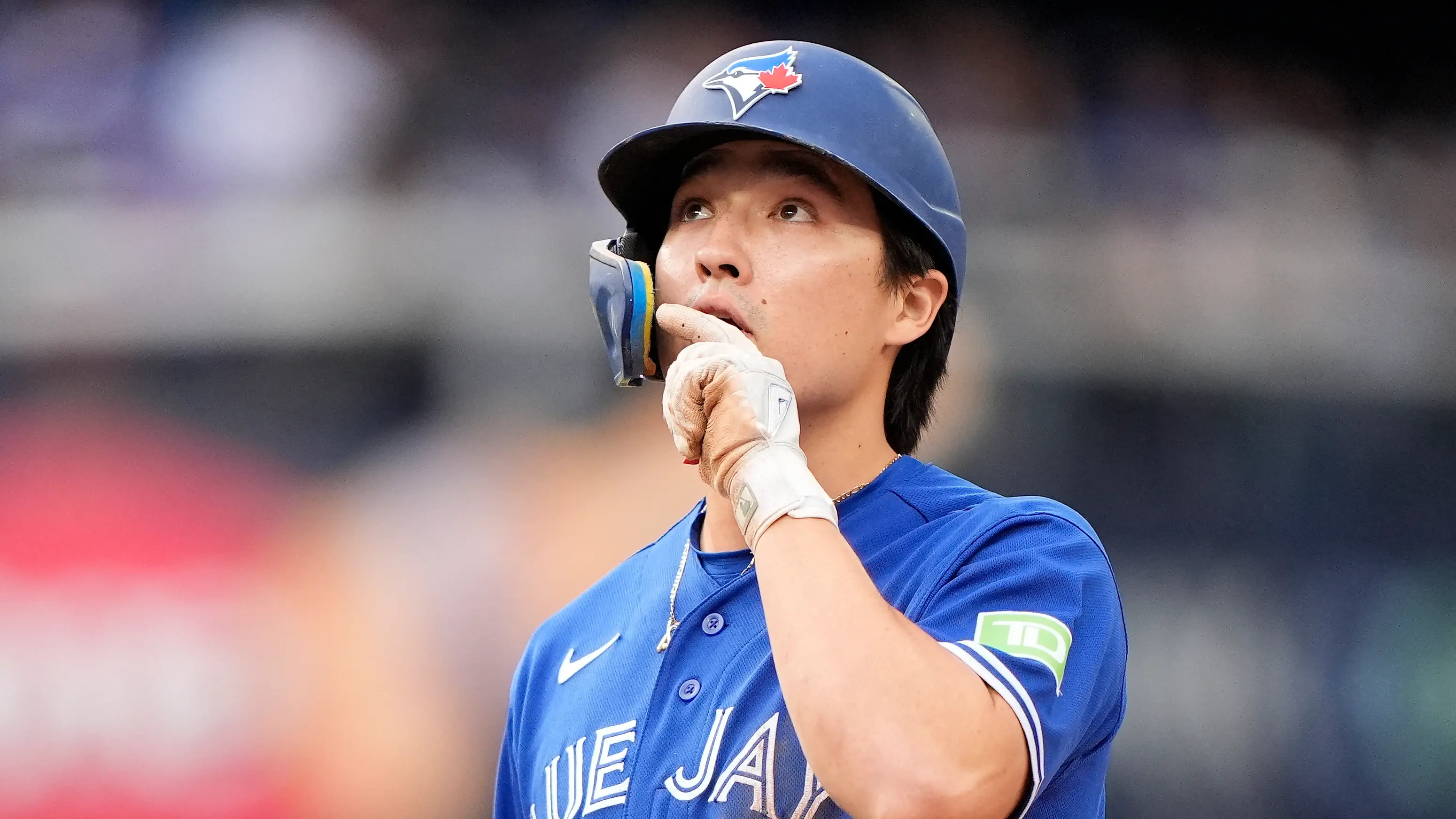
The Blue Jays cannot afford another season in which their lineup ranks near the bottom of baseball in power. Vladimir Guerrero Jr., Andrés Giménez, Ernie Clement and Okamoto are already under contract for 2027, giving Toronto a foundation to build around. But the organization needs additional impact bats, particularly in the outfield, if it intends to return to postseason contention.
Okamoto’s first season in Toronto could also influence the club’s thinking.
After arriving from Japan on a four-year, $60 million contract, Okamoto showed enough offensive ability to become an important piece of Toronto’s future. He finished the season with 28 home runs and demonstrated the type of power the Blue Jays hoped they were acquiring. His defensive struggles at third base were real, but his offensive production gave the club another reason to continue exploring the Japanese market.
The idea of adding Suzuki or Sato — or potentially both — therefore represents more than a simple free-agent rumor.
It could signal a broader strategy.
Toronto has already demonstrated that it is willing to invest heavily in Japanese talent. Now, with the offense desperately needing a reset, the Blue Jays have an opportunity to target two players who could dramatically change the lineup’s identity.
Suzuki offers proven MLB production and immediate reliability. Sato offers enormous upside and the possibility of becoming the next Japanese star to make an immediate impact in North America.
But there is another important factor: Toronto will not be the only team watching.
Sato’s potential availability is expected to attract considerable interest, while Suzuki’s combination of experience, power and on-base ability makes him one of the more attractive offensive names on the market. Toronto will have to compete financially and convince either player that Rogers Centre is the right place to continue his career.
That is why the coming weeks could become extremely important.
The Blue Jays have already admitted through their roster construction that 2027 cannot simply be a repeat of 2026. The offense needs more power. The outfield needs reinforcement. The club needs players capable of changing games rather than simply filling lineup spots.
And suddenly, Japan may provide the answer.
Seiya Suzuki and Teruaki Sato are not Blue Jays yet. There is no guarantee either player will eventually wear Toronto’s uniform. But after a season in which offensive production became the organization’s most obvious weakness, the message coming out of Toronto is becoming increasingly difficult to ignore.
The Blue Jays are looking east again.
And if the front office is serious about changing the direction of the franchise in 2027, the next Japanese star to arrive in Toronto could be much more important than anyone realizes right now.