The Toronto Blue Jays are taking no chances with George Springer.
For the second consecutive game, the veteran outfielder was absent from Toronto’s starting lineup, adding another layer of uncertainty around a player the Blue Jays continue to rely on during a critical stretch of the season. Springer was dealing with left shoulder tightness, and although he was eventually used in a limited role Sunday, Toronto’s decision to keep him out of the lineup immediately raised questions about how serious the issue could become.
Springer was a late scratch from Saturday’s game after experiencing tightness in his left shoulder, an issue he had reportedly been dealing with for several days. Blue Jays manager John Schneider confirmed the problem, prompting the club to take a cautious approach rather than risk turning a manageable issue into something more serious.
On Sunday, Springer remained out of the starting lineup against the Philadelphia Phillies.
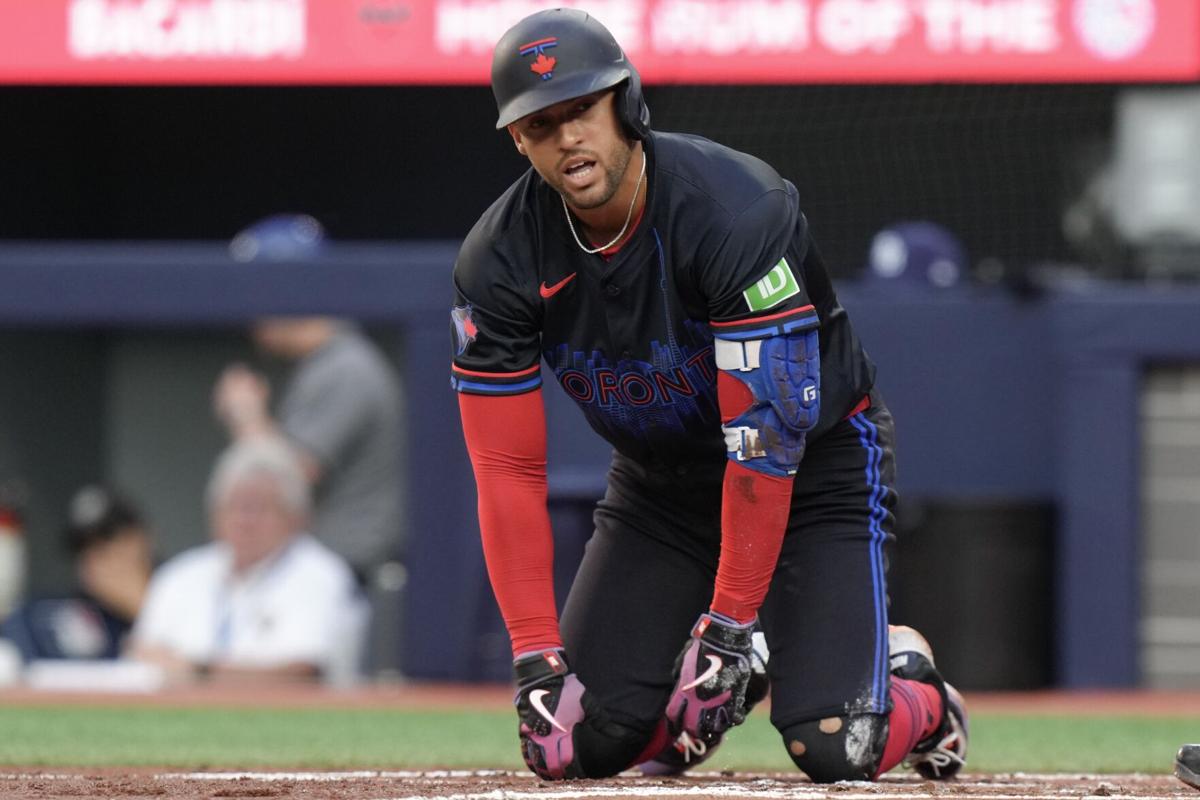
But he was not completely unavailable.
The 36-year-old entered the game as a pinch-runner in the 10th inning, suggesting the Blue Jays still viewed him as capable of contributing if necessary. However, when his spot in the batting order came around, Toronto chose not to let him hit.
Instead, Jesús Sánchez replaced him.
That decision was perhaps the clearest indication yet that the Blue Jays are trying to manage Springer carefully.
There was no dramatic announcement suggesting a major injury, but the club’s cautious handling of the veteran has created plenty of intrigue. Springer has been dealing with the shoulder tightness for multiple days, and Toronto clearly did not want to push him into a full game before he was ready.
According to Sportsnet’s Arden Zwelling, the Blue Jays gave Springer another day to manage the issue, with a strong possibility that he could return to the starting lineup Monday.
That would certainly be encouraging news for Toronto.
Still, the situation deserves attention.
At 36 years old, Springer is no longer the same player who once terrorized opposing pitchers at the top of championship lineups. But his experience and ability to contribute in multiple ways remain valuable to a Blue Jays team that needs production throughout its roster.
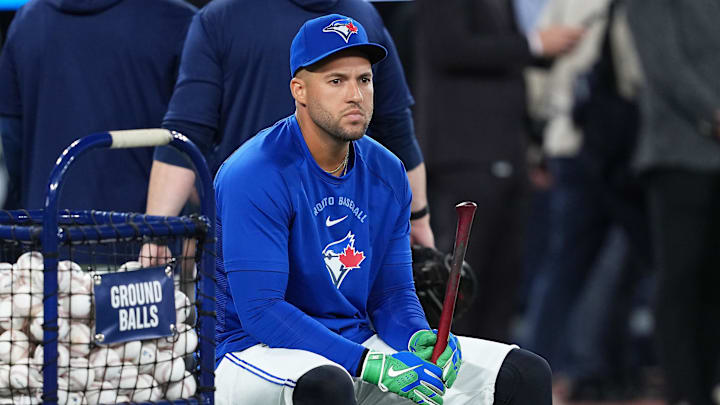
Through 87 games this season, Springer is batting .234 with a .317 on-base percentage and a .396 slugging percentage. He has hit 12 home runs, driven in 36 runs and stolen eight bases.
Those numbers may not jump off the page, but Springer remains an important piece of Toronto’s roster.
And that makes the shoulder issue particularly relevant.
The Blue Jays have little reason to gamble with a veteran player if they believe a couple of days of rest could prevent the problem from becoming something more significant. A shoulder issue can be especially troublesome for an outfielder, where throwing, hitting and running all place different demands on the body.
Toronto’s decision to keep Springer out for a second straight game therefore appears to be rooted in caution rather than panic.
But baseball teams can change their plans quickly.
Springer did take part in Sunday’s game as a pinch-runner, which provided at least one positive sign. If he were completely unavailable, Toronto likely would not have put him into a potentially high-leverage extra-inning situation.
The fact that he was allowed to run suggests the Blue Jays were comfortable enough with his condition to use him selectively.
The bigger question was clearly his ability to swing the bat.
When his spot arrived in the 10th inning, Toronto chose Sánchez instead.

That decision left Springer without an at-bat and gave the Blue Jays another opportunity to protect the shoulder while still utilizing his speed when needed.
For Toronto, that could be the ideal short-term compromise.
Springer gets additional recovery time, while the Blue Jays retain the ability to use him in specific situations if necessary.
The potential return Monday would be an important development. If Springer is back in the starting lineup without restrictions, the weekend absence could ultimately become nothing more than a brief precaution.
But if the shoulder continues to limit him, the Blue Jays may have to reconsider how they deploy one of their most experienced players.
At this point in the season, every roster decision matters.
Toronto cannot afford to lose an established veteran for an extended period, particularly if the club is already dealing with the normal wear and tear of a long MLB season. The last thing the Blue Jays want is for a minor shoulder problem to become a prolonged absence.
For now, the message from Toronto appears straightforward: Springer needs another day.
The good news is that he was healthy enough to enter Sunday’s game.
The concerning part is that he still could not take his scheduled at-bat.
That distinction is exactly why Blue Jays fans will be watching Monday’s lineup announcement so closely.
If George Springer is back in right field, Toronto may finally exhale.
If he is missing again, however, the questions surrounding his shoulder will only grow louder.