TORONTO — For months, the narrative surrounding Trey Yesavage had been almost myth-like, built on a whirlwind postseason run that redefined what a rookie pitcher could be under the brightest lights. Now, on a quiet Tuesday night in April, the 22-year-old right-hander returned to the mound for the Toronto Blue Jays—and while the box score showed dominance, the performance itself told a far more complex story.
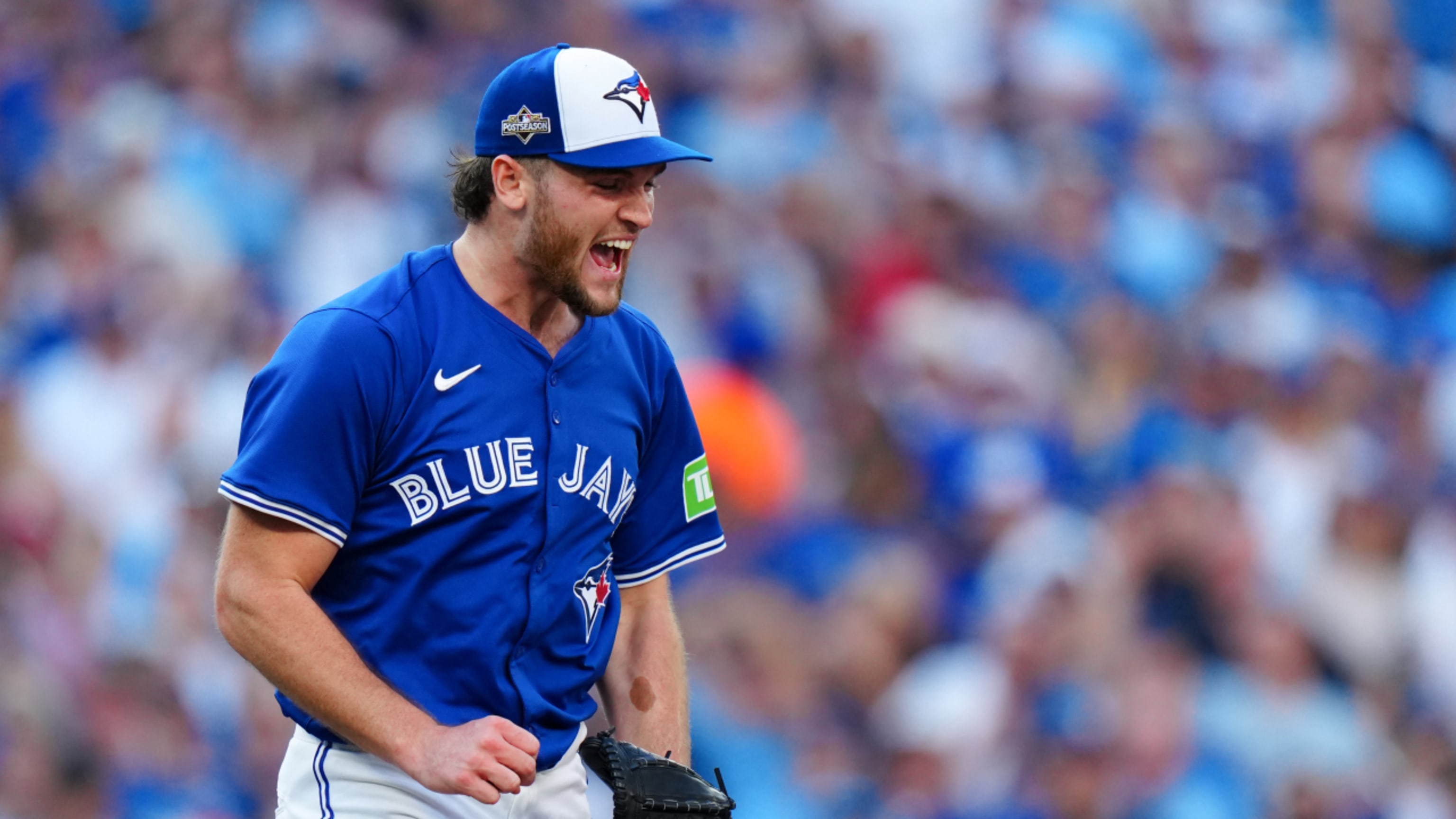
Yesavage delivered 5.1 shutout innings in a 3–0 victory over the Boston Red Sox, allowing just four hits while striking out three batters on an efficient 74 pitches. On paper, it was exactly what Toronto needed. In reality, it raised as many questions as it answered.
Because this wasn’t the same overpowering force that stunned Major League Baseball just months ago.
During last year’s postseason, Yesavage carved through elite lineups, striking out 39 batters—more than any rookie in MLB history in a single postseason—and delivering a historic World Series performance that included 12 strikeouts without issuing a single walk in Game 5. Against teams like the New York Yankees, Seattle Mariners, and even the Los Angeles Dodgers, he looked untouchable.
![Davidi] Yesavage's shutout season debut a welcome return in Blue Jays win : r/Torontobluejays](https://preview.redd.it/davidi-yesavages-shutout-season-debut-a-welcome-return-in-v0-2dfs7x8qd1yg1.jpeg?width=1639&format=pjpg&auto=webp&s=97326200cba581f2aa944ad0127110db05f379a4)
That version of Yesavage was electric. This version was… different.
And that difference is exactly what has people talking.
Instead of overpowering hitters with swing-and-miss stuff, Yesavage relied on weak contact and composure. He generated just five whiffs on 38 swings—far from the dominant strikeout numbers that defined his breakout. His fastball averaged 94.3 mph, solid but not overwhelming, and while he mixed in his splitter and a handful of sliders, the outing was more about control than intimidation.
Early on, the cracks were visible. Traffic on the bases in both the first and second innings forced him to navigate pressure situations before settling into a rhythm. It wasn’t until the fourth inning that he recorded his first strikeout, getting Wilyer Abreu swinging. For a pitcher once defined by strikeouts, the delay was noticeable.
But it didn’t matter—at least not on the scoreboard.
What Yesavage proved instead was something arguably more important: he could survive, adjust, and succeed even without his best stuff. In a season where consistency often outweighs flash, that ability could become his most valuable trait.

Still, the context surrounding his return cannot be ignored.
This outing marked Yesavage as the first of 13 injured Blue Jays players to make it back to the active roster, a critical development for a team that has struggled to maintain stability amid a wave of injuries. Manager John Schneider emphasized the importance of simply getting back to routine—pitching every five or six days, adapting as hitters adjust, and learning how to sustain performance over a full 162-game season.
Because that’s the real challenge now.
“Peak postseason performance is fueled by adrenaline, by the moment,” Schneider noted before the game. “But the regular season is about repetition, adjustment, and endurance.”
In other words, what Yesavage did in October cannot be the standard expectation every five days in April.
And yet, expectations remain sky-high.
Part of that is unavoidable. When a rookie dominates the postseason the way Yesavage did, the line between potential and reality blurs quickly. Fans expect brilliance. Analysts expect progression. The organization, however, is focused on something less glamorous but far more sustainable: growth.
Tuesday’s performance may not have been spectacular, but it was necessary.
It also came at a crucial time. With the offense still searching for consistency, contributions from players like Vladimir Guerrero Jr.—who added an RBI single to extend the lead—and timely hitting from the lineup helped secure the win. Behind Yesavage, the bullpen locked things down, with multiple arms combining to preserve the shutout before the final out was recorded.
When Yesavage exited the game to a standing ovation after striking out Willson Contreras to open the sixth inning, the moment felt symbolic. Not of dominance—but of return. Not of perfection—but of progress.
And perhaps that’s the most important takeaway.
Because while the version of Yesavage that dazzled the world last postseason may not be here—at least not yet—the version that showed up Tuesday proved something equally compelling: he can win without being perfect.
For the Toronto Blue Jays, that might be exactly what they need right now.
But for the rest of MLB, the question lingers…
What happens when he finds that dominant form again?