A gold miner blasting through frozen mud in Canada’s Yukon territory made an astonishing discovery in 2016: the remarkably preserved remains of a baby wolf that had been buried for tens of thousands of years.
Named Zhùr, meaning “wolf” in the language of the local Tr’ondëk Hwëch’in people, the female pup lived approximately 57,000 years ago. Her body had been preserved in permafrost near Dawson City, offering scientists an exceptionally rare opportunity to study an Ice Age animal in extraordinary detail.
Unlike most ancient animal remains, which survive as scattered bones, Zhùr’s mummified body retained much of its original form. This remarkable preservation allowed researchers to investigate her age, physical characteristics and possible connections to modern wolves.
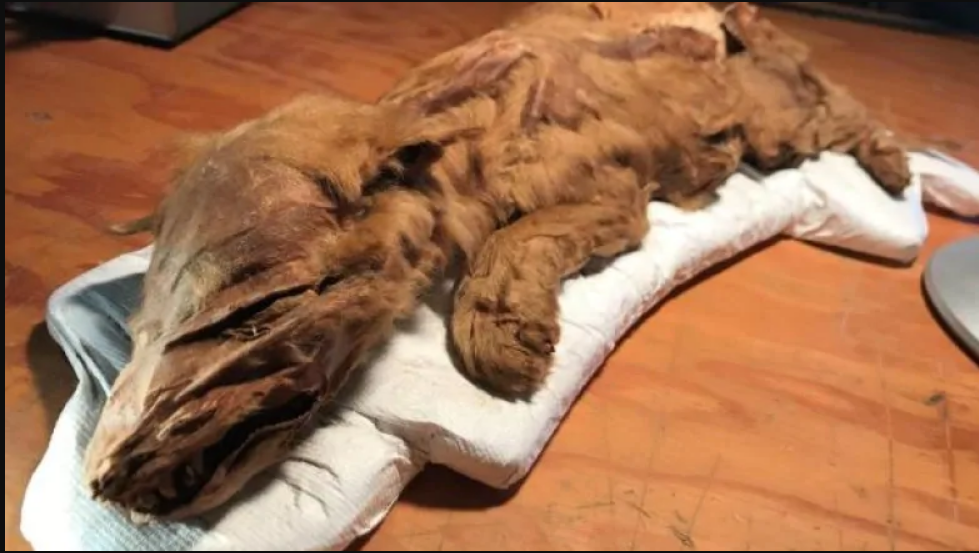
The discovery also offered a glimpse into the ancient environment of the Yukon during the Pleistocene, when Ice Age animals inhabited landscapes very different from those of today. Studying Zhùr could help scientists better understand the lives of ancient wolves and how their populations changed over time.

But the discovery carries significance beyond science. The Tr’ondëk Hwëch’in people have a special connection to Zhùr, and the community agreed to have the pup displayed at the Yukon Beringia Interpretive Centre in Whitehorse. Careful conservation helps protect her fragile remains for future generations and makes it possible for others to learn from this extraordinary find.
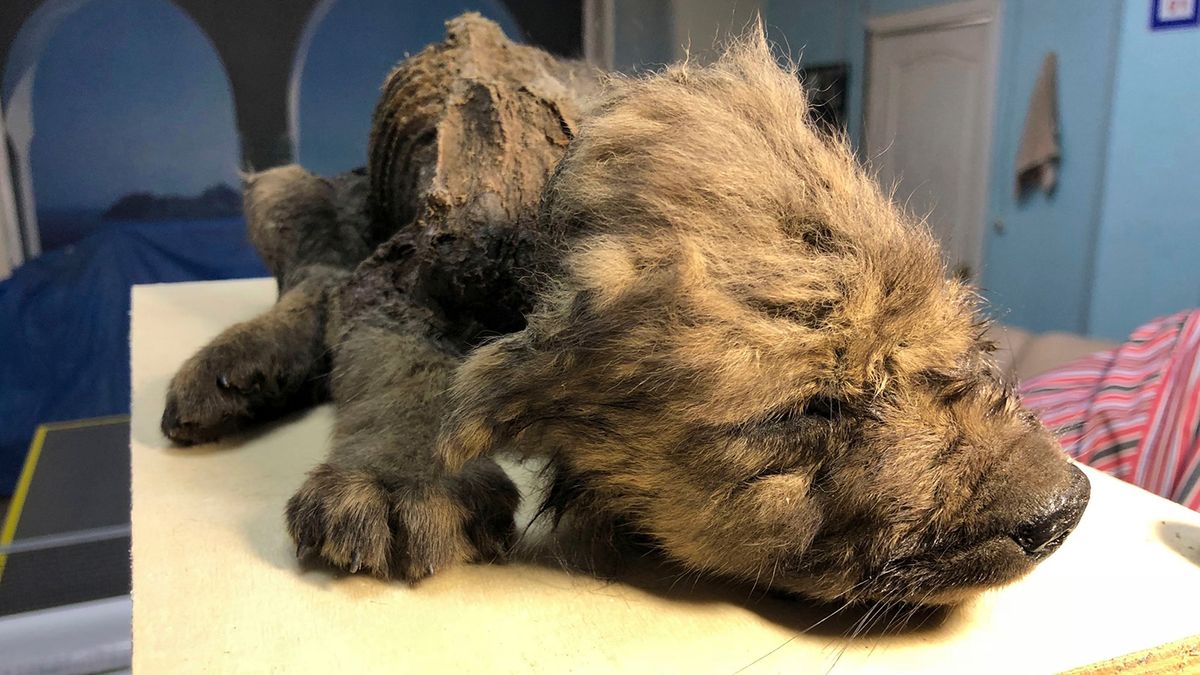
Researchers believe that melting permafrost may reveal more ancient animal remains in the years ahead. While such discoveries could provide valuable evidence about prehistoric life, they also highlight the rapid changes affecting frozen landscapes as the planet warms.
After remaining hidden for around 57,000 years, Zhùr has become a remarkable window into the Ice Age—and a powerful reminder of what the frozen ground can preserve, as well as what its disappearance may reveal.