For millions of years, tyrannosaurs dominated their ancient world. Now, a remarkable 75-million-year-old fossil is revealing a surprising clue about how these fearsome predators developed their hunting skills.
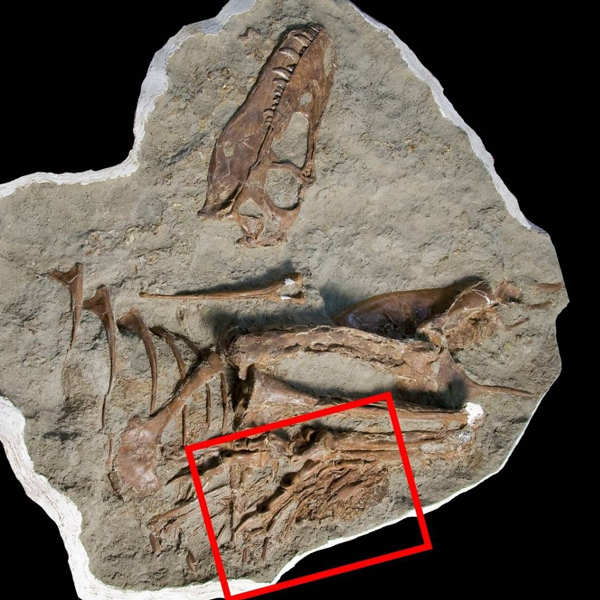
Discovered in Alberta, Canada, the fossil belonged to a juvenile Gorgosaurus libratus, a close relative of Tyrannosaurus rex. Measuring approximately 13 feet long, this young dinosaur lived during the Late Cretaceous period, when tyrannosaurs were among the most formidable carnivores on Earth.
But what makes this specimen extraordinary is not its size or fearsome reputation. It is what scientists found inside its stomach.
Researchers discovered exceptionally well-preserved remains of two small, bird-like dinosaurs within the young tyrannosaur’s fossilized body. The discovery offers rare evidence of what juvenile tyrannosaurs actually ate, providing a glimpse into their hunting behavior that scientists could not easily obtain from bones alone.

According to research published in the peer-reviewed journal Science Advances, this is the first time such well-preserved stomach contents have been identified inside the skeleton of a large tyrannosaur species.
The finding also supports the idea that young tyrannosaurs hunted differently from adults. While mature individuals were capable of taking down much larger herbivores, juveniles may have relied on smaller, quicker prey before growing into the powerful predators that ruled their ecosystems.
This difference suggests that tyrannosaurs could occupy different ecological roles at various stages of their lives, potentially reducing competition between younger and older members of the same species.
After 75 million years, this extraordinary fossil is offering scientists a rare snapshot of a predator’s last meal—and a fascinating new perspective on how tyrannosaurs rose to the top of the prehistoric food chain.