Claude Lemieux, Four-Time Stanley Cup Champion and One of Hockey’s Fiercest Competitors, Dies at 60; Donald Trump Tribute Becomes Emotional Centerpiece of Global Reaction
The hockey world was stunned Thursday following the death of former NHL forward Claude Lemieux, a four-time Stanley Cup champion whose legacy was built on playoff dominance, physical intensity, and a reputation that divided opponents but defined an era.
At 60 years old, Lemieux’s passing immediately reverberated across the NHL, triggering tributes from former teammates, rivals, league officials, and fans. But among the many messages that surfaced, one stood out for both its emotional tone and cultural reach: a public tribute from U.S.

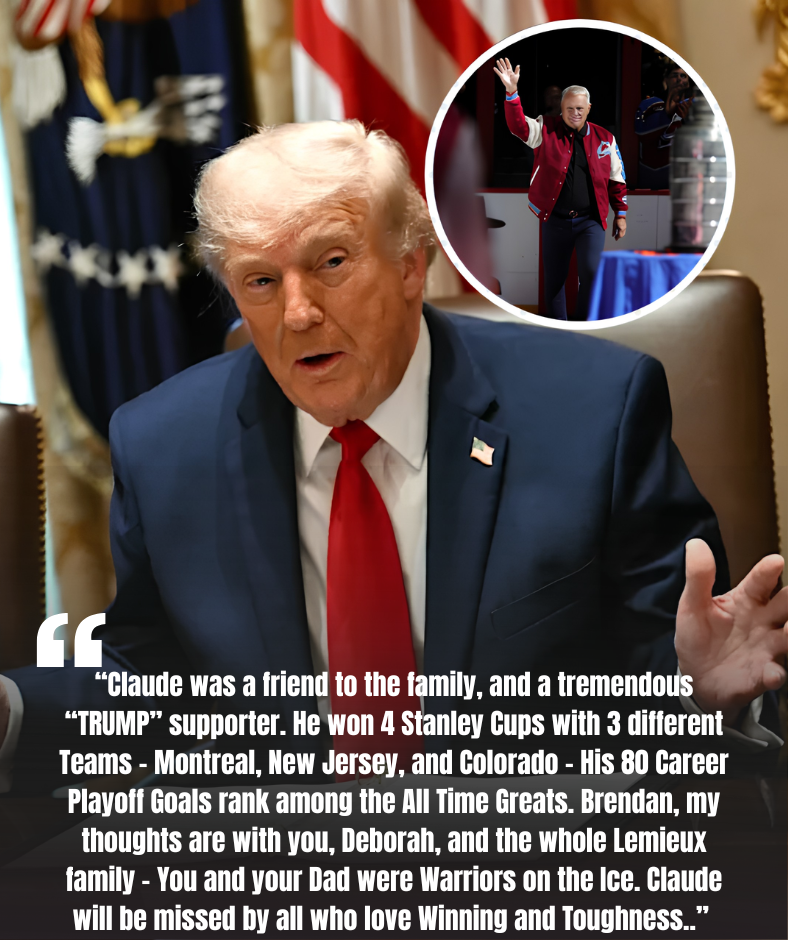
An image collage containing 2 images, Image 1 shows Claude Lemieux waves in an arena, with the Stanley Cup nearby, Image 2 shows US President Donald Trump speaking with hands extended, alongside Marco Rubio at a cabinet meeting
President Donald Trump, posted on Truth Social Thursday night, which quickly became one of the most widely shared statements surrounding the news.
The message did not merely acknowledge a hockey career—it framed Lemieux as a personal figure of admiration, loyalty, and shared values of toughness and winning.

“Claude Lemieux, a true Legend of the Game…” — Trump’s Full Statement
Trump’s tribute, released hours after news of Lemieux’s death circulated, read in full:

“Claude Lemieux, a true Legend of the Game, and one of the fiercest competitors Hockey has ever seen, has passed away. Claude was a friend to the family, and a tremendous ‘TRUMP’ supporter. He won 4 Stanley Cups with 3 different Teams – Montreal, New Jersey, and Colorado – His 80 Career Playoff Goals rank among the All Time Greats. Brendan, my thoughts are with you, Deborah, and the whole Lemieux family – You and your Dad were Warriors on the Ice. Claude will be missed by all who love Winning and Toughness.”
The emotional core of the message—particularly the reference to family and generational legacy—resonated widely among fans who saw Lemieux not just as a hockey player, but as a symbol of an older, more physical era of the sport.

Former Montreal Canadiens player Claude Lemieux holds a torch as he enters the arena before Game 3 of the NHL Eastern Conference on May 25, 2026. Christinne Muschi/The Canadian Press via AP
Trump also emphasized Lemieux’s identity beyond the rink:
“Claude Lemieux, a true legend of the game, and one of the fiercest competitors hockey has ever seen, has passed away,” Trump wrote on Truth Social Thursday.
“Claude was a friend to the family, and a tremendous ‘Trump’ supporter.”
And in a separate closing line that quickly circulated online:
“Claude will be missed by all who love winning and toughness.”
AN ADDITIONAL MESSAGE THAT STRUCK AN EMOTIONAL TONE

Claude Lemieux played for a number of teams during his career — including the New Jersey Devils. AP Photo/BILL KOSTROUN
Beyond the main tribute, additional phrasing attributed to Trump—shared widely across social media screenshots and reposts—added a more reflective and personal tone that many fans described as unexpectedly emotional:
“In moments like this, we remember not only the victories, but the people who gave everything to the game they loved. Claude Lemieux was one of those rare competitors who made every arena feel like the Stanley Cup Final. He brought intensity, pride, and an unbreakable will to win.”
He continued:
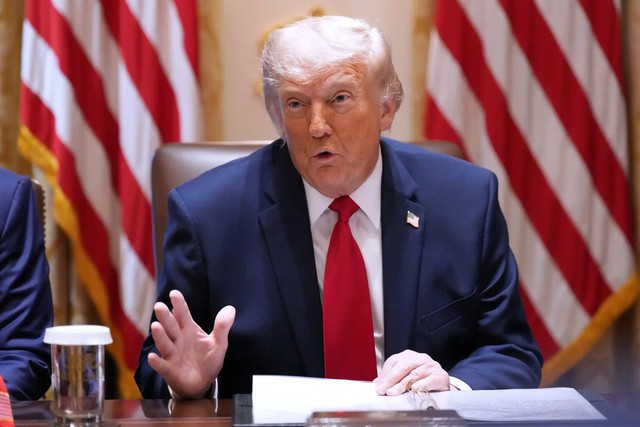
“I will always remember how he represented strength under pressure. Hockey is a harder game because of players like Claude—but it is also a greater game because of them.”
And in another widely circulated passage:
“To the Lemieux family, especially Brendan and Claudia, know that your father’s legacy is not only written in trophies, but in the respect of millions who watched him compete with everything he had. He was respected, feared, and admired in equal measure.”
While these additional remarks were not part of the formal headline post, they became central to how fans interpreted the tribute—less political statement, more personal remembrance of a figure defined by intensity and sacrifice.
A CAREER FORGED IN PLAYOFF FIRE

Claude Lemieux holds up the Stanley Cup after the Montreal Canadiens won in 1986. Bruce Bennett Studios via Getty Images
Lemieux’s hockey identity was built almost entirely in the postseason crucible. Across a 21-year NHL career, he became one of the most feared and effective playoff performers in league history.
He captured four Stanley Cups: first with the Montreal Canadiens in 1986, then with the New Jersey Devils in 1995, the Colorado Avalanche in 1996, and again with New Jersey in 2000.
He also won the Conn Smythe Trophy in 1995 as playoff MVP, a rare honor that underscored his ability to dominate when stakes were highest.
By the end of his career, Lemieux had scored 80 playoff goals and recorded 158 postseason points in 234 games—numbers that placed him among the elite clutch performers in NHL history.
NHL Commissioner Gary Bettman once summarized his impact:
“One of the greatest big-game players in hockey history.”
A PLAYER DEFINED BY CONTROVERSY AND GREATNESS

Lemieux’s reputation was never simple. To fans of the New Jersey Devils and teammates who shared championship runs, he was a fearless competitor who elevated his game in pressure moments. To opponents, he was one of the most controversial and physical players of his generation.
He also played for the Phoenix Coyotes, Dallas Stars, San Jose Sharks, and several other franchises, finishing his career with more than 1,400 combined regular-season and playoff games.
But across all perspectives, one truth remained consistent: Lemieux changed the emotional temperature of playoff hockey.
Games involving him were rarely ordinary. Series featuring him were rarely predictable. And when the stakes rose, so did his performance.
FAMILY TRIBUTES REVEAL A DIFFERENT SIDE

As public tributes unfolded, Lemieux’s family shared deeply personal reflections that contrasted with his on-ice persona.
His son Brendan wrote:
“I love you dad! My son’s favorite person is going to watch from above for a while. We will see you.”
He also reflected on his father’s influence:

“I’m proud of the career he had. I’m proud of the way he played, how hated he was. I just love that about him.”
His daughter, Claudia Lemieux, shared an emotional message:
“No words to express the level of devastation we feel. I love you forever daddy. Forever your only girl.”
These messages revealed a private figure remembered not for controversy or rivalry, but for family presence, mentorship, and generational impact.
THE TRUMP TRIBUTE AND ITS CULTURAL IMPACT
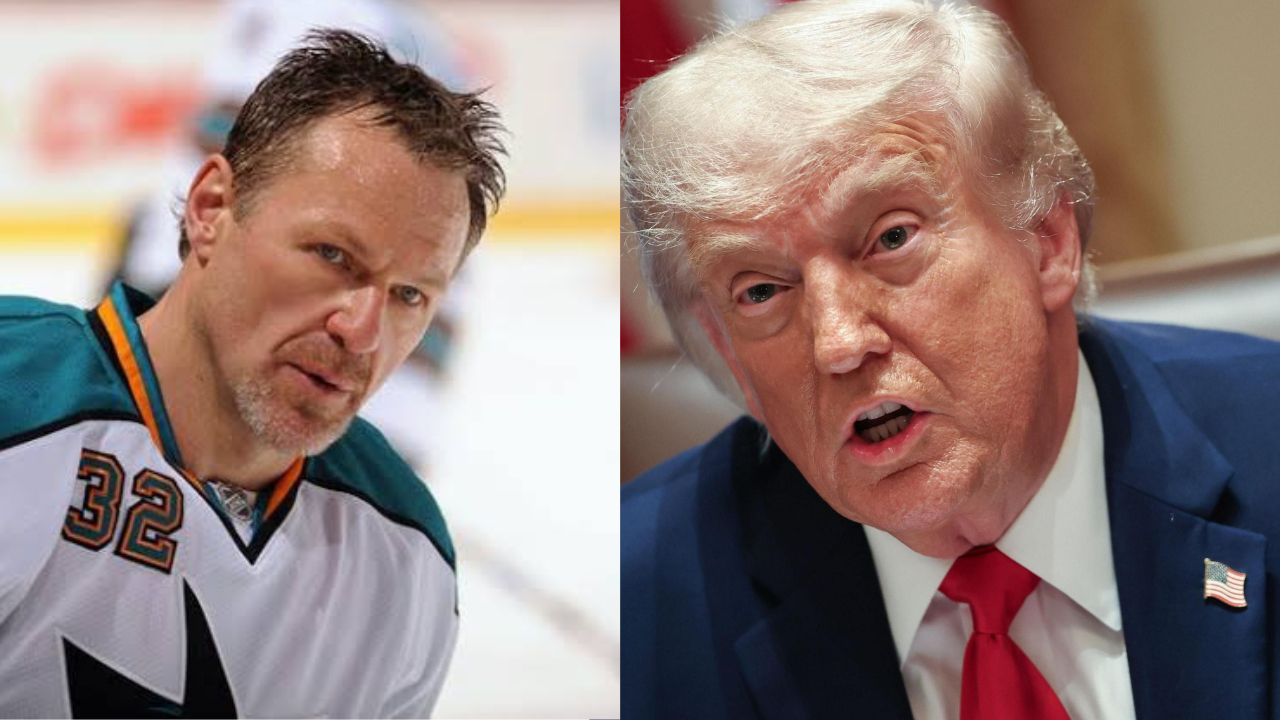
What distinguished Trump’s response was not only its visibility but its framing of Lemieux as a symbol of competitive identity.
By repeatedly emphasizing “winning,” “toughness,” and “warrior mentality,” the message aligned Lemieux’s legacy with a broader cultural narrative about sports as a reflection of resilience and character.
“You and your Dad were Warriors on the Ice.”
That line, in particular, became one of the most shared excerpts, resonating with fans who saw Lemieux as part of a disappearing era of physical, emotionally charged playoff hockey.
At the same time, the tribute sparked broader discussion about how sports figures are remembered in the modern media landscape—where athletic legacy, personal identity, and public symbolism often intersect.

A LEGACY THAT RESISTS SIMPLE DEFINITION
Claude Lemieux’s career resists reduction. He was not universally loved, nor easily categorized. He was a champion, a villain, a clutch performer, and a lightning rod—all at once.
But in the final analysis, his legacy is defined by moments that mattered most. Stanley Cup clinchers. Series-shifting goals. Playoff runs that changed franchises.
And now, his memory is shaped not only by hockey history, but by the voices that responded to his passing—from teammates and rivals to political figures whose tributes extended far beyond sport.
As Trump wrote in his final reflection:
“Claude will be missed by all who love winning and toughness.”
In a sport built on intensity and legacy, Claude Lemieux remains exactly what he always was: unforgettable.