Deborah Lemieux Breaks Silence After Tragic Passing of Claude Lemieux at 60: “He Was Still Smiling for the World, Even When Something Was Changing at Home”
The hockey world continues to mourn the heartbreaking loss of former NHL star Claude Lemieux, whose death at the age of 60 has left former teammates, fans, and loved ones struggling to process the sudden tragedy surrounding one of the fiercest competitors of his generation.

But while tributes across the NHL have focused on Lemieux’s legendary playoff performances, Stanley Cup victories, and unforgettable intensity on the ice, a far more personal and emotional picture has begun to emerge from inside his family’s home.

In a deeply painful statement released Thursday evening, Claude Lemieux’s wife, Deborah Lemieux, spoke publicly for the first time since her husband’s passing — describing a man who, in his final weeks, appeared to quietly drift away emotionally while still trying to smile for the people around him.
“Claude was the love of my life, a devoted husband, and an incredible father,” Deborah said. “Right now, we are completely heartbroken. None of this feels real to us yet.”

Her words immediately resonated across social media and throughout the hockey community, particularly as she described subtle but troubling changes in Lemieux’s behavior during the final weeks leading up to his death.
According to Deborah, the former NHL forward — long known for his fiery personality, emotional intensity, and larger-than-life presence — had gradually become quieter at home, often retreating into silence in ways that deeply worried those closest to him.
“At home, there were moments where he was just… quieter,” she said softly. “Not angry. Not distant in a cold way. Just quieter than usual. There were nights he would sit there for long periods without saying much at all.”
She explained that while the family tried to continue their normal routines together, something about Claude’s demeanor had changed in ways that were difficult to fully understand at the time.

“He still sat with us. He still tried to be present. But sometimes it felt like his mind was somewhere else,” Deborah shared. “You could feel something changing, even if you couldn’t explain it.”
What has made the tragedy even more painful for the family, she said, was the striking difference between the Claude they saw privately at home and the one the public continued to see outside.
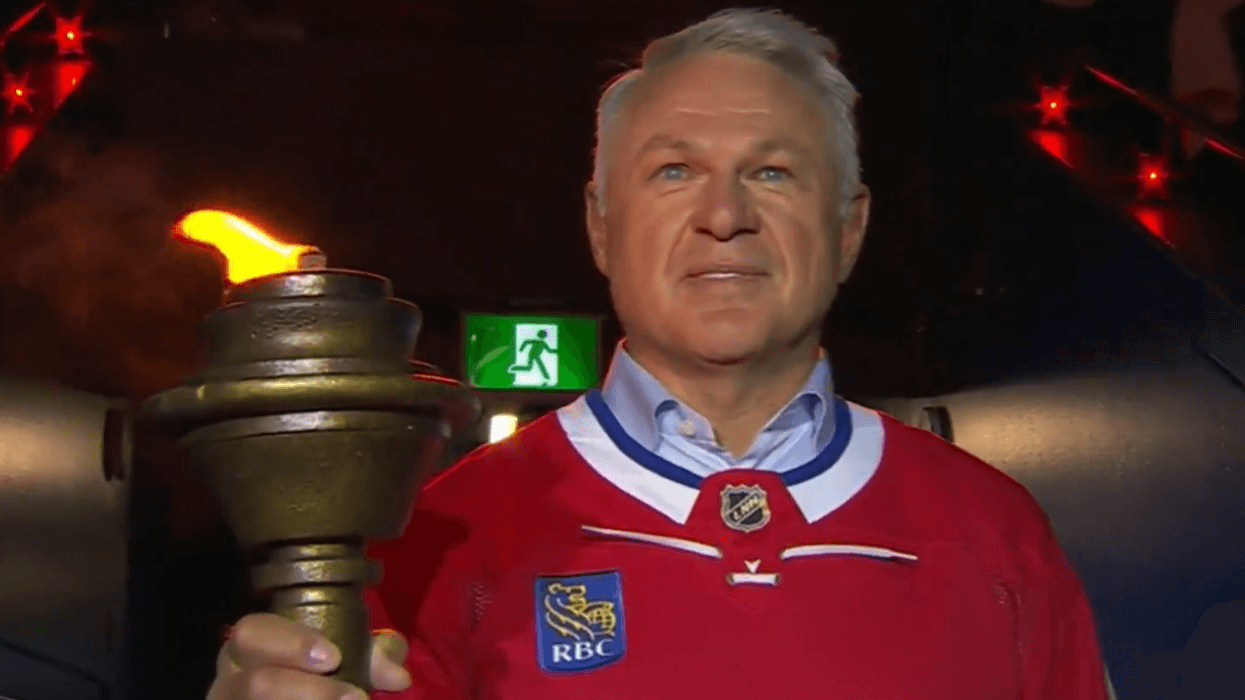
Despite becoming increasingly quiet in personal moments, Lemieux reportedly remained warm, smiling, and gracious whenever he interacted with fans or appeared in public settings.
“When people saw him, he still smiled,” Deborah said. “He still greeted people kindly. Fans would come up to him and he’d laugh, shake hands, take pictures… and for a moment it almost felt normal again.”
“To the outside world, he looked like the same Claude everyone always knew,” she continued. “That’s what makes this so hard for us now. We keep replaying everything in our minds wondering if there was something we missed.”

Deborah did not speculate publicly about the circumstances surrounding his death and emphasized that the family is choosing to focus on remembering Claude’s life, rather than dwelling on unanswered questions.
“We don’t want people to remember only the sadness of this moment,” she said. “We want people to remember the man he was for decades — passionate, loving, competitive, loyal, and someone who cared deeply about the people around him.”

The emotional statement has triggered an outpouring of sympathy from across the hockey world, where Lemieux’s legacy remains one of the most unique and unforgettable in modern NHL history.
Over the course of a remarkable 21-year NHL career, Claude Lemieux became one of hockey’s ultimate postseason warriors. He captured four Stanley Cups with Montreal, New Jersey, and Colorado, while building a reputation as one of the fiercest playoff competitors the league had ever seen.
At his peak, Lemieux was the type of player every team hated to face but desperately wanted on its own side.
His intensity bordered on obsession. He embraced physical confrontations, hostile crowds, playoff pressure, and emotional chaos with a level of comfort few players could match. While opponents often viewed him as controversial, teammates respected the relentless competitiveness that made him so effective when games mattered most.

“He lived for big moments,” one former teammate said this week. “Some players get nervous under pressure. Claude became more alive.”
Nowhere was that more evident than during his years with the Colorado Avalanche.
When the franchise relocated from Quebec to Denver in 1995, Lemieux became one of the emotional pillars of a team preparing to build a championship identity.

Alongside stars like Joe Sakic and Peter Forsberg, he helped transform the Avalanche into one of hockey’s dominant teams during the late 1990s.
His performances during Colorado’s 1996 Stanley Cup run remain legendary among Avalanche fans. While more skilled stars often grabbed headlines, Lemieux consistently delivered critical goals, physical leadership, and emotional fire during the most difficult playoff moments.

Many fans still remember him not only for the goals he scored, but for the emotion he carried every single night onto the ice.
That same intensity, according to those closest to him, also existed deeply within him away from hockey.
“He felt everything strongly,” a longtime friend of the family shared privately. “The highs, the pressure, the emotions — Claude carried all of it deeply.”
As news of his death spread across North America, fans gathered outside Ball Arena in Denver, placing Avalanche jerseys, flowers, hockey sticks, and handwritten letters in tribute to one of the defining players of the franchise’s championship era.

Some remembered his toughness. Others remembered the passion he brought to every playoff shift. Many simply struggled to reconcile the larger-than-life competitor they watched for decades with the heartbreaking reality of his passing.
For Deborah Lemieux and their children, however, the grief is far more personal than public memory or hockey history.
“He loved his family more than anything,” Deborah said near the end of her statement. “That’s the Claude we will hold onto. Not the headlines. Not the speculation. Just the man we loved.”
Claude Lemieux is survived by his wife Deborah and four children.
And while hockey fans will forever remember him as one of the fiercest playoff competitors of his era, those closest to him are now mourning something much deeper — the quiet loss of a husband, father, and man they believed would always keep fighting.