A woolly mammoth that died nearly 39,000 years ago has been preserved so remarkably well that scientists were able to recover blood and muscle samples from her ancient body.
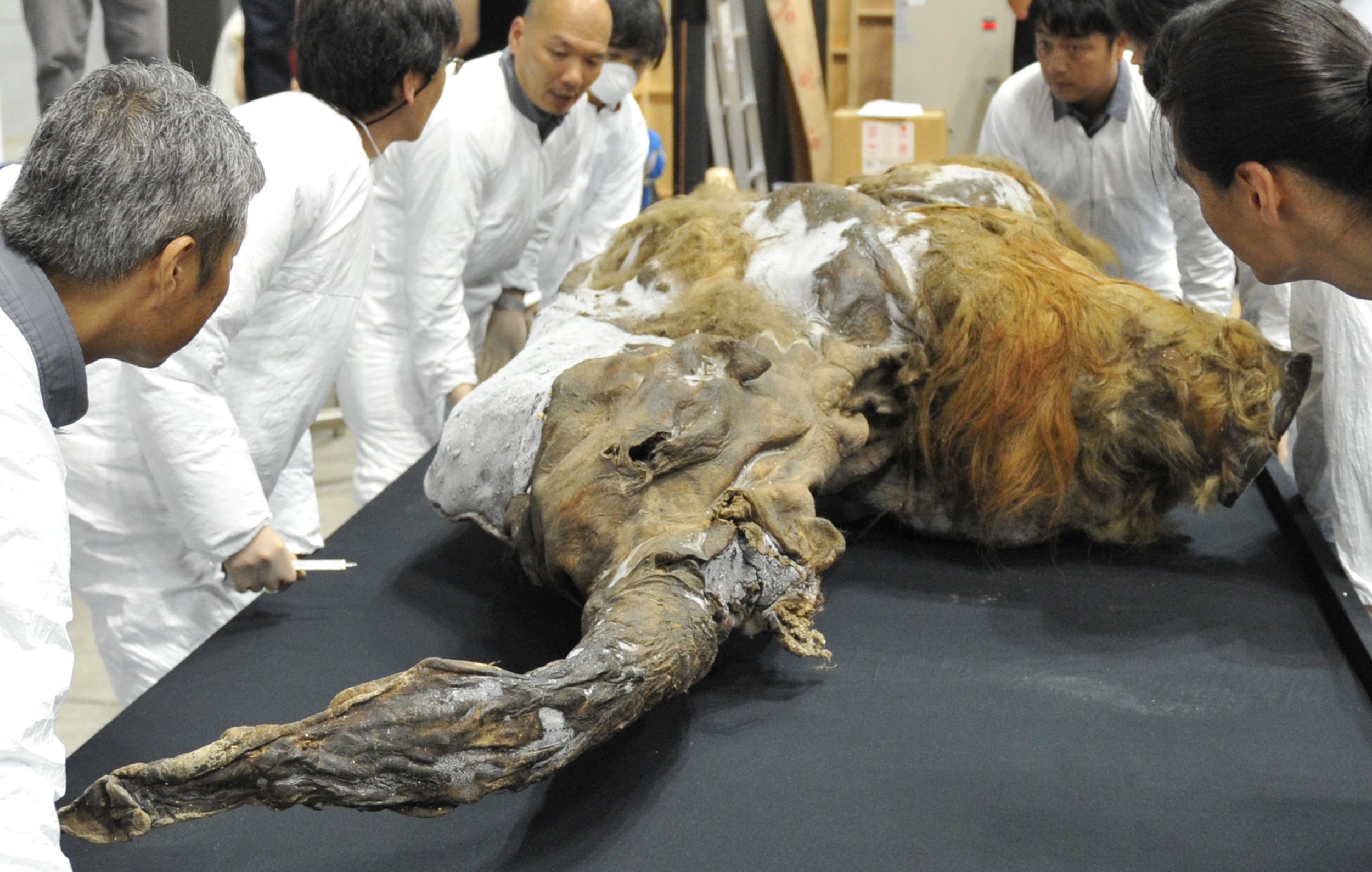
The female mammoth, named Yuka, was discovered frozen in ice on an island near Siberia after becoming trapped in the frozen ground. Her body was found partly encased in permafrost, while other sections lay preserved in soil.
The extraordinary condition of the remains has made Yuka one of the best-preserved woolly mammoths ever discovered.
Scientists estimated that she was only around two and a half years old when she died, based on examinations of her tusk and teeth.
But the discovery became even more remarkable when researchers extracted a blood sample and obtained muscle tissue from the ancient animal.
Those samples immediately raised a tantalizing possibility: could preserved biological material from an Ice Age mammoth eventually help scientists understand whether extinct animals might one day be brought back?
Researchers have discussed the potential for cloning or other forms of genetic research using preserved mammoth material, although recovering DNA or cells capable of producing a living mammoth is an entirely different challenge.
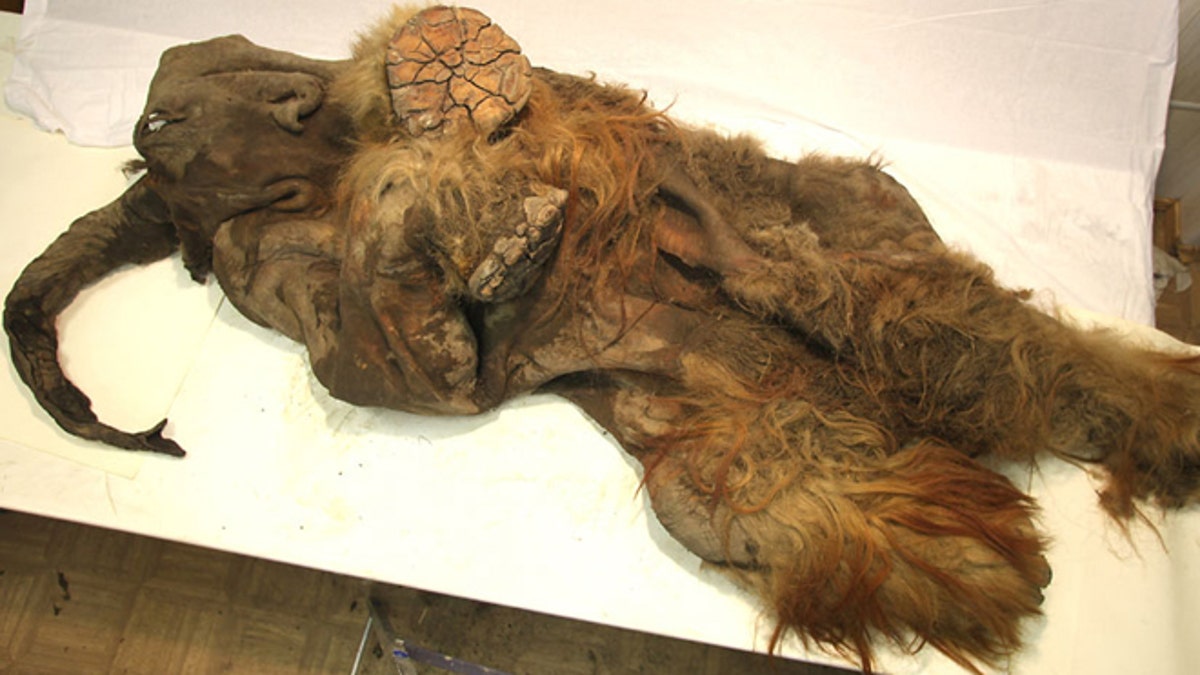
Yuka’s remains were ultimately prepared for public display in Japan, allowing visitors to see an Ice Age animal that had remained hidden beneath Siberia’s frozen landscape for tens of thousands of years.
She is more than a spectacular fossil.
Her remarkably preserved body offers scientists a rare opportunity to investigate what a young woolly mammoth was like — and perhaps uncover secrets that have remained frozen since the last Ice Age.