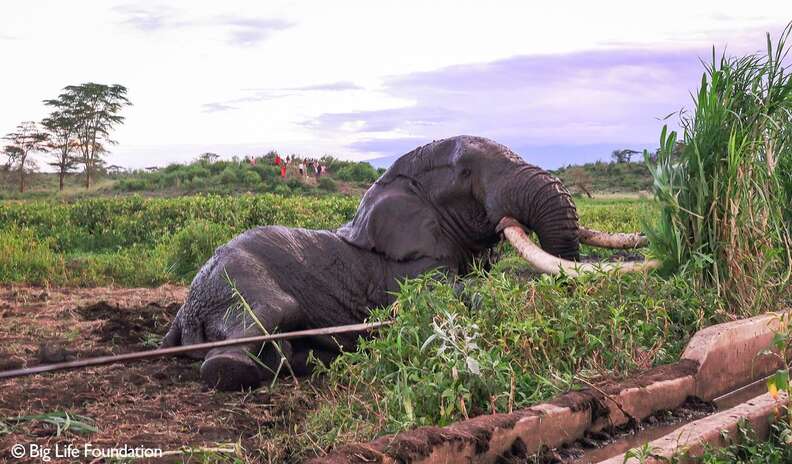
Last week, the 49-year-old wild elephant, who’s famous for his huge 100-pound tusks, moseyed onto a farm in Kimana, Kenya, to snack on some crops. But when Tim tried to move to another farm, he slipped into a furrow in a swampy part of the land.
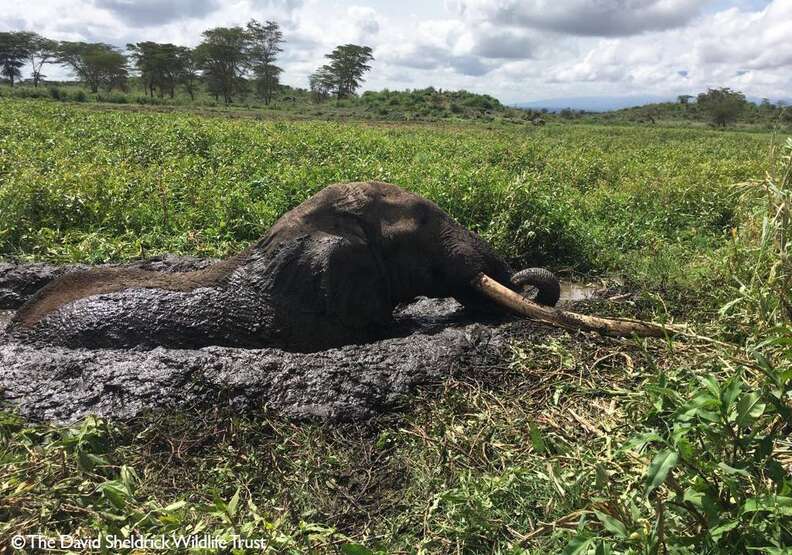
No one knows for sure how long Tim was stuck, but Craig Millar, head of security at Big Life Foundation, believes he spent 12 to 14 hours in the furrow. A farmer eventually noticed Tim, and instead of getting angry that Tim had eaten his crops, he phoned Big Life Foundation and urged them to help the helpless elephant.
Big Life Foundation joined forces with the mobile veterinary unit run by the David Sheldrick Wildlife Trust and the Kenya Wildlife Service — but when the team of rescuers arrived, they realized that freeing Tim was not going to be easy.
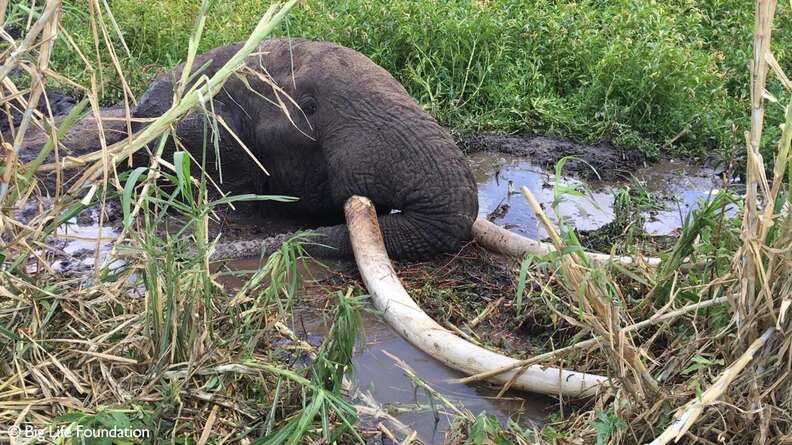
“In other rescues, the elephant has always been smaller, the mud nowhere near as deep and there has always been firm ground much closer to position vehicles to pull the elephant out,” Millar told The Dodo.
Tim was also visibly agitated, thrashing his head and trunk, making it dangerous for the rescuers to get too close.
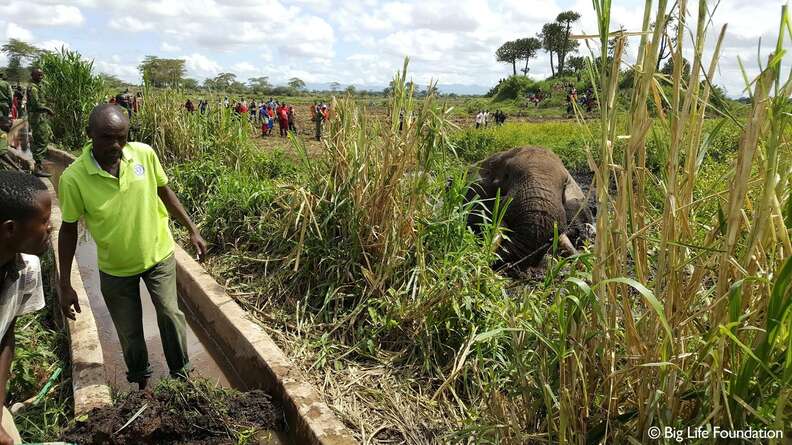
“He would have been stressed at being stuck and desperate to free himself, but in addition to this, he found himself surrounded by people,” Rob Brandford, executive director of DSWT, told The Dodo. “Tim has had a bumpy past with people, having been speared on two separate occasions by farmers after he was found crop raiding on their land. In both cases DSWT/KWS units have treated Tim. So it would have been stressful for him to have so many people around him when he was feeling trapped and vulnerable.”
On top of everything else, the rescuers didn’t have long enough straps to pull Tim out.

“Given Tim’s location deep in the swamp and it being almost 100 meters to firm ground, we needed longer straps,” Brandford said. “So while the drama was unfolding in Kimana, Angela Sheldrick [CEO of DSWT] organized for a stock of straps from our Nairobi store to be taken to East Africa Canvas company, one of our partners. They dropped every other job they were working on that morning to stitch together our straps as fast as possible, to ensure we had the length needed.”
“Once this was complete, Angela arranged for a plane, chartered by DSWT, to fly the straps to the scene,” Brandford added. “This was all done in a matter of hours, as we knew time was short for Tim.”
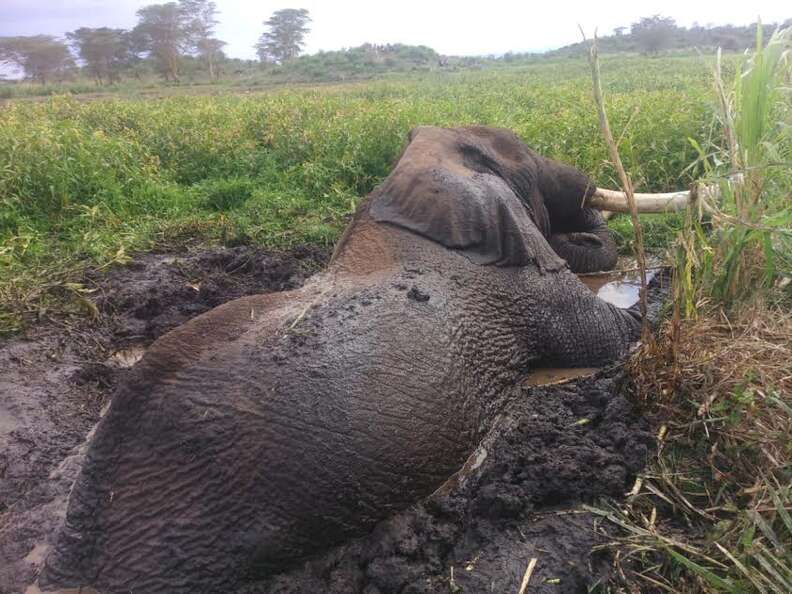
In the end, it all worked out. The rescuers looped the long straps around Tim’s body and used a tractor and a couple Land Cruisers to haul him out to safety.
“They managed it though, persistence, patience and bravery,” Brandford said.
Since Tim’s rescue, the Big Life team has been keeping a close eye on him — but he seems to be doing just fine.
Big Life Foundation
“The following day … he was found to be browsing, as if nothing had happened,” Brandford said. “Big Life Rangers who patrol the area where Tim is currently have checked in on him daily since he was rescued, and he is showing no ill signs from the incident and is feeding well.”
To Millar, the most remarkable part of this rescue is how the community stepped up to help Tim.

DSWT
“The community … amazingly displayed no aggression toward him when he was in a vulnerable position, despite the fact that he had literally raided crops that night,” Millar said. “This human behavior could be attributed to a number of things, but Big Life’s work (and that of our partners) with the communities to generate economic benefits to them for coexisting with wildlife, including elephants, will certainly have played a role in this positive outcome.”
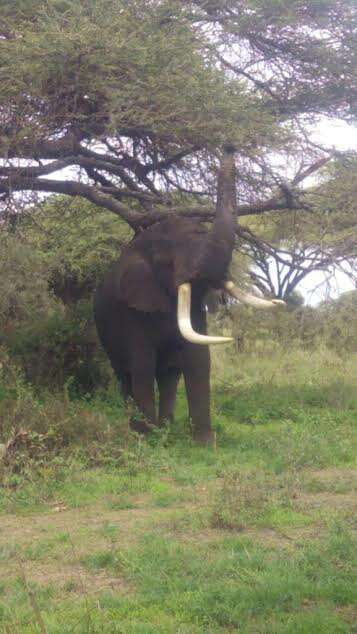
Everyone is also pleased to have saved a “big tusker” like Tim, who’s well-loved by tourists and locals in the area.
DSWT
“To be classified as a tusker, an elephant needs to have tusks that each weigh in excess of 100 pounds, and more often than not, this means the tusks will be longer than 1.5 meters [5 feet],” Brandford said. “Tim’s tusks are longer than that length and will be in excess of 100 pounds each.”