Ancient creatures resembling stout-necked Loch Ness Monsters apparently developed arthritis in their monster jaws, revealing that even such lethal killers could suffer from and eventually succumb to diseases of old age, researchers find.
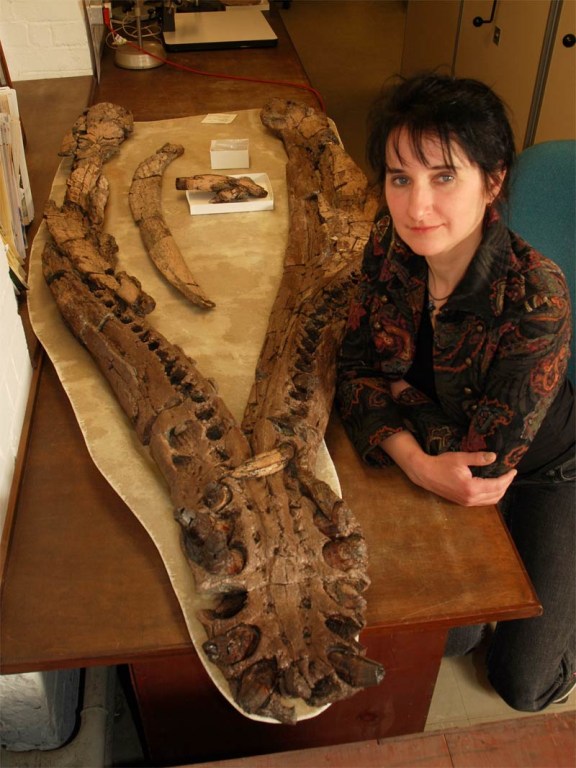
“This pliosaur, like many of its relatives, was truly huge,” researcher Michael Benton, a vertebrate paleontologist at the University of Bristol in England, told LiveScience. “To stand beside its skull and realize that it is 3 meters long, and massive and heavy as it is, that it once functioned with muscles and blood vessels and nerves, is amazing. You can lie down inside its mouth.”
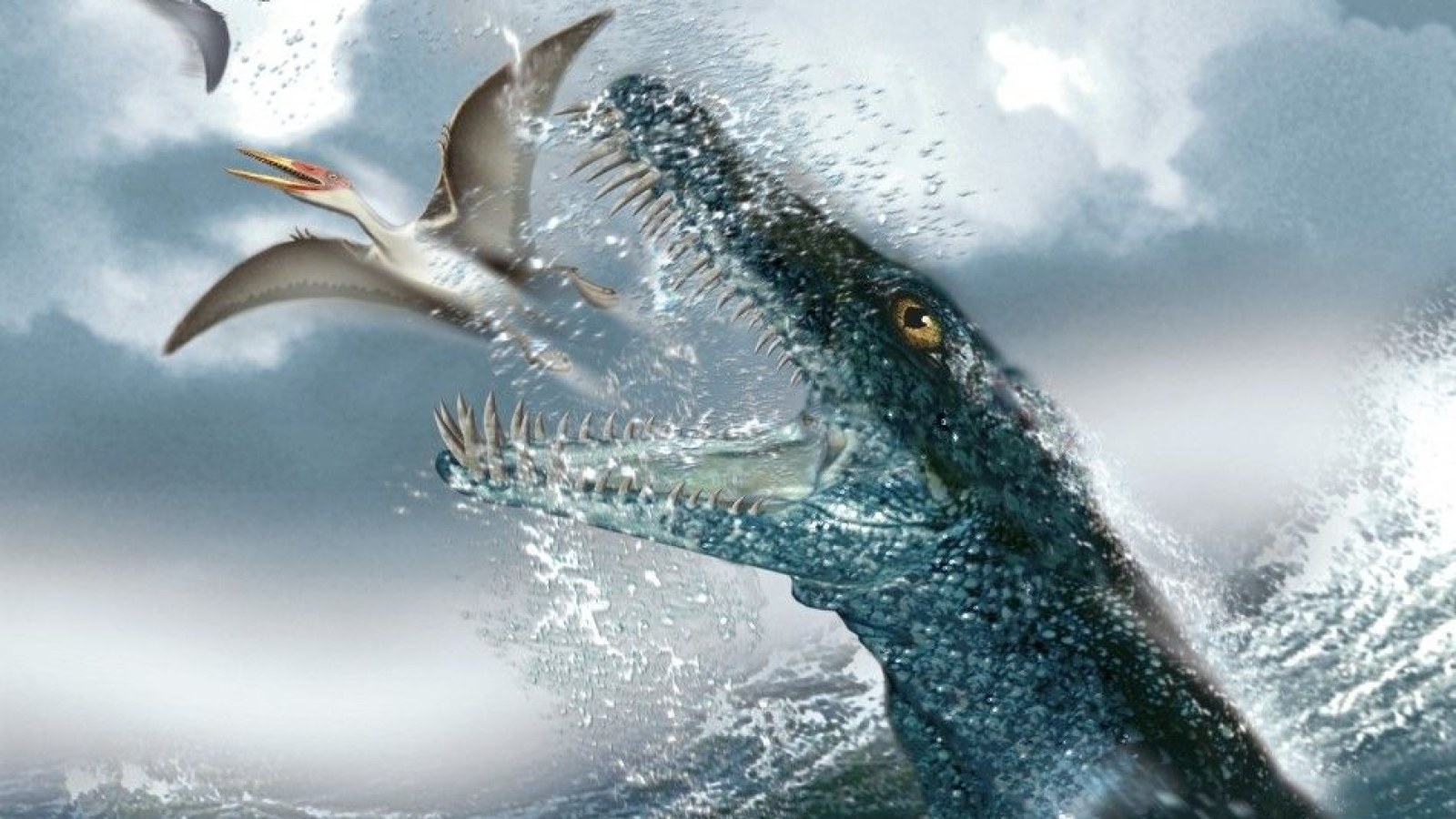
Normally, with huge jaws and teeth about 8 inches (20 centimeters) long, this pliosaur could have ripped most other animals apart. However, paleontologists found this specimen was apparently afflicted with an arthritis-like disease.
Crooked jaws
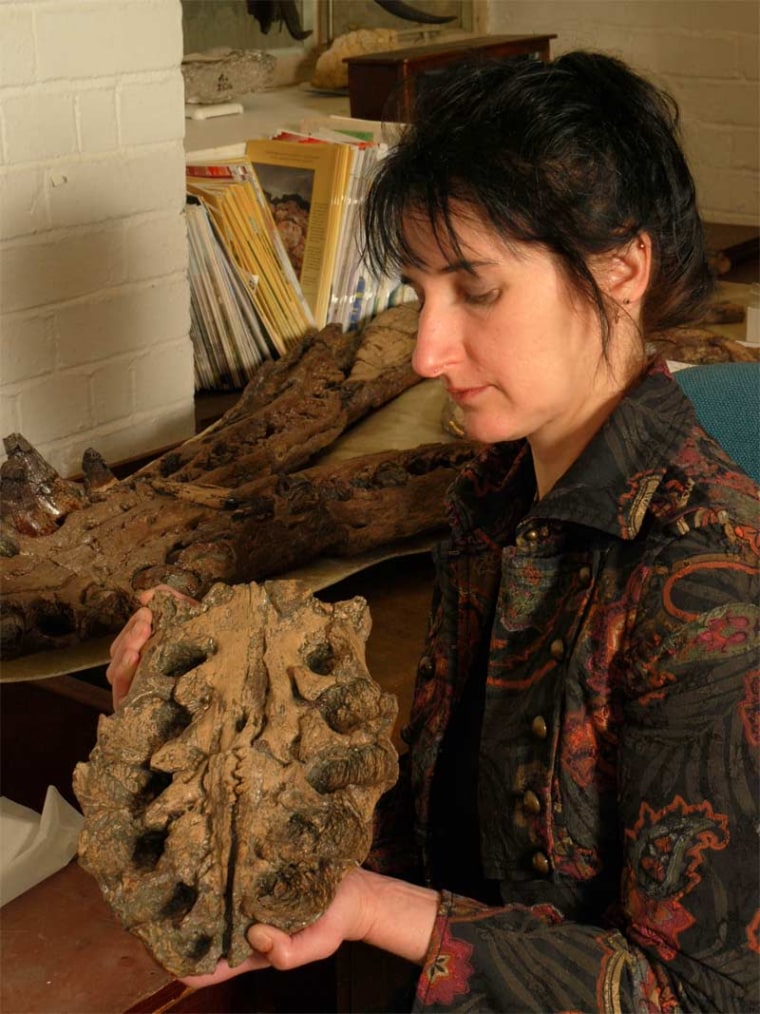
The degenerative condition had eroded the pliosaur’s left jaw joint. This would have knocked its lower jaw askew.
“In the same way that aging humans develop arthritic hips, this old lady developed an arthritic jaw and survived with her disability for some time,” Sassoon said. “But an unhealed fracture on the jaw indicates that at some time the jaw weakened and eventually broke.
“With a broken jaw, the pliosaur would not have been able to feed, and that final accident probably led to her demise.”
Marks on the lower jawbone from the pliosaur’s upper teeth suggest the predator lived with a crooked jaw for many years, long enough to damage its own bones.
“You can see these kinds of deformities in living animals, such as crocodiles or sperm whales, and these animals can survive for years as long as they are still able to feed. But it must be painful,” Benton said. “Remember that the fictional whale Moby-Dick, from Herman Melville’s novel, was supposed to have had a crooked jaw.” [Album: World’s Biggest Beasts]

Despite its condition, the animal was evidently still able to hunt and avoid being eaten by other pliosaurs, which were the top predators in their environment, the researchers noted.
“To see the jaws distorted out of place substantially enough that the front tips of the jaws overlapped, and the lower teeth made definite holes in the upper jaw, 5 centimeters (2 inches) off to the side, and that it lived with this agonizing pain for so long, evidently still managing to feed, is quite impressive,” Benton wrote in an email. “This was an old, weather-beaten animal when it died.”
Sassoon, Benton and Leslie Noè detailed their findings online May 15 in the journal Palaeontology.
Sassoon is currently investigating another pliosaur and hopes to better understand the creatures’ diversity and habits and how they mechanically adapted to their huge size.
“I plan to carry on poking around in museum collections, looking for interesting specimens, until I am too old to lift a paintbrush and wipe the dust off a fossil,” Sassoon said.