MANCHESTER, England — Just twenty minutes ago, the air inside a packed media room in Manchester went razor-sharp as reporters leaned forward, cameras locked onto the dais, and a single unfinished sentence raced across the internet like a flare shot into a midnight sky
For years, whenever Pep Guardiola sat behind a row of microphones in Manchester, the questions revolved around tactical geometries, false nines, title races, and Champions League nights that stretched nerves to breaking point. Not today. Today, the room was stripped of its usual sparring, replaced by an electric, suffocating stillness. Every shuffle of paper echoed off the walls. Every glance toward the side door carried the weight of a city—and a global footballing public—waiting to hear the latest truth about the 55-year-old Catalan’s health.
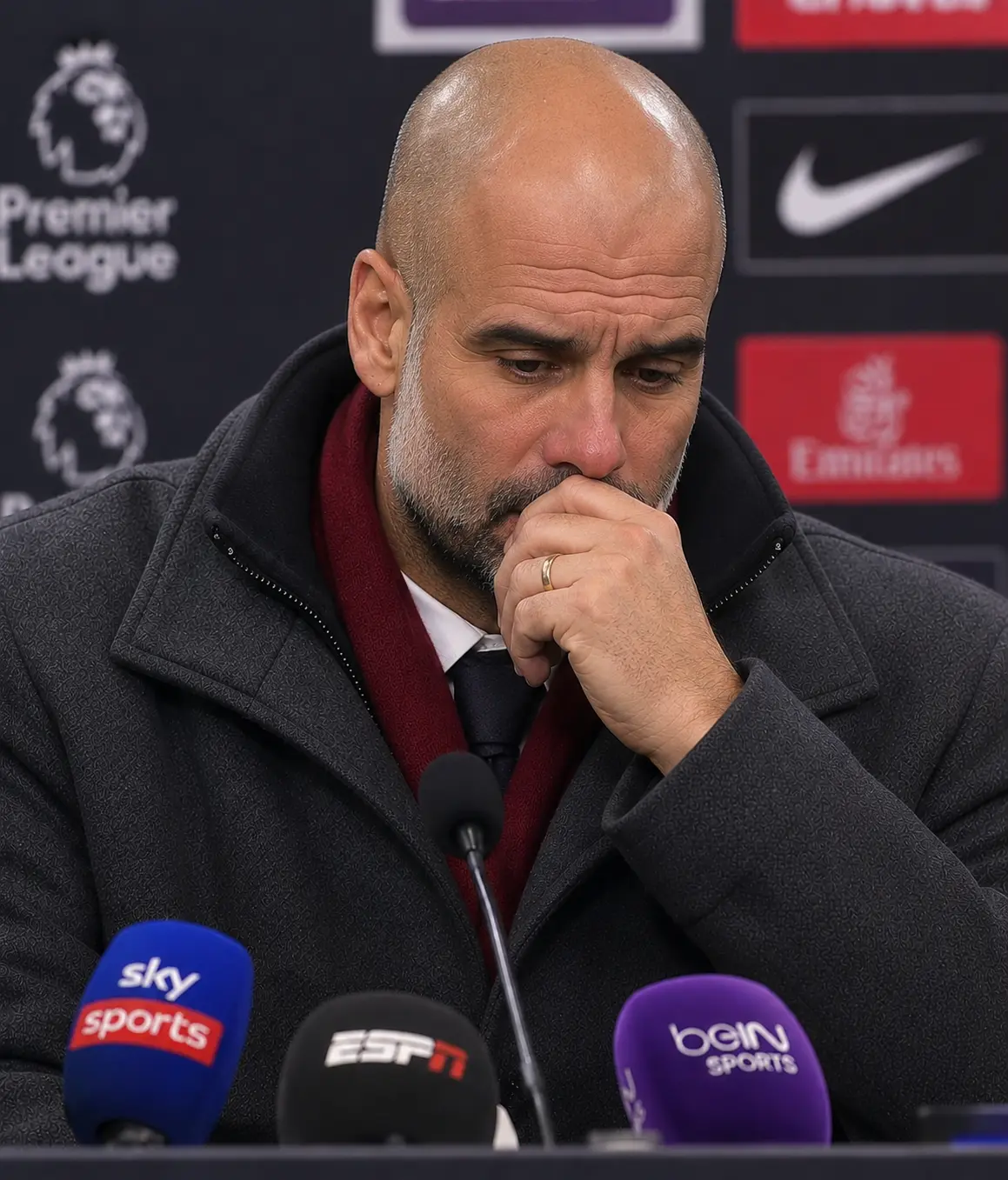
The Heavy Silence Before the Microphones Turned On
Across Manchester, rain beat a steady rhythm against glass windows while millions of phones buzzed in unison. A headline cut off with an ellipsis is a cruel instrument: it leaves the mind to fill the blank with every memory, every rumor, and every unspoken fear. For supporters who watched Guardiola pour every ounce of nervous energy into touchlines from Barcelona to Munich to the Etihad Stadium, the words “WAS CONFIRMED AS…” landed like a sudden drop in cabin pressure.
Inside the briefing room, seasoned correspondents who have covered thousands of press conferences exchanged tight, unreadable glances. Usually, a Manchester briefing begins with light banter—a dry joke about the British weather, a nod to a familiar face in the front row, a quick sip from a water bottle before dissecting midfield transitions. Instead, the podium stood framed by muted club backdrops and a cluster of broadcast microphones that looked less like sports equipment and more like witnesses to a reckoning.
Those closest to the modern game know the toll elite management extracts. Guardiola himself has never hidden the physical and mental price of obsession—the sleepless nights replaying ninety minutes frame by frame, the back surgeries and quiet battles with exhaustion, the sheer relentlessness that once drove him to step away from Barcelona in 2012 simply because his batteries were empty, and later shaped his decision to step back from day-to-day touchline management in Manchester. When someone lives on that razor’s edge for two decades, any urgent health update carries a gravity that transcends rivalries.
Every Syllable Measured Like Gold
When the briefing finally began, there were no sweeping gestures, no rapid-fire tactical diagrams sketched in the air with restless fingers. Instead, every phrase was delivered deliberately, paced with the caution of people who knew that a single stray adjective would detonate across social media within milliseconds.
Reporters scribbled furiously, fingers hovering over live-blog keyboards as the update unfolded piece by piece. Questions came softly at first, stripped of the usual theatrical edge. What was his current condition? How had the past few days unfolded behind closed doors? What had medical staff advised, and what did the immediate hours ahead look like?
In the back rows, television producers whispered urgently into headsets while photographers kept shutters clicking in rapid, rhythmic bursts—capturing the furrow of brows, the clasped hands, the brief pauses where breath was drawn before the next sentence arrived. Outside the room, fan forums and group chats from Moss Side to Madrid refreshed endlessly, hung up on that viral ellipsis, demanding to know what had just been confirmed in Manchester twenty minutes ago.
The Cost of Living at Full Voltage
To understand why a single unfinished sentence about Pep Guardiola can stop the football world cold, you have to understand how deeply he has etched himself into the rhythm of modern sport. For nearly twenty years, he hasn’t merely coached teams; he has altered how millions of people watch the game, turning ninety minutes into high-wire theater where perfection is demanded on every pass.
Yet behind the trophies, the touchline sprints, and the immaculate suits has always stood a human being carrying an extraordinary load. Supporters remember the gaunt look during grueling winter fixture lists, the visible physical strain when back pain forced him into surgery and recovery away from the bench, and the raw candor with which he often admitted how deeply stress embeds itself in the body. Football loves to treat its icons as indestructible statues—until a press conference room goes quiet and reminds everyone that beneath the legend is pulse, bone, and vulnerability.
That awareness hung over every corner of the room in Manchester. Even rival fans—who spent years cursing his teams’ relentless dominance—found themselves refreshing feeds with genuine concern, bound by the sudden realization that some stories are far bigger than points on a table.
Hanging on the Final Word
As the press conference entered its final stretch, the tension did not break; it coiled tighter. Notes were double-checked, quotes verified word for word, and broadcast links prepared for live cut-ins as presenters waited for the exact phrasing to clear the room.
No one walked toward the exits early. No one looked down at their phone unless it was to file the next line. Because in Manchester, twenty minutes after that urgent alert first flashed across screens around the world, every person in the room knew that the final words spoken at that podium would define the hours, days, and headlines to come—leaving millions holding their breath right up to the last syllable.
The video below shows Pep Guardiola speaking at a Manchester press conference, capturing his demeanor and presence in front of the media.