The Manchester United takeover saga has entered a decisive-looking week, but behind the headlines, almost nothing is certain. Qatar is dominating the conversation, Sir Jim Ratcliffe remains the only confirmed interested party, and the Glazer family continues to weigh a potential sale of England’s biggest football club.
Yet Friday may not deliver the clear outcome many supporters are expecting. The deadline is not legally binding, bids do not even have to be made public, and there is a genuine possibility that the Glazers could extend the process, keep the club, or explore a complicated deal involving members of their own family.
How Qatar entered the Manchester United takeover race
Around the turn of the year, the Raine Group—the advisers handling the sale of Manchester United—approached Qatari state investors to ask whether they would be interested in purchasing the club.
Sources familiar with those discussions said the initial response was lukewarm. Part of the reason was that Qatari figures viewed the approach as a possible “fishing expedition”, while there were also doubts over how serious the Glazer family really was about selling.
That uncertainty remains one of the biggest questions surrounding the process. The possibility that the Glazers may simply be testing the market has already made some potential bidders nervous. It could also mean that Friday is far less decisive than the attention surrounding it suggests.
The timing is striking. Manchester United’s Europa League meeting with Barcelona at Camp Nou is a historically significant fixture, but it is still a Europa League tie that would once have been a Champions League encounter. The club’s position in that competition, combined with its financial limitations, has contributed to the Glazers’ question over whether now is the right time to sell.
The £5bn price tag and Ratcliffe’s challenge
Only a handful of facts can be stated with confidence. As previously reported by The Independent, the Glazers are interested in a sale but want around £5bn for Manchester United.
Sir Jim Ratcliffe is currently the only bidder to have publicly confirmed his interest. However, his valuation is considerably below the figure wanted by the Glazer family. His proposal would carry the added factor of government support, since it would represent British money returning to the United Kingdom economy through one of the country’s most famous cultural institutions.
It remains unclear who else will join Ratcliffe in making an offer. The takeover process has been surrounded by what interested parties describe as “noise reminiscent of the Chelsea sale”, when publicity, speculation and competing claims frequently blurred the real state of negotiations.
There is an important difference this time: Friday is not a hard deadline. Offers do not have to be publicly disclosed, and the documents being requested are only brief expressions of interest. Each party must outline the percentage of the club it wants to purchase and state the value of its proposal by 10pm UK time.
If the Glazers are dissatisfied with the offers, which many observers consider likely, they could extend the process by another two weeks. Current expectations suggest there may be between two and five bids for 100 per cent of Manchester United, with most sources believing the final number will be closer to the lower end of that range.
Qatar is leading the headlines—but is it really bidding?

Qatar has become the central focus of the takeover story. Some figures are absolutely convinced that a state-backed bid will arrive, with several even naming the Qatar Investment Authority, or QIA. One source went as far as to state that Manchester United “will be sold to Qatar”.
Other people close to the situation are far more sceptical. At executive level, discussions surrounding Paris Saint-Germain’s Champions League match were said to include surprise at the scale of the coverage. One source within Qatar Sports Investments, a subsidiary of QIA, said that no bid for Manchester United would come from either fund.
A private investor could theoretically make an offer, but that description is complicated by Qatar’s political structure. A businessman involved in a project of this size would not be viewed as truly independent, and a takeover of Manchester United would still require approval at the highest level.
Analysts familiar with the region have also questioned whether Qatar would allow a new state-backed project to overlap with the ownership of Paris Saint-Germain. Some believe it would be implausible for Qatar to permit another major football investment to encroach on the PSG project.
Conversations involving figures within Qatar’s sporting structure have even included the belief that Ratcliffe could become Manchester United’s owner within two months, provided he receives substantial financial backing.
The Emir’s reported support and the PSG rivalry theory
One reason the Qatar speculation has gained so much momentum is the long-standing claim that the Emir is a Manchester United supporter. He studied in the United Kingdom during the 1990s and is said to have spoken about purchasing the club for many years.

Football officials who have worked with Qatar’s ruling family believe Paris Saint-Germain was primarily purchased at the wishes of the Emir’s brother, Jassim bin Hamad bin Khalifa. According to that view, a rivalry between the siblings may still exist, raising the possibility that Manchester United could become part of a broader personal and sporting contest.
However, those claims have not been matched by clear evidence of a formal Qatari offer. The gulf between confident predictions and denials is one of the defining features of the current process.
A Qatar takeover would create a Premier League political storm
Even the possibility of Qatar purchasing Manchester United has raised serious questions about the Premier League’s ownership rules. The competition has had more than a year since Saudi Arabia’s takeover of Newcastle United to strengthen its Owners’ and Directors’ Test. Although the league has briefed that it has been speaking to Amnesty International about the issue, the last meeting with the human rights organisation was reportedly in October 2021—the same month as the Saudi takeover.
Amnesty has publicly stated that it is still waiting for another discussion. Peter Frankental, Amnesty International UK’s Economic Affairs Director, said:
“We’re still following up with the Premier League and hope they can find time to meet us to discuss our concrete proposals for how the league can update its ownership rules to ensure they’re properly human rights-compliant.”
A Qatari takeover of Manchester United would not simply be another controversial ownership change. It would represent a major political development for English football. Qatar, Saudi Arabia and the United Arab Emirates—through Abu Dhabi—would all control Premier League clubs, turning the competition into another highly visible arena for rivalry between states on opposite sides of the Gulf blockade.
Advertisement
That prospect is particularly sensitive because Abu Dhabi’s ownership of Manchester City has already produced one of the biggest controversies in modern English football. The Premier League has charged City with numerous alleged financial breaches, although the matter remains part of an ongoing process.
The league should have changed its rules to prevent such a situation, critics argue. The possibility of Manchester United joining the same ownership landscape would only strengthen calls for an independent regulator—though, for many, that intervention would arrive far too late.
Could the Glazers keep Manchester United?
The uncertainty is not limited to Qatar. Potential buyers are also examining whether the entire process has been designed by Raine and the Glazers to push the price higher. There is a widespread belief that Friday’s offers could come in at least 30 per cent below the family’s £5bn valuation.
Interested parties are preparing for publicity stunts similar to those seen during the Chelsea sale, as business people attempt to use the global attention to raise their own profiles. One possibility being taken seriously is an offer from Josh Harris and David Blitzer, who previously tried to purchase Chelsea, on terms similar to Ratcliffe’s proposal.
That could trigger either a delay or the proposed two-week extension. It could also open the door to a more dramatic outcome: the Glazers deciding not to sell at all.
The fear of an “11th-hour pull-out” is now genuine among potential bidders. If the offers fail to match the family’s expectations, the Glazers could decide to retain ownership, which would support the theory that the sale process was partly a market test rather than a firm commitment to leave.
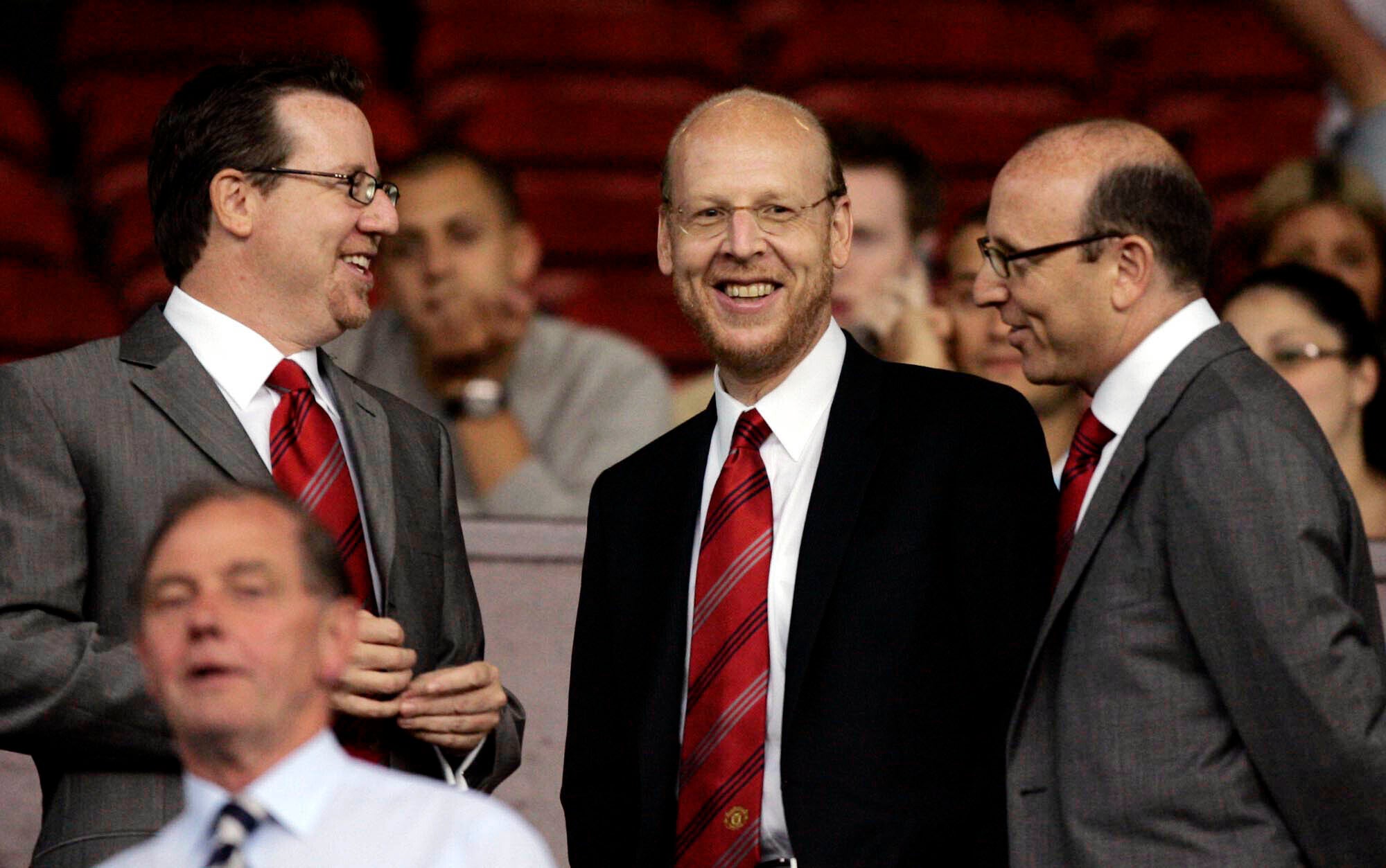
Another possibility is that Joel and Avram Glazer attempt to remain involved as buyers themselves. They could seek to purchase Manchester United from their siblings, potentially with financial backing from Apollo.
The Glazer family divisions behind the sale
Much depends on the internal politics of the Glazer family and the financial condition of Manchester United. Discussions between the six siblings have reportedly been described as being “like Succession”, a comparison that reflects the deep divisions over the club’s future.
One member of the family is said to be firmly in favour of selling. Avram and Joel, by contrast, have long appeared more open to minority investment rather than a complete exit.
Those differences are central to understanding why Manchester United has reached this point. The Glazer ownership model has taken the club to a financial ceiling. Debt servicing, cash flow restrictions and Financial Fair Play rules have combined to limit the way United can operate.
The pressure was visible in January, when the club did not complete an actual player purchase. The limitations are not only affecting recruitment; they are also restricting the investment required to modernise the club and compete at its full potential.
Old Trafford’s £1bn problem
Manchester United also faces the enormous task of investing approximately £1bn in Old Trafford. The stadium must be upgraded if the club is to commercialise its facilities to the level expected of one of the world’s biggest football institutions.
People within the club have reportedly looked enviously at the revenue generated by Tottenham Hotspur’s new stadium. That comparison highlights the scale of the opportunity being missed at Old Trafford.
But the Glazers have not been prepared to commit to such a project. Industry figures therefore believe the family may have little choice but to sell if a minority investment cannot provide the resources required.
Friday may reveal very little
The Manchester United takeover race has become a contest involving Qatar, Ratcliffe, potential American investors, the Premier League’s ownership rules and the internal divisions of the Glazer family. But the loudest rumours remain far more certain than the available evidence.
Qatar may bid, or it may not. Ratcliffe may emerge as the strongest candidate, or the offers may lead to a delay. The Glazers may sell, seek minority investment, extend the deadline—or decide that the club is not yet leaving the family’s hands.
Friday should make the picture slightly clearer. It is unlikely, however, to provide the final answer to the most important question of all: whether Manchester United is truly for sale.