For decades, dinosaur fossils preserving traces of skin have been considered extraordinarily rare — the result of unusual conditions that prevented ancient bodies from completely decomposing.

But scientists are now exploring a surprising possibility: dinosaur “mummies” may not have required such exceptional circumstances after all.
The term “mummy” is often used for dinosaur fossils that preserve skin impressions or other traces of the animals’ outer tissues. Traditionally, researchers have suggested that these remains needed to be buried rapidly or dried out before scavengers and microbes could destroy the delicate skin.
However, a different explanation may help solve the mystery.
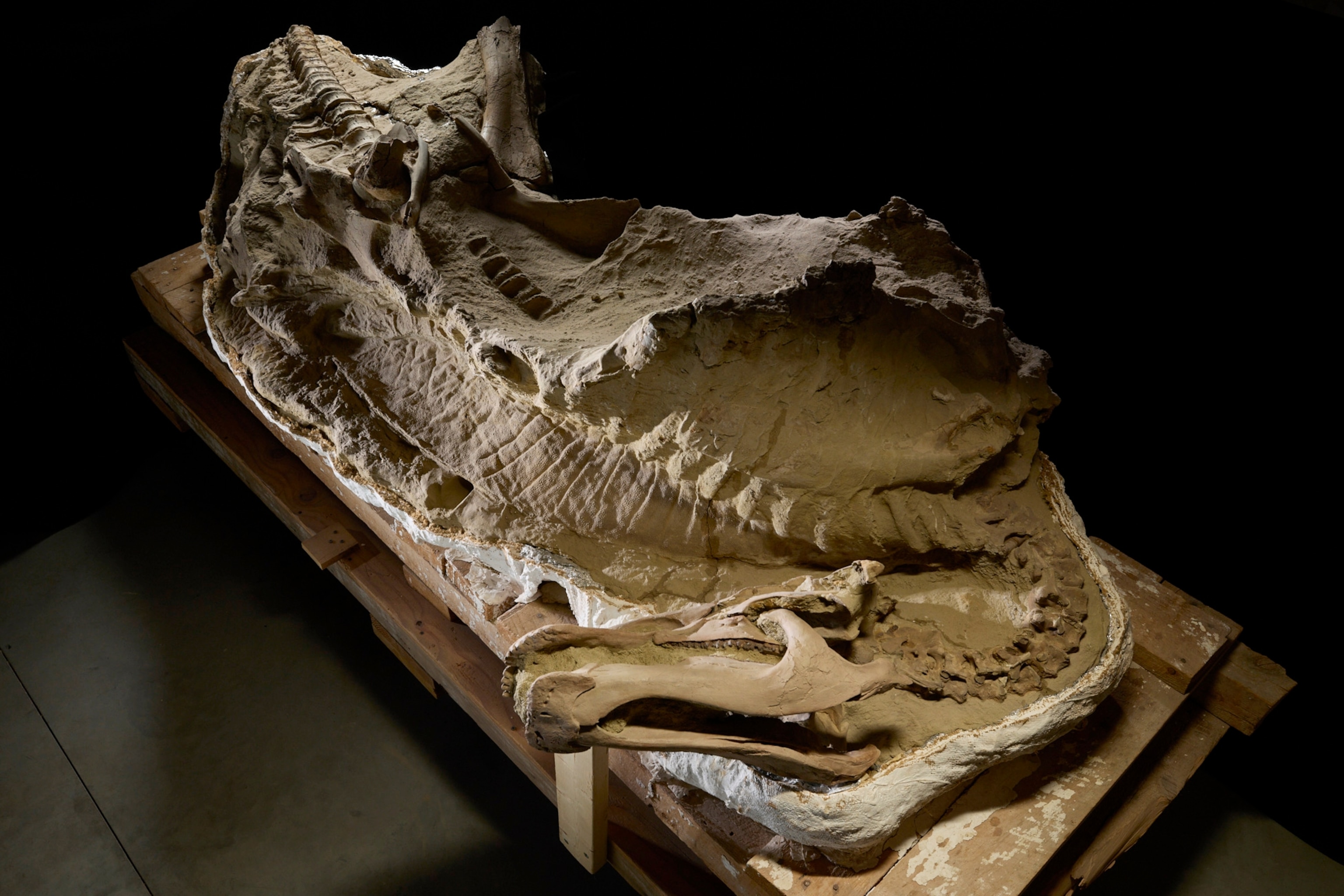
Modern animal carcasses can sometimes lose much of their internal tissue as scavengers and decomposers consume the softer parts of the body, while the skin and bones remain behind.
Researchers propose that a similar process may have occurred with some dinosaurs.
Damage to a carcass’s skin could have allowed scavengers to reach the internal tissues. As those tissues disappeared, the remaining skin and bones may have gradually dried out before being buried and preserved in sediment.
Over time, geological processes transformed these remains into fossils, leaving behind striking evidence of the dinosaur’s outer body.
This possibility challenges the idea that every dinosaur “mummy” must have been preserved through an extraordinarily rare event. Instead, certain combinations of scavenging, exposure, drying and burial may have created more opportunities for skin to survive than scientists once assumed.
The theory does not mean that dinosaur mummies are common, nor does it explain every example. Fossilization remains complex, and different specimens may have formed in different ways.
But it raises an intriguing question: have scientists been underestimating how ordinary processes can sometimes preserve extraordinary evidence of prehistoric life?