A mammoth that was hunted and butchered 45,000 years ago has revealed astonishing evidence that humans were living and hunting in the Arctic thousands of years earlier than previously known.
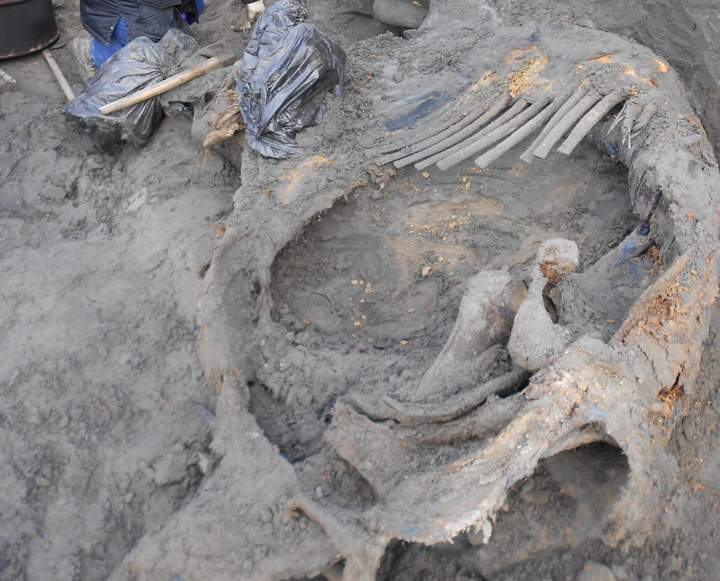
The remains were discovered in the far north of Russia, near the Kara Sea, where the harsh landscape would have presented enormous challenges to any prehistoric hunter.
But the mammoth’s bones contain clues that appear to tell the story of what happened.
Researchers found marks indicating that the animal had been stabbed and butchered, providing evidence of deliberate human activity. Even more intriguing, the tip of one tusk had been damaged in a way that suggests people may have removed or worked the ivory, potentially to make tools.
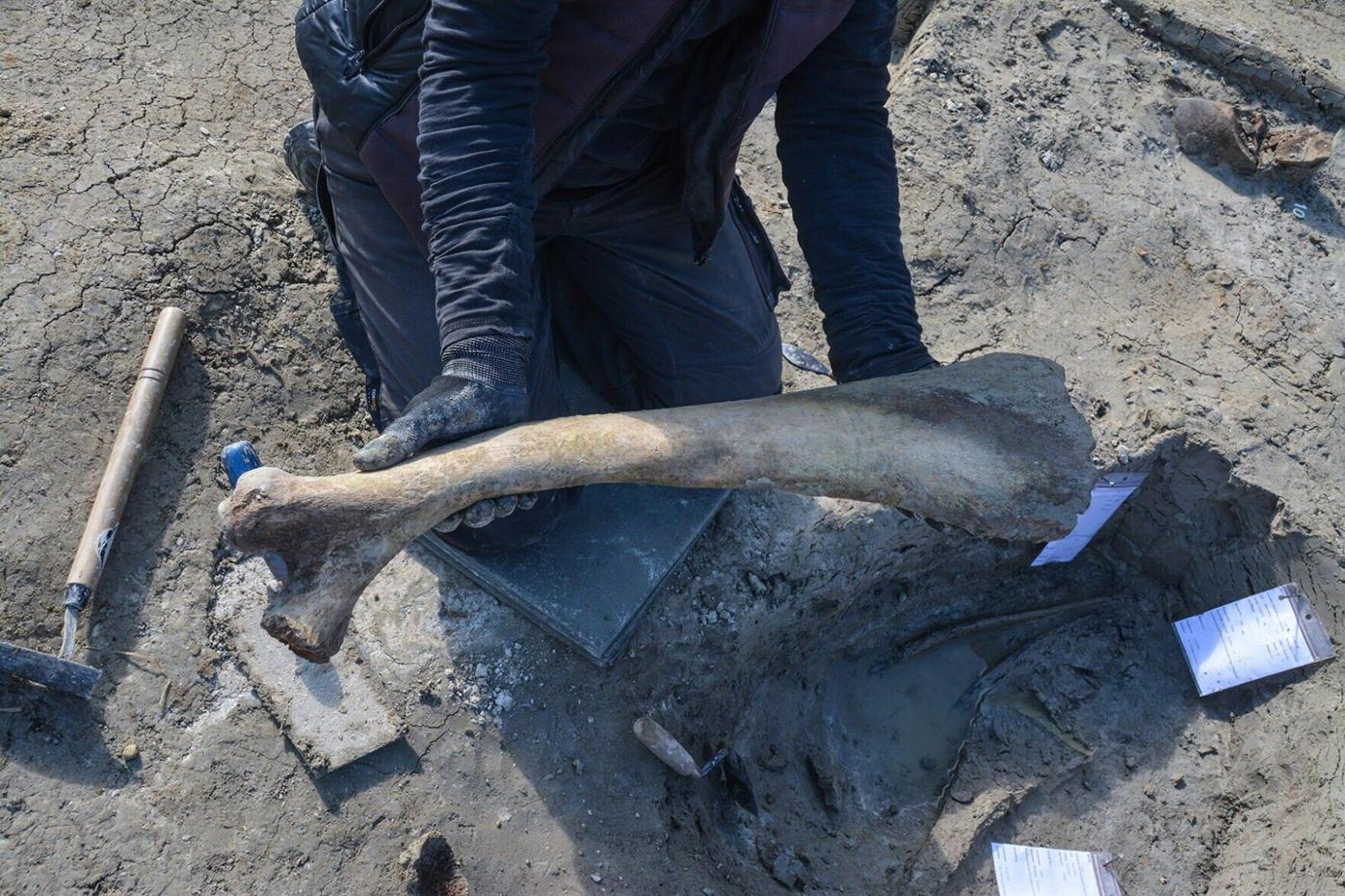
The researchers, led by Vladimir Pitulko of the Russian Academy of Sciences, estimated the remains to be at least 45,000 years old.
That pushes the known record of human occupation in the Arctic back by roughly 5,000 years.
The discovery is particularly significant because the Siberian site represents the northernmost evidence of human presence in Eurasia dating to before 40,000 years ago.
And the mammoth may not have been an isolated event.

Researchers also reported evidence suggesting humans hunted a wolf around the same period at a site much farther east. Together, the findings suggest prehistoric people may have occupied a surprisingly vast Arctic landscape, although their numbers were probably very small.
For thousands of years, the Arctic seemed to have been an almost impossible frontier.
Now, the battered bones of a prehistoric giant suggest that humans had already learned how to hunt, survive and make use of the frozen north 45,000 years ago.