A terrifying predator that once ruled the ancient seas has emerged from the Texas earth — and its enormous fossilized remains reveal just how monstrous life could become millions of years ago.
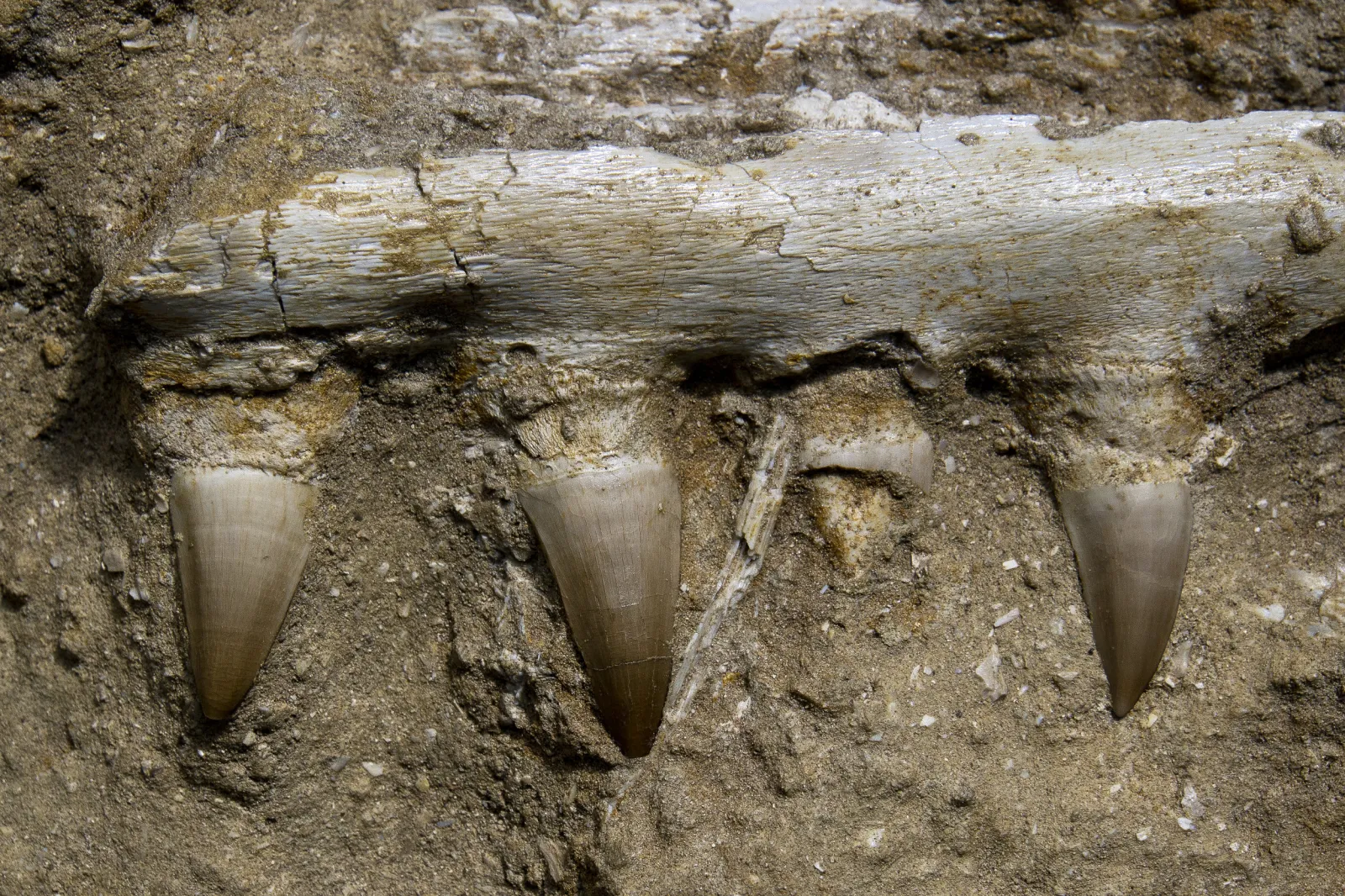
Paleontologists from the Perot Museum of Nature and Science recently unearthed the fossil of a 30-foot-long mosasaur near the North Sulphur River in northern Texas.
The discovery began with an unexpected sight.
Amateur fossil enthusiast Stephen Kruse was walking near the river when he noticed part of a prehistoric spine seemingly sticking straight out of the riverbank. What initially appeared to be a single fragment soon turned into something far more extraordinary.
Excavations uncovered an oversized skull, massive lower jawbones and a series of vertebrae belonging to the enormous marine reptile.
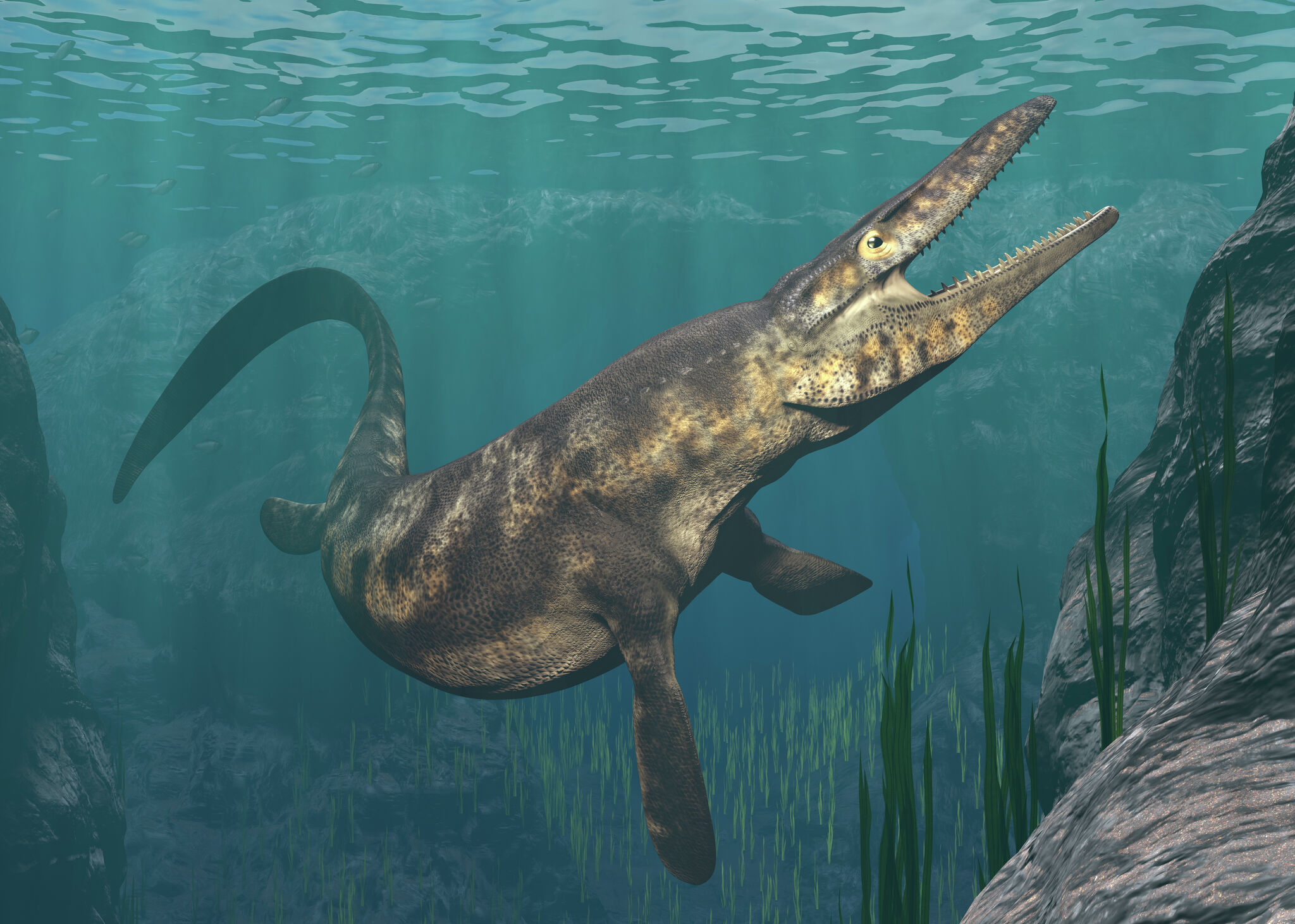
Mosasaurs lived during the Cretaceous Period alongside dinosaurs, but they were not dinosaurs. Instead, these powerful underwater predators were ancient relatives of today’s snakes and monitor lizards.
Removing the fossil was anything but simple. Researchers had to work through hard, clay-like rock using shovels, picks, probes and even delicate paintbrushes. Glue was injected into cracks in the fragile bones to keep them from breaking apart.
The excavation took six days.
And with every layer of rock removed, another piece of the prehistoric puzzle appeared.
For the paleontologists, the most astonishing part was not knowing exactly where the fossil would lead until they uncovered what was hiding beneath the surface.