It was a violent encounter frozen in time — and it happened 76 million years ago.
\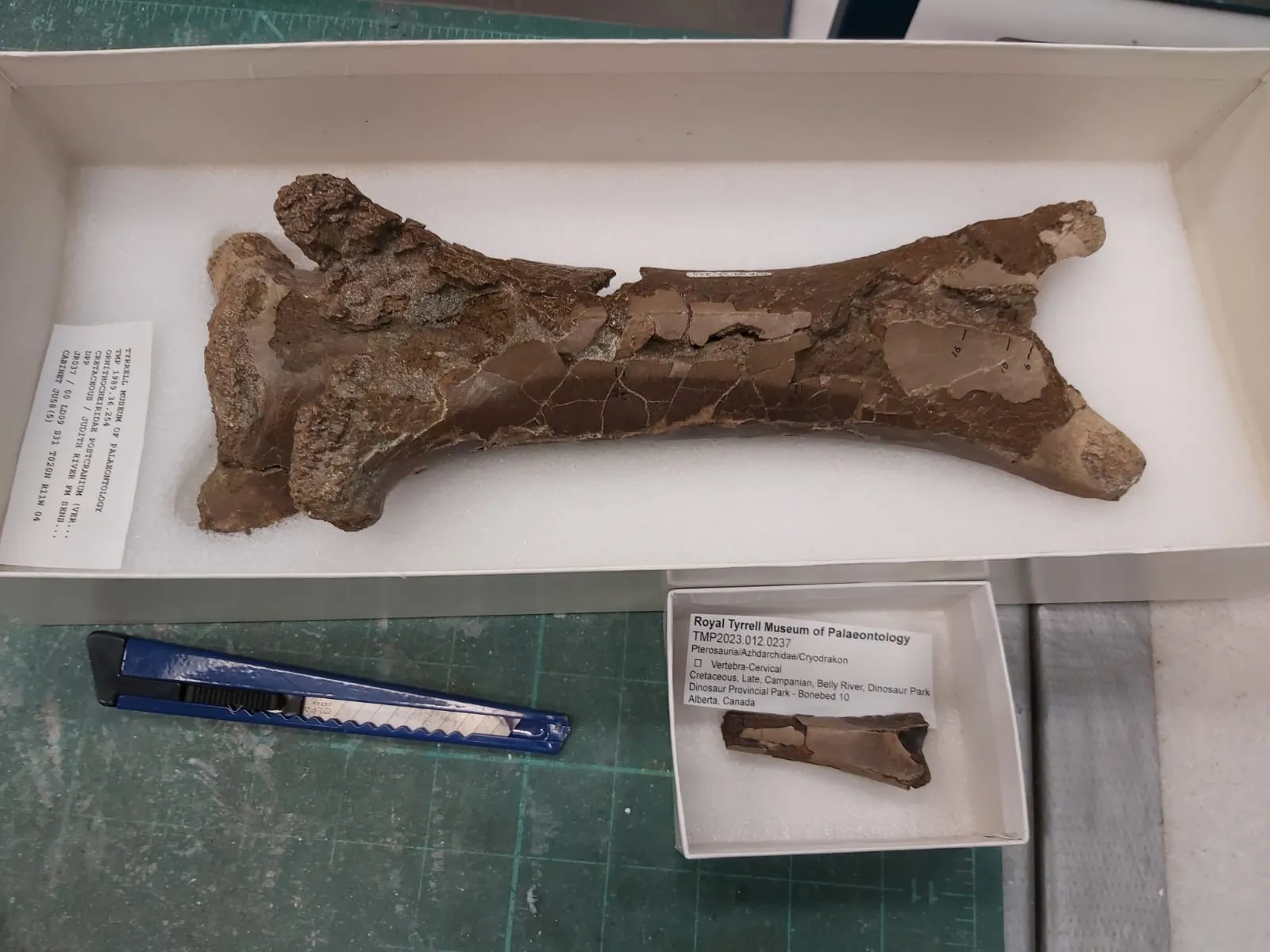
Paleontologists have uncovered the fossilized neck bone of a young pterosaur bearing a tiny but unmistakable tooth mark, offering a rare glimpse into the brutal predator-prey battles that unfolded during the Cretaceous Period.
The fossil was discovered in Dinosaur Provincial Park in Alberta, Canada, and belonged to a juvenile azhdarchid pterosaur. Researchers estimate the young flying reptile had a wingspan of around 6.5 feet. Had it survived to adulthood, it could have grown to nearly 33 feet across.
But its life appears to have ended in a far more dramatic fashion.
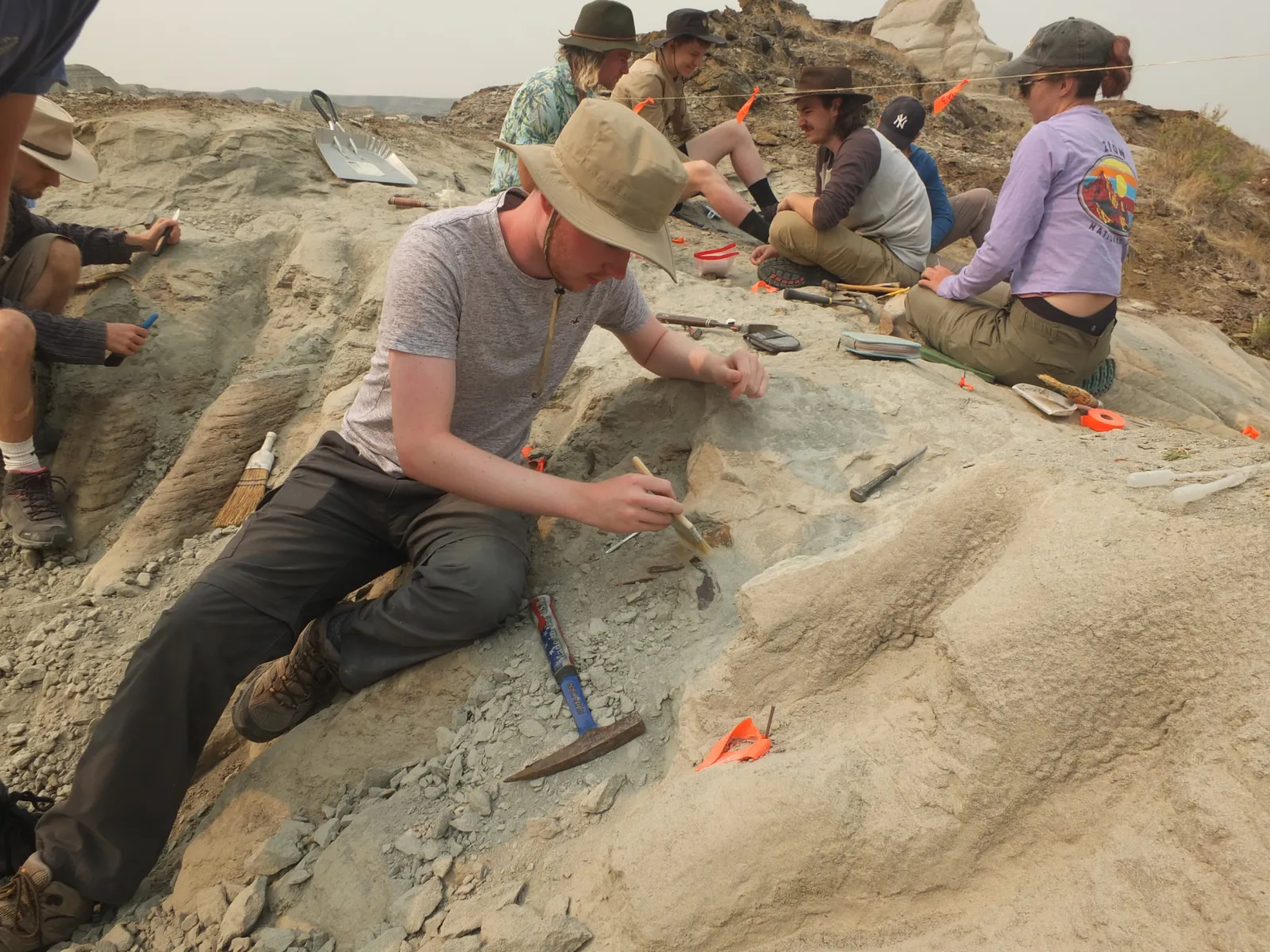
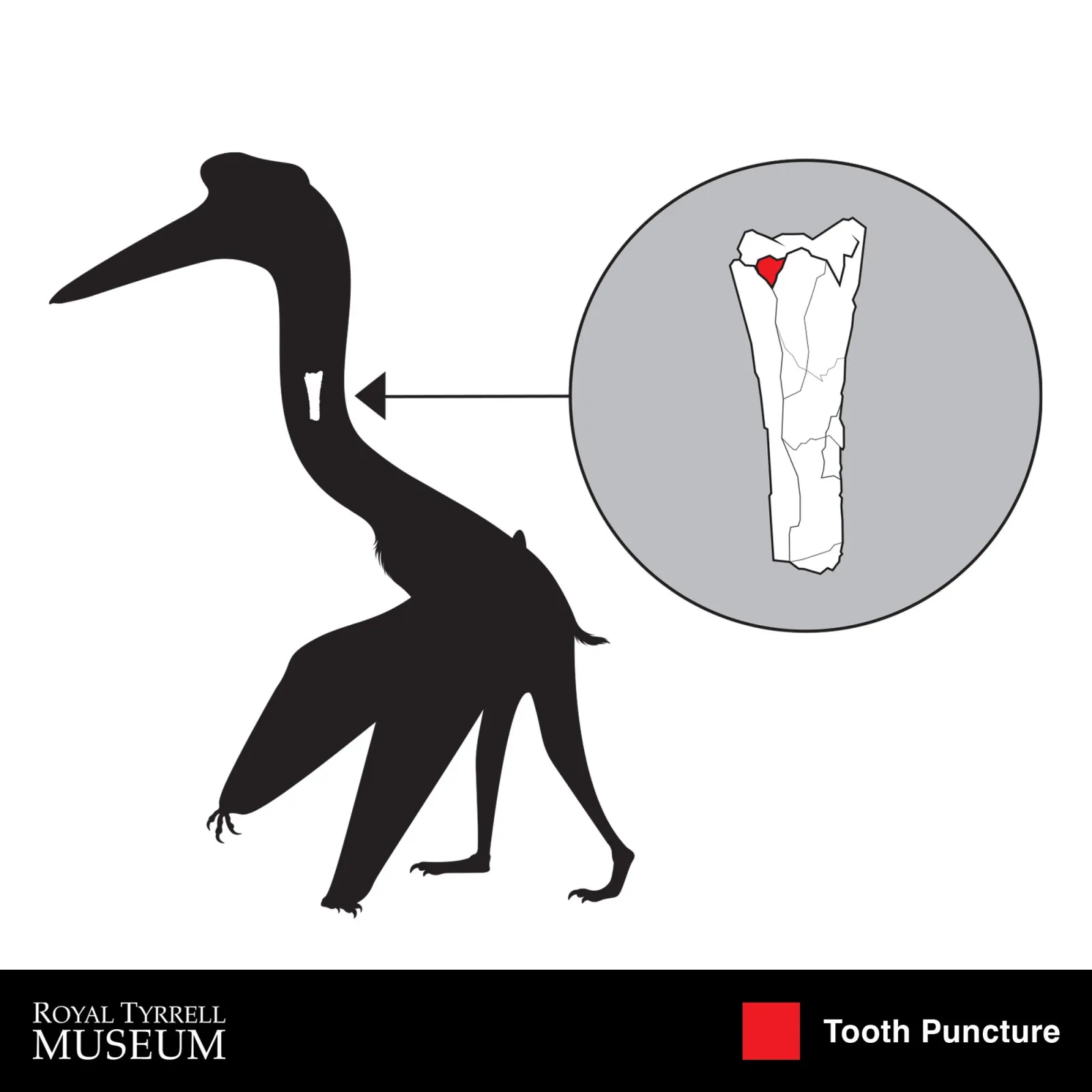
A puncture measuring just 0.16 inches wide was found on one of the pterosaur’s neck vertebrae. Using micro-CT scans, scientists examined the damage in detail and compared it with other pterosaur fossils.
The results strongly indicated that the hole was caused by a bite — rather than damage occurring during fossilization or excavation.
“Pterosaur bones are very delicate,” lead author Caleb Brown of the Royal Tyrrell Museum of Palaeontology said, making such evidence exceptionally rare.
Even more remarkable is the fact that the victim was a juvenile.
Researchers believe the bite came from an ancient crocodile relative, preserving a fleeting moment of prehistoric violence inside a single piece of bone.
A tiny puncture — but a huge clue to a world where even the skies were not safe.