DENVER — Peyton Manning’s final NFL season was nothing like the dominant years that had established him as one of the greatest quarterbacks football had ever seen.
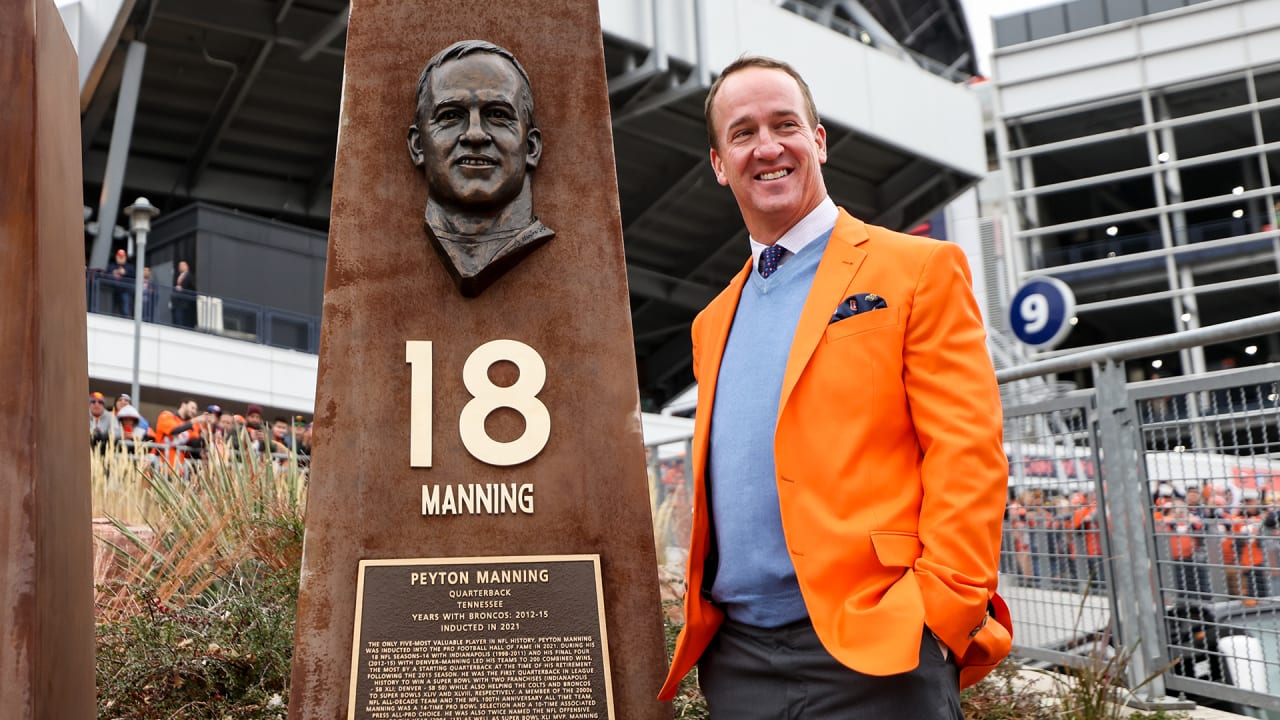
By 2015, Manning was 39 years old. His body carried nearly two decades of punishment, and the effects of the serious neck problems that had once threatened to end his career were still impossible to ignore. The quarterback who had spent years dissecting defenses with surgical precision was now fighting a completely different battle: simply finding enough left in his body to make it through another Sunday.
And sometimes, the physical toll was impossible to hide.
One story from Manning’s final season captured just how difficult those final months had become. After a game, he reportedly needed roughly 15 minutes just to get out of his equipment, with a Broncos staff member helping him remove his cleats.
For most NFL players, getting dressed and undressed after a game is an afterthought.
For Manning, it had become part of the battle.
This was the same quarterback who once looked almost untouchable in the pocket. The same Manning who had thrown for 55 touchdowns in 2013, breaking Tom Brady’s previous single-season record. The same quarterback who had spent years changing plays at the line of scrimmage, reading defenses before the snap and making football look like a game of chess.
Now, every hit mattered.
Every movement hurt.
And every Sunday seemed to require a little more from him.
The Numbers Told a Brutal Story
Manning’s 2015 regular season statistics were almost shocking when compared with the standard he had established throughout his career.
He finished with just nine touchdown passes and 17 interceptions, despite appearing in only 10 games. His 17 interceptions were the most in the NFL that season.
The contrast was enormous.
Just two years earlier, Manning had produced one of the greatest statistical seasons in NFL history. In 2013, he threw for 5,477 yards and 55 touchdowns, leading the Broncos to Super Bowl XLVIII.
In 2015, the quarterback who once seemed capable of throwing a touchdown whenever Denver needed one was struggling simply to keep the offense moving.
A partially torn plantar fascia made matters worse and forced Manning to miss significant time.
That opened the door for Brock Osweiler.
And for perhaps the first time in Manning’s legendary career, his team had to move forward without him as its unquestioned centerpiece.
Osweiler stepped in and gave Denver enough stability to keep its season alive.
Manning, meanwhile, faced a reality that would have been almost unimaginable earlier in his career:
He had to watch.
He had to recover.
And eventually, he had to accept that he might not be the player who carried the Broncos to the finish line.
The Quarterback Who Had to Change
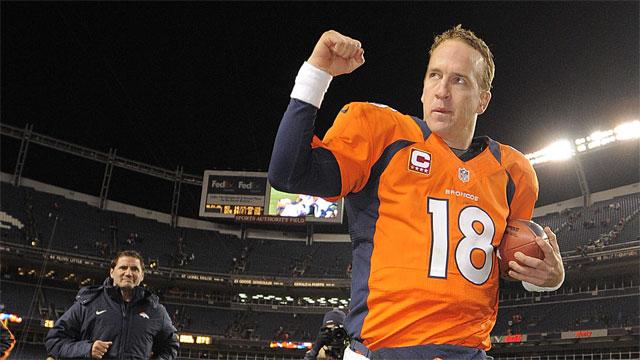
That may have been the most difficult part of Manning’s final season.
For years, winning had depended heavily on him.
At Indianapolis, Manning had been the engine of the Colts’ offense. In Denver, he had initially filled the same role. His intelligence, preparation and ability to control the line of scrimmage made him one of the most influential players in the sport.
But the 2015 Broncos were different.
Their identity wasn’t built around offensive fireworks.
It was built around defense.
And that defense was terrifying.
Von Miller was playing at an elite level. DeMarcus Ware remained one of the league’s most dangerous pass rushers. Behind them was a secondary that became known as the “No Fly Zone.”
Denver could pressure quarterbacks.
Denver could create turnovers.
Denver could suffocate passing games.
The Broncos had constructed a team capable of winning without needing Manning to be the superhero.
That meant Manning had to embrace something that might have been harder for him than any defensive scheme:
He had to let other people carry him.
Instead of throwing five touchdowns, he needed to avoid the catastrophic mistake.
Instead of controlling every possession, he needed to manage situations.
Instead of proving that he was still the old Peyton Manning, he needed to understand what the new version of Peyton Manning could still contribute.
It wasn’t glamorous.
But it worked.
Then Came the Return
Manning eventually returned to the starting lineup, and Denver continued its march toward the postseason.
The Broncos didn’t suddenly transform into the high-powered offense associated with Manning’s prime.
They didn’t need to.
They had another identity.
They were physical.
They were relentless.
They were defensive.
And Manning understood his job.
Get the offense into the right situations.
Protect the football.
Make the throws that mattered.
Trust the defense.
That formula took Denver all the way to Super Bowl 50.
Waiting on the other side was the Carolina Panthers, led by Cam Newton and a 15–1 regular-season record.
Carolina had dominated opponents throughout the season. Newton was playing some of the best football of his career. The Panthers looked like a team built to overpower Denver.
Instead, Denver’s defense turned the Super Bowl into one final statement.
Von Miller Took Over Super Bowl 50
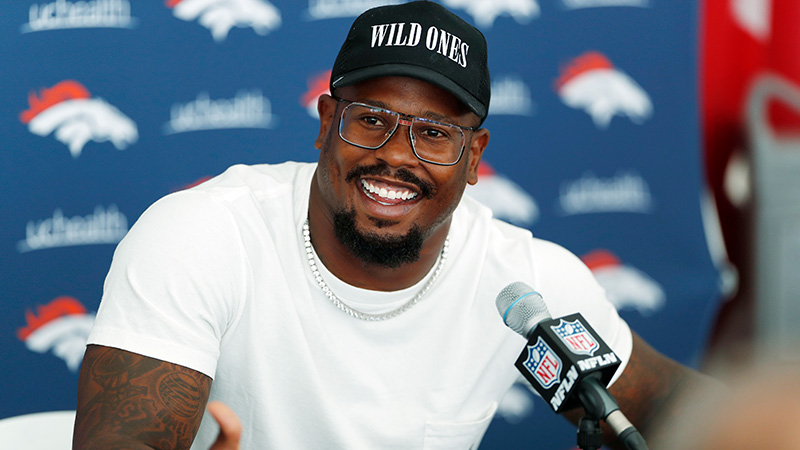
From the opening moments, the Broncos made it clear that Newton was going to have almost no room to breathe.
Miller was relentless.
Denver’s pass rush constantly disrupted Carolina’s quarterback, and the Broncos eventually forced four turnovers.
The defense kept applying pressure until Carolina’s offense simply couldn’t recover.
Manning didn’t need to throw for 400 yards.
He didn’t need to produce a spectacular statistical performance.
He simply needed to stay composed and give Denver enough offense to complement its defense.
And that is exactly what happened.
The Broncos defeated the Panthers 24–10, capturing Super Bowl 50.
For Manning, it was the perfect final chapter.
Not because he played like the quarterback of 2004.
Not because he produced one last statistical masterpiece.
But because he had finally learned how to win without needing to dominate every second of the game.
A Different Kind of Greatness
There was something deeply fitting about Manning’s final season.
For most of his career, greatness had been measured through numbers.
Touchdowns.
Yards.
MVP awards.
Records.
Playoff expectations.
Every poor performance became a debate about whether Manning could win the big one. Every postseason loss became another chapter in the argument surrounding his legacy.
But his final championship required him to redefine what being great actually meant.
He couldn’t always throw the ball the way he once did.
He couldn’t always move comfortably.
He couldn’t always stay on the field.
He couldn’t even remain the starter for the entire season.
But he could prepare.
He could lead.
He could recognize what his team needed.
And most importantly, he could accept that the Broncos didn’t need vintage Peyton Manning to become champions.
They needed the version of Manning who understood the moment.
After the Super Bowl, Manning famously told reporters he had not made a decision about his future, even joking about drinking a lot of Budweiser before deciding.
But the answer eventually came.
On March 7, 2016, Manning announced his retirement from the NFL.
He walked away after 18 seasons, two Super Bowl victories and one of the most remarkable careers in league history.
His final NFL season wasn’t statistically beautiful.
It wasn’t physically easy.
It wasn’t even consistently successful on an individual level.
He threw more interceptions than touchdowns.
He lost his starting job.
He battled injuries.
And there were moments when it seemed reasonable to wonder whether the great Peyton Manning had finally reached the end.
But that’s precisely what made the ending so powerful.
The quarterback who had spent his career carrying enormous expectations finally reached a point where he didn’t have to carry everything himself.
His defense carried him.
His teammates carried him.
And when the final whistle sounded in Santa Clara, Manning had something that mattered far more than another regular-season record.
He had another championship.
39 years old. Injured. Benched. Doubting his own body. Written off by critics.
And yet, when the final game of his career was over, Peyton Manning walked away from football as a two-time Super Bowl champion.
His last season wasn’t about proving he was still the quarterback of his prime.
It was about proving something much more difficult:
That even when greatness changes, it doesn’t necessarily disappear.
Sometimes, it simply finds another way to win.