PEDRO MARTÍNEZ DOESN’T NEED ANOTHER FENWAY TRIBUTE. HIS KNOWLEDGE MAY BE THE REAL LEGACY BOSTON SHOULD PRESERVE
BOSTON — Pedro Martínez has already received nearly every kind of recognition a retired baseball player can receive.
His number hangs above Fenway Park. His plaque resides in Cooperstown. His greatest performances live permanently in the memory of Red Sox fans.
There is not much left for Boston to give him symbolically.
Perhaps that is precisely why the next conversation should be about something different.
Not another ceremony.
Not another anniversary.
A role.
There is an appealing idea in imagining Martínez becoming a more consistent presence around the Red Sox organization, particularly around young pitchers learning what it means to perform in Boston.
To be clear, that should not be confused with reporting that the Red Sox have offered Martínez some formal lifetime contract. Without confirmation from the organization or Martínez, such a claim would turn an intriguing concept into something it is not.
But the concept itself deserves consideration.
Few former Red Sox players occupy Martínez’s unusual position.
He is unquestionably part of the franchise’s history, yet he does not feel trapped inside it.
His relevance extends beyond nostalgia.
Young baseball fans know Pedro.
Young pitchers study Pedro.
His peak remains one of baseball’s clearest examples of what pitching dominance looks like when measured against the offensive environment surrounding it.
Between 1998 and 2004, Martínez produced a 117–37 record and a 2.52 ERA for Boston. He won two American League Cy Young Awards with the Red Sox after winning the National League award with Montreal in 1997.
Then came 2004.
No explanation is necessary in Boston.
Martínez became part of the team that ended an 86 year championship drought, permanently connecting his career to one of the defining stories in American sports.
But numbers explain only part of why his presence could matter now.
Pitching at Fenway is technical.
Pitching in Boston is psychological.
Those are different skills.
A young pitcher must understand how to execute a breaking ball. He must also understand what happens when that breaking ball hangs with 37,000 people watching and another million discussing it before he reaches the clubhouse.
Martínez understands both sides.
He understands dominance, but also vulnerability.
He understands what happens when expectations become enormous.
He understands October failure and October redemption.
And importantly, Martínez was never simply a pitcher who survived Boston.
He embraced it.
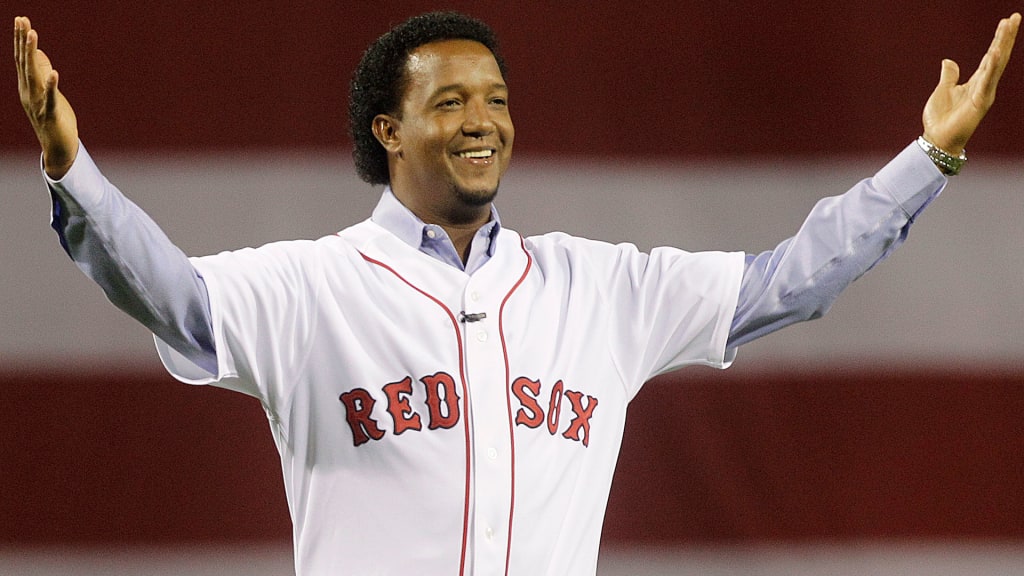
That makes him potentially valuable in ways that cannot be measured by a traditional coaching title.
Imagine a young Red Sox starter struggling through three poor outings.
There are pitching coaches capable of diagnosing his mechanics. Analysts can identify changes in release point or movement profile.
Pedro could offer something else.
He could tell that pitcher what Fenway sounds like when everything is going wrong.
Then he could explain how to walk back onto the mound anyway.
That knowledge has value.
The challenge would be defining the role correctly.
Organizations can sometimes become overly sentimental with former stars. A legendary playing career does not automatically make someone an effective coach, executive or developmental instructor.
Martínez should not be placed beside young pitchers simply because his Hall of Fame plaque makes for a compelling photograph.
Any meaningful role would require purpose.
Perhaps it involves spring training.
Perhaps selected visits to Boston’s minor league affiliates.
Perhaps conversations with pitchers approaching their first major league callup.
Perhaps postseason preparation.
The title matters less than the access.
Boston has an extraordinary reservoir of institutional memory.
David Ortiz understands the burden of becoming the face of the franchise.
Jason Varitek understands leadership from behind the plate.
Pedro understands the loneliness of the mound.
Organizations spend millions searching for competitive advantages.
Not all of them come from technology.
Sometimes institutional knowledge is an advantage too.
And there is something particularly fitting about Martínez becoming part of that bridge.
When Boston retired his No. 45 in 2015, the honor established where Pedro belonged historically.
Nobody needs to revisit that question.
The more interesting question in 2026 is where he could belong next.
Fenway Park will always preserve Martínez’s past.
The banners, photographs and stories guarantee that.

But preservation is different from participation.
A permanent organizational relationship, if both sides ever wanted one, would not need to be about keeping Pedro visible.
Pedro Martínez has never had difficulty remaining visible.
It would be about keeping something more valuable close to the organization.
His knowledge.
His perspective.
His understanding of what the mound at Fenway demands.
Boston already knows how to honor Pedro Martínez.
Maybe the next chapter is allowing him to help shape someone who will stand on that mound after him.