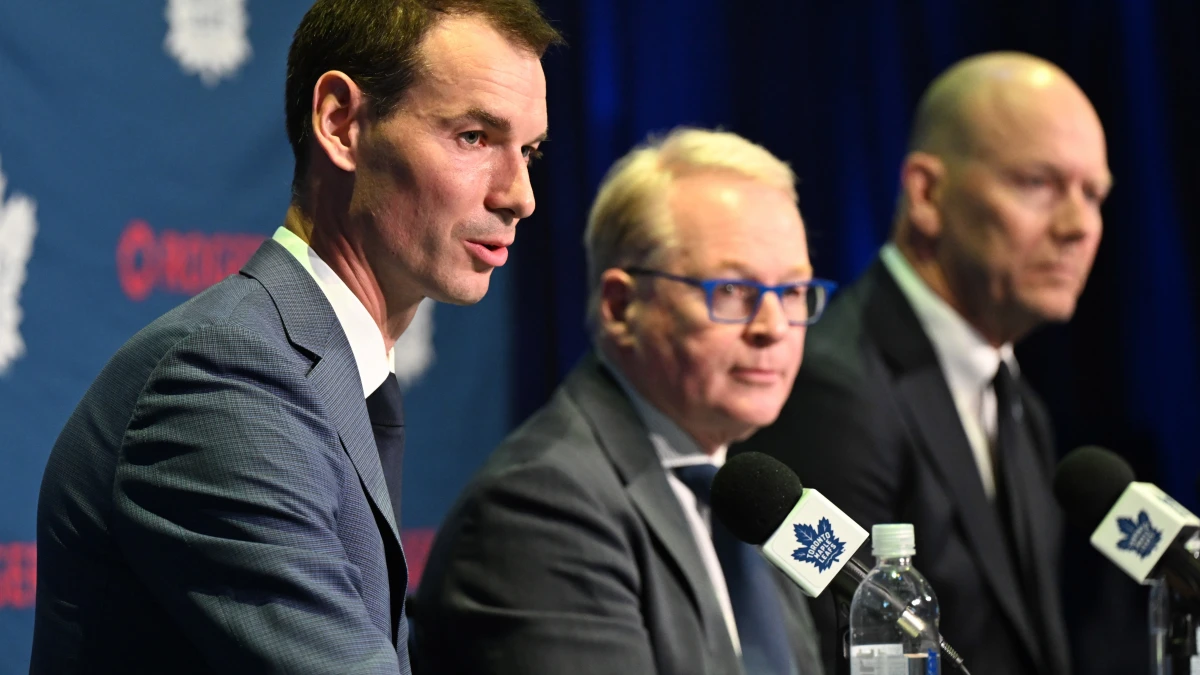
John Chayka arrived in Toronto already carrying high expectations and heavy skepticism. After more than five years away from the game, his prior reputation and the circumstances surrounding his tenure with the Arizona Coyotes left many Maple Leafs fans questioning whether MLSE and Keith Pelley had made the right call. The pressure was immense before he executed a single move.
Chayka has made some solid decisions since taking over. Yet those moves have not cemented him as the long-term architect of the Maple Leafs, nor have they guaranteed his stay. Success over the next two seasons with Auston Matthews remains critical. But Chayka’s definitive test will arrive in how he prepares to build around Gavin McKenna.
A Roster Built for the Short Term
Toronto has constructed a clear win-now group around Matthews. The window is narrow—essentially two years. If the Leafs fail to advance past the second round and compete for the Stanley Cup, Matthews could choose to leave, stripping the franchise of its captain and core identity.
The salary-cap and roster implications are stark. At the end of the 2027-28 season, the Maple Leafs will confront 10 unrestricted free agents and two restricted free agents, all while needing to negotiate an extension for McKenna if one is not already in place. By the time McKenna requires a new contract, William Nylander will be 33, John Tavares nearly 40, Darren Raddysh 33, and Morgan Rielly 35 (assuming he remains). Key defenders Jake McCabe and Chris Tanev will be in their mid-to-late 30s, while goaltenders Anthony Stolarz and Sergei Bobrovsky will be 35 and 40, respectively.
The only significant young talent currently positioned to grow alongside McKenna consists of Matthew Knies, Easton Cowan, and Ben Danford. That leaves Toronto needing either a true star addition or a deliberate infusion of players in the 23-to-28 age range to support McKenna’s development and the team’s next competitive cycle.
Balancing Present Ambition with Future Stability

Chayka’s challenge is clear: he must avoid sacrificing McKenna’s eventual window for the current one. Past controversies—reports of using questionable data or skirting rules to gain drafting advantages—remain part of the public narrative. Those issues, however, are secondary now. Chayka will be judged on the roster he constructs in Toronto and the decisions he makes with the resources at his disposal.
If next season’s moves demonstrate genuine investment in the future—trading aging veterans, declining to re-sign or extend certain players to create opportunity for younger ones—then Chayka can show that while he is fully committed to the next two years, he is also protecting the franchise’s longer-term interests. Conversely, this is the most talented group he has ever managed, backed by MLSE’s substantial resources. Failure to advance, or a failure to prepare the ground for McKenna, would reflect poorly on both the organization and the general manager who may yet fumble the opportunity at the one-yard line.
Leaving McKenna with only a handful of complementary pieces and a mismatched supporting cast would place immediate leadership pressure on a young player and could prove the final blow to Chayka’s tenure. The Maple Leafs stand at a genuine crossroads. How John Chayka navigates the tension between winning now and building for McKenna will define not only the franchise’s next era, but his own legacy in Toronto.