Carlo Ancelotti’s recent remarks about Bukayo Saka have reignited a debate that has been simmering for years: is the Arsenal star being undervalued simply because of the shirt he wears? The legendary manager, who has coached some of the greatest talents in football history, did not just offer polite praise. He went further, calling Saka “untouchable” and admitting he would reshape his tactical system to accommodate the winger.
For a coach who has worked with Cristiano Ronaldo, Vinícius Júnior, and countless other icons, such a statement carries immense weight. It suggests that Saka’s qualities are not only recognized but revered at the highest level of the game. “If Bukayo Saka played for Real Madrid or Barcelona, the world would already call him the best winger of this generation,” Ancelotti declared, and in doing so, he exposed the bias that continues to shape perceptions of talent in modern football.
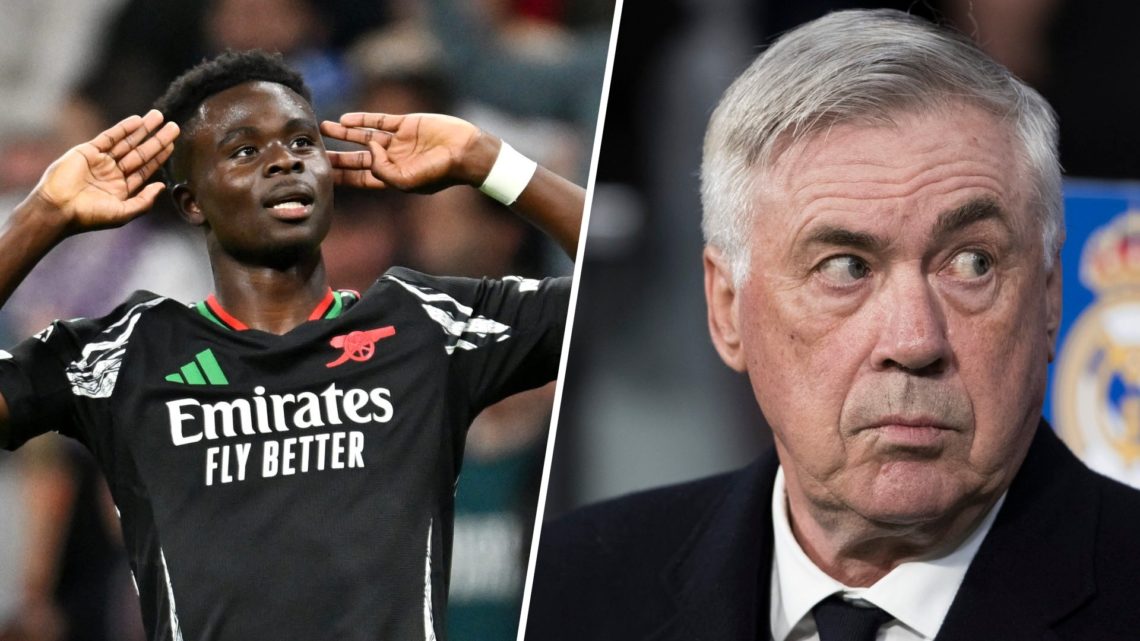
Saka’s rise has been nothing short of remarkable. From his early days in Arsenal’s academy to becoming the face of the club’s resurgence under Mikel Arteta, he has consistently demonstrated a blend of technical skill, tactical intelligence, and mental resilience that belies his age. His ability to read the game, make decisive runs, and deliver in crucial moments has made him indispensable. Yet despite his consistency, there remains a tendency among some fans and pundits to dismiss his achievements as inflated or “overrated.”
This criticism often stems not from his performances but from the context in which they occur. Arsenal, while a historic club, has not carried the same global aura in recent years as Real Madrid or Barcelona. As a result, Saka’s brilliance is sometimes overshadowed by the perception that it is happening on a smaller stage. “People confuse club prestige with player quality,” one analyst observed. “Saka is proving every week that he belongs in the conversation with the very best.”
The contrast between fan narratives and managerial evaluations is striking. While online debates often reduce players to statistics and highlight reels, elite managers value qualities that are harder to quantify: football IQ, adaptability, and consistency under pressure. Ancelotti’s willingness to publicly elevate Saka reflects an appreciation for these subtler attributes.
He sees a player who not only produces goals and assists but also shapes the rhythm of matches, dictates tempo, and forces opponents to adjust their strategies. “He is the kind of player who bends the game to his will,” a coach commented. “That’s why managers love him—because he makes systems work.” This perspective underscores the gap between how fans discuss football and how professionals evaluate it, and it explains why Saka’s reputation among managers is far higher than among casual observers.
The broader context of Saka’s career adds another layer to the discussion. He has carried the weight of expectation at Arsenal during a period of transition, becoming the focal point of a team striving to return to the pinnacle of English and European football. His performances in the Premier League and on the international stage with England have consistently demonstrated maturity and composure.
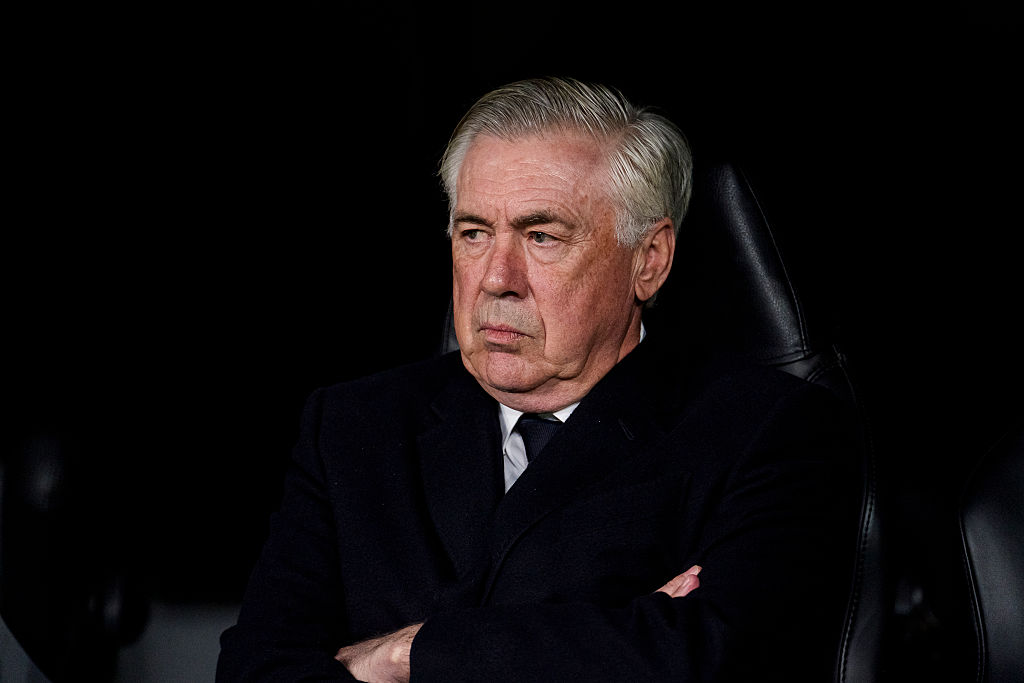
Yet the absence of Champions League triumphs or Ballon d’Or campaigns has limited his global recognition. If he were playing in Spain, surrounded by the glamour of El Clásico and the spotlight of La Liga, his profile would likely be elevated to a different level. “The shirt matters,” one pundit admitted. “It shouldn’t, but it does. And that’s why Saka is still fighting for the respect he deserves.” For Arsenal supporters, Ancelotti’s comments are both validation and frustration. They confirm what fans have long believed—that Saka is among the finest talents of his generation—but they also highlight the persistent undervaluation of players outside the traditional powerhouses. The notion that Saka would be universally hailed as the best winger if he played for Real Madrid or Barcelona is a reminder of the structural biases in football culture.
It raises questions about how talent is recognized, how narratives are shaped, and how players are judged not only by their abilities but by the institutions they represent. “It’s not about what he does,” one supporter said. “It’s about where he does it. And that’s unfair.” The implications of this debate extend beyond Saka himself. They touch on the broader issue of how football’s global hierarchy influences perception. Players at clubs like Arsenal, Tottenham, or even Napoli often face an uphill battle for recognition compared to those at Madrid, Barcelona, or Bayern Munich. This dynamic distorts the conversation about who truly defines a generation.
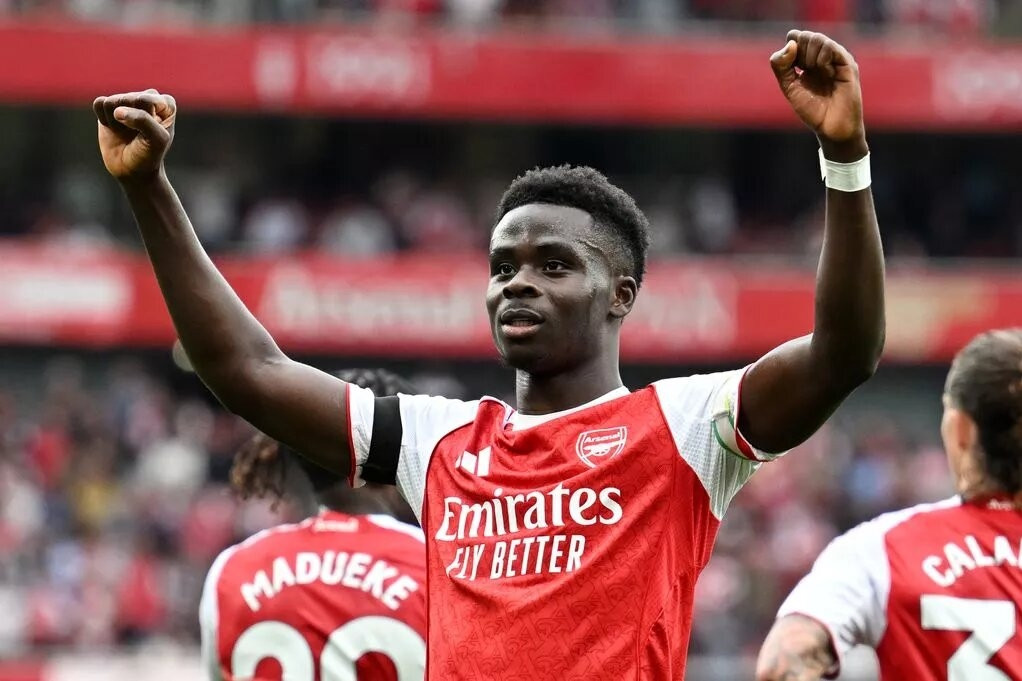
Saka’s case illustrates how excellence can be overlooked when it occurs outside the traditional centers of prestige. “We are watching one of the best wingers of his era,” a journalist wrote. “But because he wears red in North London instead of white in Madrid, the world hesitates to admit it.” As the new season approaches, the spotlight on Saka will only intensify. Arsenal’s ambitions hinge on his ability to continue delivering at the highest level, and his performances will shape not only the club’s fortunes but also his own legacy. Ancelotti’s words have added fuel to the narrative, positioning Saka as a player whose greatness is undeniable yet still contested.
The question now is whether the football world will catch up to what elite managers already know. “Respect is often delayed,” a commentator reflected. “But when it arrives, it is unstoppable.” For Bukayo Saka, the path to recognition may be longer because of the badge he wears, but the destination is inevitable. His talent, consistency, and intelligence ensure that he will be remembered not just as Arsenal’s star, but as one of the defining wingers of his generation.