Colorado Wildfire Crisis Forces Mass Evacuations Across Front Range Communities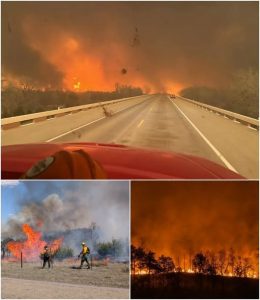
A rapidly developing wildfire situation in Colorado has prompted urgent evacuation orders across multiple counties, as emergency services work to contain fast-moving flames driven by dry conditions and shifting winds. Officials confirmed that several communities across the Front Range are now under mandatory evacuation orders as firefighters battle to prevent further spread into densely populated areas.
The wildfire, which ignited in rugged terrain along Colorado’s foothills, has escalated quickly due to extreme drought conditions, low humidity, and unpredictable wind patterns. Authorities warn that the combination of these factors has created highly volatile fire behavior, making containment efforts extremely difficult.
Evacuation orders have been issued across multiple regions. In Jefferson County, residents in and around Golden, Evergreen, Morrison, and nearby foothill communities have been instructed to leave immediately as flames approach wildland-urban interfaces. Boulder County officials have also ordered evacuations in high-risk zones near Boulder, Lyons, Nederland, and surrounding mountain areas.
Further south, Douglas County authorities have urged residents in Castle Rock, Parker, and adjacent neighborhoods to evacuate due to rapidly changing fire conditions. In Larimer County, communities near Estes Park and forested corridors along the eastern slopes of the Rocky Mountains are also under threat, with emergency responders working to establish containment lines.
State emergency management officials have emphasized that the situation remains highly dynamic, with fire boundaries shifting as wind patterns change. “This is an evolving emergency,” one official stated. “Conditions can change within minutes, and residents in affected zones must not delay evacuation.”
Traffic congestion has become a serious concern as thousands of residents attempt to leave simultaneously. Major highways including Interstate 70, U.S. Highway 36, C-470, and sections of Interstate 25 have experienced delays and partial closures due to smoke, emergency vehicles, and evacuation traffic. Authorities are urging drivers to remain patient and follow designated evacuation routes to avoid bottlenecks and hazards.
Firefighters from across the state, along with mutual aid teams from neighboring regions, have been deployed to the scene. Air support units, including water-dropping helicopters and fixed-wing aircraft, are being used where conditions allow. However, heavy smoke and strong winds have limited aerial operations in some areas, reducing visibility and operational effectiveness.
Officials have stressed that the top priority remains life safety. Residents in evacuation zones are advised to leave immediately, taking only essential items such as identification, medications, important documents, and pets. Emergency shelters have been opened in multiple counties to accommodate displaced residents, with additional facilities being prepared if the fire continues to spread.
Meteorologists warn that weather conditions may continue to challenge firefighting efforts over the next 24 to 48 hours. Persistent dry air and gusty winds could push flames into new areas, increasing the risk to additional communities. Fire behavior analysts are closely monitoring the situation to predict potential expansion zones and assist ground crews in strategic planning.
Local authorities are also working closely with utility companies to assess potential infrastructure risks, including power outages in affected regions. Precautionary shutdowns may be implemented in high-risk zones to prevent electrical equipment from contributing to fire ignition or worsening existing conditions.
Residents outside evacuation zones are being urged to stay alert, monitor official emergency alerts, and prepare for possible evacuation notices. Officials strongly discourage sharing unverified information on social media, emphasizing the importance of relying on verified updates from emergency management agencies.
While the full extent of the damage remains unknown, early reports indicate that vegetation loss is significant in several rural areas. No confirmed fatalities have been reported at this time, though emergency services continue to assess affected zones as access becomes possible.
As Colorado faces one of its most challenging wildfire situations this season, emergency crews remain on high alert. The coming hours will be critical in determining whether containment efforts can stabilize the fire’s advance or whether additional communities will be placed at risk.
For now, authorities reiterate a simple but urgent message: evacuate early, stay informed, and prioritize safety above all else.