Kyle Shanahan’s arrival in San Francisco was not the kind of move that simply changes a team’s playbook—it was the kind of move that reshapes the very soul of a franchise. He came with a vision that stretched beyond schemes and formations, a vision that sought to redefine what it meant to wear the 49ers uniform. Before his tenure, the team had become a story of flashes—moments of brilliance followed by heartbreak, seasons of promise undone by inconsistency. Shanahan’s presence changed that trajectory. He brought with him a belief system rooted in precision, discipline, and identity. He didn’t just want the team to win games; he wanted them to embody a culture where winning was expected, not hoped for. That shift in mentality is what has made his impact so profound, because belief in football is not born overnight—it is cultivated, coached, and carved into existence by leaders who refuse to settle.
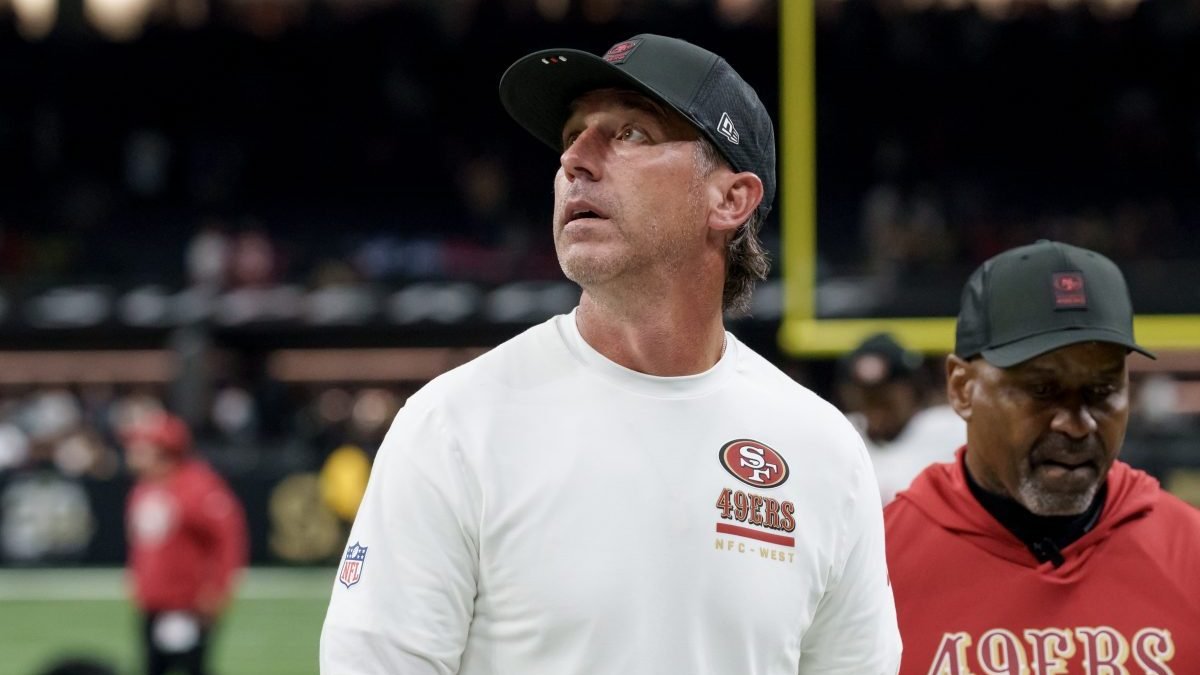
The transformation under Shanahan has been as much about psychology as it has been about strategy. His offensive schemes are celebrated for their creativity, but what truly defines his tenure is the way he has instilled resilience into the DNA of the team. The 49ers no longer flinch in the face of adversity. They no longer play as if success is fragile. Instead, they carry themselves with the confidence of a team that knows it belongs among the elite. “We don’t hope to win anymore—we expect to win,” one veteran player said, echoing the sentiment that has become the hallmark of Shanahan’s leadership. That expectation is not arrogance; it is the product of a culture that has been rebuilt from the ground up, a culture that demands accountability and rewards toughness. His players speak of him not just as a coach but as a figure who has instilled belief, someone who has made them feel that every game is theirs to claim.
The broader context of Shanahan’s impact is tied to the history of the franchise itself. The 49ers are not just another NFL team; they are a storied organization with a legacy of greatness, from Joe Montana and Steve Young to Jerry Rice and Ronnie Lott. That history carries weight, and for years, the team struggled to live up to it. Shanahan’s arrival was a turning point, a moment when the franchise began to reclaim its identity. He understood that the 49ers could not simply be competitive—they had to be contenders, because anything less would betray the standard set by their past. “This is a team that measures itself by championships, not by playoff appearances,” a commentator observed, capturing the essence of Shanahan’s mission. His leadership has been about restoring that standard, about reminding the organization and its fans that greatness is not negotiable. In doing so, he has reconnected the modern team with its legendary past, creating a bridge between eras.
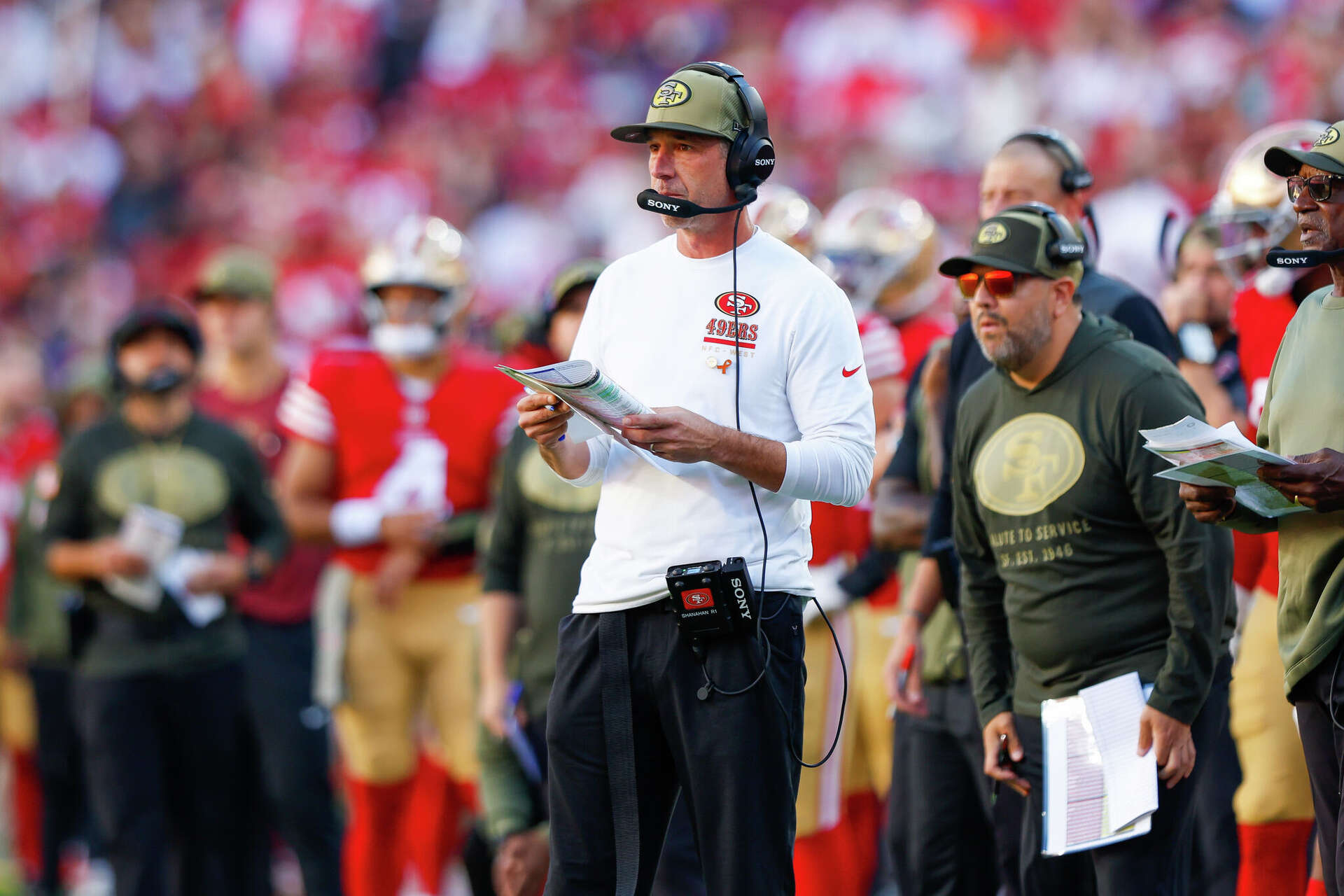
What makes Shanahan’s story compelling is the way he has balanced innovation with tradition. His playbook is modern, filled with motion, misdirection, and creativity, but his philosophy is rooted in timeless values: toughness, discipline, and belief. He has managed to bridge eras, crafting a team that feels both contemporary and classic. That balance has resonated with fans, who see in him a leader capable of honoring the past while building for the future. Levi’s Stadium has become more than just a venue—it has become a fortress, a place where belief is palpable, where the culture Shanahan has built radiates from the field to the stands. “You can feel it when you walk in,” one fan said. “This isn’t the same team we used to watch. This team believes.” That belief is contagious, spreading from the locker room to the fan base, creating an atmosphere where expectation is the norm.
The ripple effects of Shanahan’s leadership extend beyond the field. His presence has reshaped the way the league views the 49ers, turning them from a team of potential into a team of expectation. Opponents no longer see San Francisco as vulnerable; they see them as formidable, as a team that embodies the toughness of its coach. That perception matters because in the NFL, reputation can be as powerful as talent. Shanahan has given the 49ers a reputation for resilience, for creativity, and for fearlessness. He has made them a team that others measure themselves against, a team that defines the standard rather than chasing it. Rival coaches speak of preparing for the 49ers as preparing for a chess match, knowing that Shanahan’s schemes will test their discipline and adaptability. His influence has elevated the franchise into a position where respect is not demanded but naturally given.
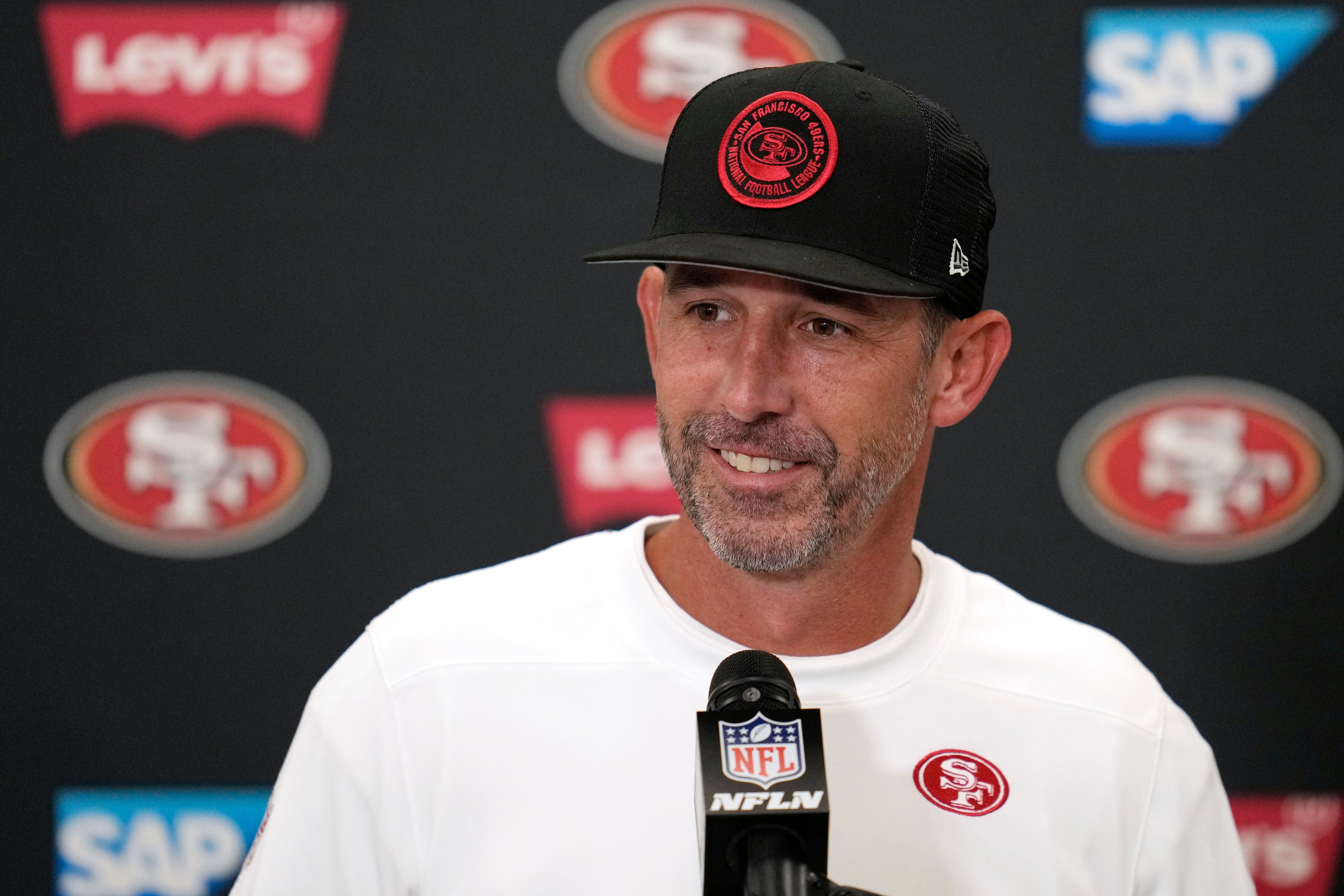
The emotional weight of Shanahan’s tenure is felt most deeply by the fans. For a community that endured years of disappointment, his leadership has been a source of pride and renewal. The 49ers are once again a team that reflects the spirit of San Francisco—bold, resilient, and unafraid to challenge expectations. Fans see in Shanahan not just a coach but a symbol of belief, a reminder that their team is capable of greatness. “He gave us back our identity,” one supporter said, and that quote captures the essence of his impact. Identity is not just about wins and losses; it is about belonging, about feeling that your team represents something larger than the game itself. Shanahan has given the fans a team they can believe in again, a team that feels like a rightful heir to the franchise’s storied past.
As the seasons unfold, Shanahan’s legacy continues to grow. He has already reshaped the DNA of the franchise, but his mission is far from complete. The ultimate measure of his success will be championships, because that is the standard by which the 49ers have always judged themselves. Yet even before the trophies arrive, his impact is undeniable. He has given the team belief, he has given the fans pride, and he has given the franchise an identity that feels both authentic and enduring. In a league where cultures can crumble, a nd identities can fade, Shanahan has built something lasting. His story is not just about coaching—it is about transformation, about the power of vision, and about the refusal to settle for anything less than greatness. And that is why, when people talk about the modern 49ers, they don’t just talk about a team—they talk about a culture, a belief system, and a leader who stepped in not to manage, but to redefine.