When Colin Cowherd raised his voice about the Pittsburgh Steelers’ quarterback situation, it wasn’t just another hot take meant to stir up ratings. It was a direct challenge to the very identity of a franchise that has long prided itself on stability, tradition, and an unshakable sense of continuity. For decades, the Steelers have been the NFL’s model of consistency, a team that rarely panics, rarely rebuilds, and always finds a way to remain competitive. Yet Cowherd’s warning cut to the core: the one position you cannot afford to patch together—the quarterback—has become Pittsburgh’s Achilles’ heel. His words carried a sense of urgency, suggesting that by 2026, the consequences of indecision could be devastating. “What’s the plan?” he asked pointedly. “Everybody else in the AFC seems to know who their guy is. Pittsburgh doesn’t.”

That question resonates because the AFC is currently defined by quarterbacks who tilt the balance of power. Patrick Mahomes has turned Kansas City into a dynasty, Josh Allen continues to terrorize defenses with his dual-threat ability, Joe Burrow has transformed Cincinnati into a perennial contender, and Lamar Jackson remains one of the most electrifying players in football. Against this backdrop, Pittsburgh’s uncertainty looks glaring. Cowherd’s warning is not just about the Steelers—it is about the unforgiving reality of competing in a conference where elite quarterback play is the price of admission to Super Bowl contention. “You can’t win championships in this conference with average quarterback play,” he argued. “Eventually, you’re going to pay for that.” His words carried the weight of truth, because in today’s NFL, the quarterback is not just another position—it is the axis around which everything else turns.
The Steelers’ reliance on Aaron Rodgers as a short-term fix only amplifies the concern. Rodgers brings leadership, experience, and a Hall of Fame résumé, but at his age, he is not a long-term solution. Cowherd sees him as a bridge, not a cornerstone. Meanwhile, younger options like Will Howard and rookie Drew Allar remain unproven. Both have talent, but neither has yet shown the ability to become the kind of franchise quarterback who can stand toe-to-toe with Mahomes or Burrow. For Cowherd, this is the crux of the issue: Pittsburgh is patching together the most important position in football instead of committing to a clear future. The danger is obvious—bridges eventually collapse if they don’t lead somewhere solid.

The history of the franchise makes this debate even more charged. Since Ben Roethlisberger’s retirement, the Steelers have cycled through quarterbacks without finding a true successor. Mike Tomlin’s leadership and the team’s defensive strength have kept them competitive, but postseason success has been elusive. Cowherd believes that formula is becoming harder to sustain. In his view, Pittsburgh risks falling into the NFL’s most frustrating trap: good enough to stay relevant, but not good enough to seriously contend. For a franchise defined by championship expectations, that scenario would be painful. “This is a team that measures itself by Lombardis, not by wild card berths,” one analyst noted, echoing Cowherd’s concern. The Steelers’ proud tradition of excellence makes mediocrity feel like failure, and that is the danger Cowherd sees looming.
Not everyone agrees with Cowherd’s assessment. Many Steelers fans argue that patience is warranted. Tomlin has never posted a losing season, and the organization has consistently found ways to remain competitive regardless of roster changes. Supporters point out that Rodgers’ presence could accelerate the development of younger quarterbacks, providing mentorship and stability. Optimists believe that Howard or Allar could surprise, developing into quality starters who silence critics. “We’ve seen this team defy expectations before,” one fan wrote passionately. “Why should this be any different?” That optimism reflects the faith many have in the Steelers’ culture, a belief that the organization’s stability can overcome uncertainty at quarterback.
.jpg)
Yet even the optimists acknowledge that the position remains unsettled. Unlike rivals with established stars, Pittsburgh enters 2026 with more questions than answers. In a conference where quarterback play often determines playoff success, uncertainty at the most important position could become a major obstacle. Cowherd’s comments may have sounded harsh, but they reflect concerns that many around the league quietly share. The Steelers have built their reputation on consistency and stability, yet the quarterback position remains one of the few areas where long-term clarity is missing. And in today’s NFL, that uncertainty can become expensive—not just in wins and losses, but in missed opportunities to compete for championships.
The debate sparked by Cowherd’s remarks highlights the tension between tradition and modern reality. The Steelers’ identity has always been rooted in defense, toughness, and organizational stability. But the modern NFL is quarterback-driven, and franchises without elite passers often find themselves stuck in mediocrity. Cowherd’s warning is essentially a call for Pittsburgh to adapt, to recognize that the formula that worked in the past may not be enough in a conference dominated by offensive firepower. “You can’t keep playing 1990s football in a 2026 AFC,” one commentator observed, capturing the urgency of the moment. The Steelers’ refusal to panic has long been their strength, but in this case, it may become their weakness if it prevents them from making bold decisions.
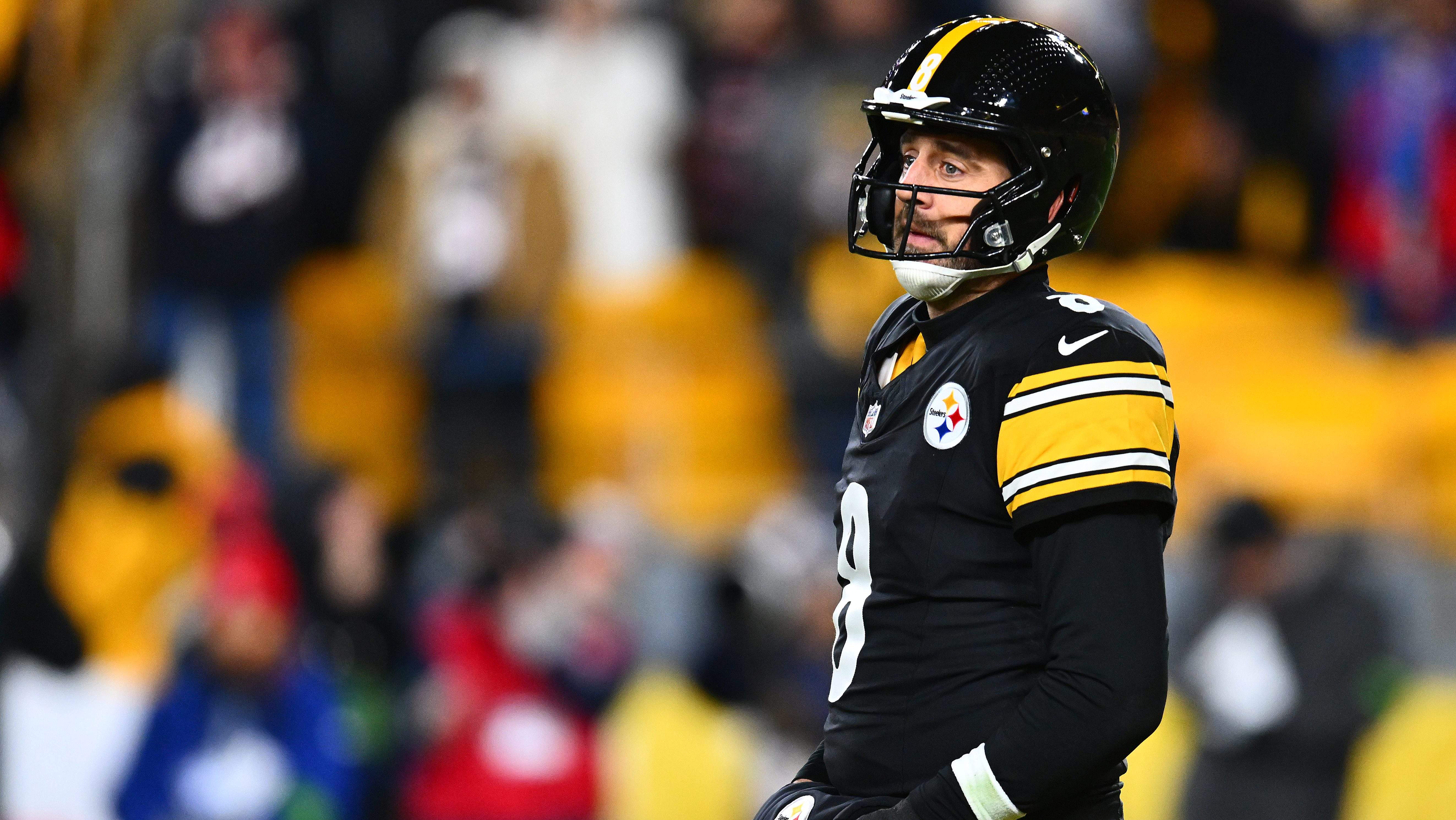
As the season approaches, the questions loom large. Can Rodgers squeeze out another productive year, or will age finally catch up to him? Will Howard or Allar develop into franchise players capable of carrying the mantle forward? Or will Pittsburgh eventually be forced to pursue another quarterback altogether, perhaps through the draft or a blockbuster trade? The answers will shape not only the Steelers’ immediate future but their long-term legacy. For now, Cowherd’s warning hangs over the franchise like a storm cloud, a reminder that even the most stable organizations are vulnerable when the foundation at quarterback begins to crack. The Steelers have always measured themselves by championships, and the quarterback position will determine whether that standard can still be met in an AFC defined by stars.
What makes Cowherd’s warning sting even more is the broader context of what the Steelers represent to the NFL. This is not a franchise accustomed to drifting in uncertainty, nor one that tolerates mediocrity for long stretches. The Rooney family has built its reputation on patience and vision, but patience without a plan can quickly become complacency. The quarterback position is not like other roster spots that can be patched with depth or schemed around—it is the heartbeat of a team, the defining factor in whether a season ends in glory or disappointment. For Pittsburgh, the looming question is whether they will seize control of their future or allow themselves to be swept into the tide of irrelevance in a conference dominated by stars. “You can’t keep borrowing time at quarterback,” one former player remarked. “Eventually, you have to own the future.” That sentiment captures the urgency of the moment. The Steelers stand at a crossroads, and the decisions they make in the coming seasons will determine whether they remain part of the NFL’s elite or fade into the background as a cautionary tale of tradition colliding with modern reality.