Why Manchester City’s Reported £120 Million Move for Elliot Anderson Signals the Beginning of a New Era
Manchester City supporters have grown accustomed to seeing their club make headlines in the transfer market.

Over the years, they have watched some of football’s biggest names arrive at the Etihad Stadium. Record-breaking deals, superstar signings, and ambitious spending have become part of the club’s identity during one of the most successful periods in English football history.
Yet even by City’s standards, the latest reports surrounding Elliot Anderson have sparked genuine disbelief.
According to growing speculation, Manchester City are prepared to offer Nottingham Forest a package worth up to £120 million, including bonuses and performance-related add-ons, for the highly-rated midfielder.
If true, it would instantly become one of the largest transfers in Premier League history.
And it raises a simple question.
Why would Manchester City spend £120 million on Elliot Anderson?

The answer has less to do with the player’s current reputation and far more to do with the future Enzo Maresca is trying to build.
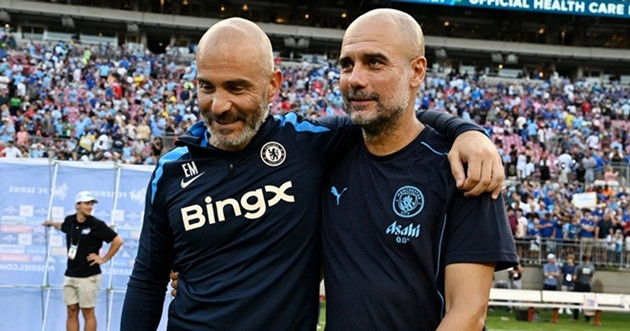
The departure of Pep Guardiola marked the end of an era at Manchester City. Under Guardiola, the club established itself as the dominant force in English football, collecting league titles, domestic cups, and European silverware while redefining how the modern game could be played.
Replacing a figure of that magnitude was never going to be easy.

When City turned to Enzo Maresca, they were not simply appointing a new manager. They were beginning a transition.
The challenge facing Maresca is enormous. Maintaining success is difficult. Reinventing a successful team while remaining competitive is even harder.
Every great dynasty eventually reaches a crossroads.
Players age.
Squads evolve.
Key leaders move on.
New stars must emerge.

Manchester City are approaching that moment.
Several experienced members of the squad are entering the latter stages of their careers, while others face uncertain futures. The midfield, long considered the heartbeat of City’s success, is expected to undergo significant changes over the next few seasons.
That is where Elliot Anderson enters the picture.
Within recruitment circles, Anderson is viewed as one of the most complete young midfielders currently playing in England. His performances for Nottingham Forest have attracted attention not only because of his technical quality but because of his versatility.
Modern football increasingly rewards players capable of performing multiple responsibilities.
Anderson can operate as a deep-lying midfielder, helping control possession and dictate tempo. He can also play further forward, driving attacks and linking play between midfield and attack. Defensively, he brings intensity, energy, and a willingness to press aggressively.
Those qualities make him particularly attractive for Maresca’s tactical vision.
Unlike many traditional midfielders, Anderson offers flexibility.
He can adapt.

He can learn different roles.
He can fit into multiple systems.
For a manager tasked with building the next version of Manchester City, those attributes carry enormous value.
The reported £120 million fee, however, is not solely based on talent.
It is based on scarcity.

Elite clubs around Europe are constantly searching for young midfielders with Premier League experience, tactical intelligence, technical quality, and long-term potential. Finding players who possess all those characteristics is exceptionally difficult.
When such a player becomes available, the price rises rapidly.
Nottingham Forest understand exactly what they have.
From their perspective, there is little reason to sell one of their most valuable assets unless an extraordinary offer arrives. Anderson remains young, continues to improve, and has become an increasingly important figure within the squad.
That reality gives Forest significant leverage in negotiations.
If Manchester City truly want the player, they may have to offer a fee that completely changes Forest’s position.
A package approaching £120 million would certainly qualify.
For Forest, such a sale could transform the club’s future. The funds generated would allow major reinvestment across multiple areas of the squad while providing financial flexibility for years to come.
For Manchester City, meanwhile, the calculation is very different.
They are not paying for what Anderson is today.

They are paying for what they believe he can become.
That distinction is critical.
Football’s transfer market has evolved dramatically over the past decade. Clubs increasingly invest in future potential rather than established reputation. The most successful organizations identify elite talent before it fully matures.
City believe Anderson may belong in that category.
If Maresca views him as a central figure in his long-term plans, the financial commitment becomes easier to justify.
The pressure, of course, would be immense.
Any player arriving at Manchester City for a fee approaching £120 million would immediately face extraordinary expectations. Every performance would be analyzed. Every mistake would become a talking point. Every strong display would be measured against the size of the investment.
Not every player thrives under that spotlight.
Some are overwhelmed by it.
Others use it as motivation.
City would be betting that Anderson falls into the second group.
What makes the story particularly fascinating is what it says about Manchester City’s ambitions.
This is not a club preparing to slow down after years of success.
It is a club preparing for another cycle of success.
The reported pursuit of Anderson suggests City are already thinking beyond the present. Rather than focusing solely on short-term solutions, they appear determined to build the foundations of the Maresca era.
Whether the final fee reaches £120 million remains uncertain.
Transfer negotiations are rarely straightforward, and reported figures often fluctuate as discussions progress.
But one thing is becoming increasingly clear.
Manchester City see Elliot Anderson as more than a talented midfielder.
They see him as a potential cornerstone of their future.
And if they ultimately complete a deal of this magnitude, the transfer will be remembered as more than just an expensive signing.
It will be remembered as the first major statement of the Enzo Maresca era — a declaration that Manchester City have no intention of standing still, even after the end of the most successful chapter in the club’s history.