Why Europe’s Biggest Clubs Are Chasing Ayyoub Bouaddi After His World Cup Breakthrough
EAST RUTHERFORD, N.J. — The list of clubs interested in Ayyoub Bouaddi grows longer by the week, but the question echoing across Europe is no longer whether the teenager is talented enough for the elite level.
It is whether anyone can still afford to wait.
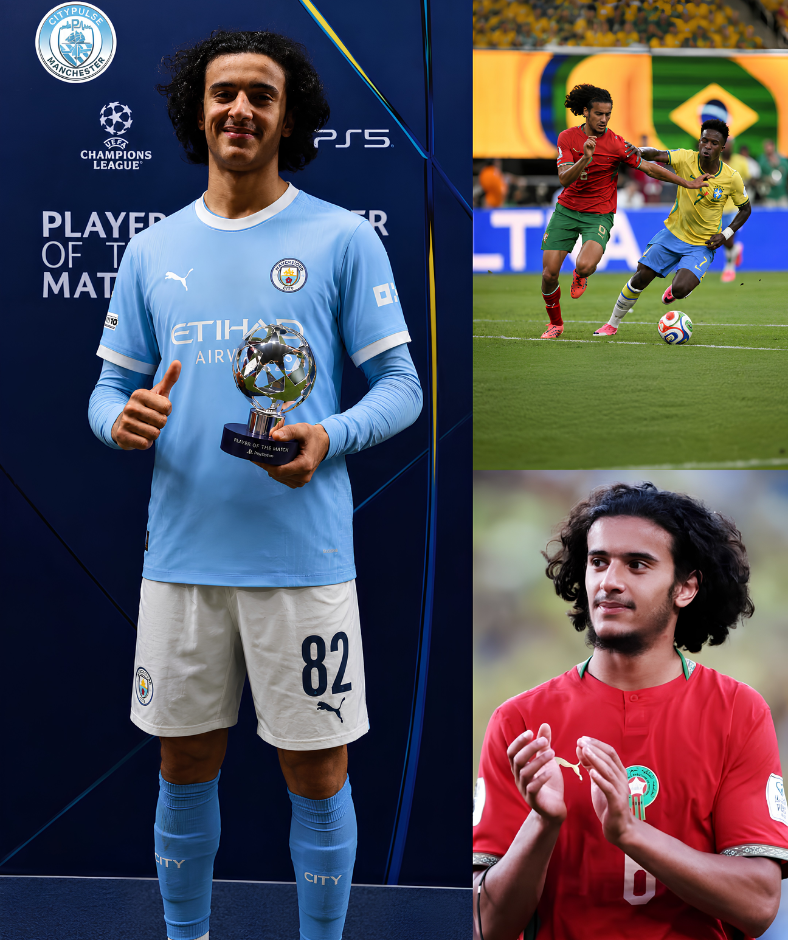
Manchester City, Arsenal and Chelsea are among the clubs monitoring the 18-year-old Lille midfielder following a series of eye-catching performances for Morocco at the 2026 FIFA World Cup. Paris Saint-Germain and Bayern Munich are also reportedly tracking his situation, turning what was once a scouting project into one of the most competitive transfer races of the summer.
The reason is simple: Bouaddi has transformed from one of Europe’s most promising young midfielders into one of the tournament’s defining breakout stars.
Against Brazil in Morocco’s 1-1 draw at MetLife Stadium, Bouaddi delivered the kind of performance that forces executives to reconsider transfer priorities. Facing a midfield filled with established internationals, the teenager played with remarkable composure, constantly offering passing angles, escaping pressure and dictating transitions. He looked less like a prospect and more like a player already operating at the highest level.
For many observers, however, the display was not a surprise.
Inside scouting departments across Europe, Bouaddi’s name has been circulating for years.
Born in France but representing Morocco after switching his international allegiance ahead of the World Cup, Bouaddi emerged through Lille’s academy system as one of the most technically gifted players of his generation. Before turning 19, he had already accumulated nearly 100 senior appearances for the French club — a remarkable achievement in a league known for developing elite talent.
One moment, in particular, still resonates with recruiters.

On his 17th birthday, Bouaddi helped Lille secure a memorable UEFA Champions League victory over Real Madrid. While many young players require carefully managed introductions to elite competition, Bouaddi appeared entirely comfortable. His maturity in possession and tactical intelligence stood out against some of the world’s best players.
That performance placed him firmly on the radar of Europe’s giants.
The World Cup may have merely accelerated a process already underway.
For Manchester City, the attraction is obvious. Pep Guardiola’s system demands midfielders capable of receiving under pressure, controlling tempo and understanding positional play at an elite level. Bouaddi’s profile aligns closely with those requirements. City have already witnessed his qualities firsthand after closely monitoring Lille before their Champions League encounter last season.
Arsenal’s interest is equally logical.
Mikel Arteta continues to build a squad capable of competing for Premier League and Champions League titles over the long term. Bouaddi’s age, technical ability and tactical flexibility make him an ideal fit for a club seeking sustainable excellence rather than short-term solutions.
Chelsea, meanwhile, have spent several transfer windows investing heavily in young talent with high ceilings. Bouaddi fits that recruitment strategy perfectly. Unlike many teenage prospects, however, he arrives with significant first-team experience and a growing résumé on the international stage.
What separates Bouaddi from other highly rated youngsters is not merely his technical skill.
It is his understanding of space.
Modern football increasingly values midfielders who can manipulate the rhythm of a game without necessarily dominating highlight reels. Bouaddi possesses that rare ability. He recognizes passing lanes before they open, anticipates pressure before it arrives and consistently makes teammates around him better.
Those traits are difficult to teach and even harder to find.

Formerly, clubs might have viewed him as a developmental investment. After this World Cup, he is increasingly viewed as a player capable of contributing immediately.
That shift explains Lille’s reported valuation of approximately £50 million.
The French club is under no immediate pressure to sell, and executives understand that every strong World Cup performance strengthens their negotiating position. Sources around the transfer market expect any serious discussions to intensify only after Morocco conclude their tournament campaign.

Until then, Bouaddi remains focused on football.
Morocco’s impressive draw against Brazil has positioned the Atlas Lions as genuine contenders to progress deep into the competition, and Bouaddi’s influence is becoming increasingly central to their ambitions. Another strong performance against Scotland and a convincing display in the final group match against Haiti could further elevate both his reputation and market value.
Yet perhaps the most striking aspect of Bouaddi’s rise is how natural it appears.

Many young stars arrive at major tournaments accompanied by hype and expectation. Bouaddi arrived with neither. He entered the World Cup known primarily to scouts, analysts and dedicated followers of European football.
He leaves it as one of the sport’s most coveted assets.
The transfer battle now forming between Manchester City, Arsenal, Chelsea, Paris Saint-Germain and Bayern Munich is not simply about potential. Clubs are competing because they believe Bouaddi has already crossed the difficult bridge between prospect and performer.
That distinction matters.
Potential creates interest.
Performance creates bidding wars.
And after announcing himself on football’s biggest stage, Ayyoub Bouaddi has become one of the most valuable young midfielders in the world.