Levi’s Stadium has unexpectedly become the centerpiece of a global viral moment after FIFA attempted to strip away its identity during international matches. Under FIFA’s strict sponsorship rules, the venue was temporarily renamed “San Francisco Bay Area Stadium” and its massive Levi’s branding was covered with plain white tarps. The intention was to erase any trace of the brand from the global broadcast stage. Yet the effort backfired in spectacular fashion. The stadium’s distinctive “batwing” silhouette remained visible beneath the coverings, instantly recognizable to millions of 49ers fans worldwide. What was meant to be a neutral, sponsor‑compliant backdrop instead became a symbol of defiance, sparking a wave of online reactions that transformed FIFA’s restrictions into a comedy trend embraced across continents.
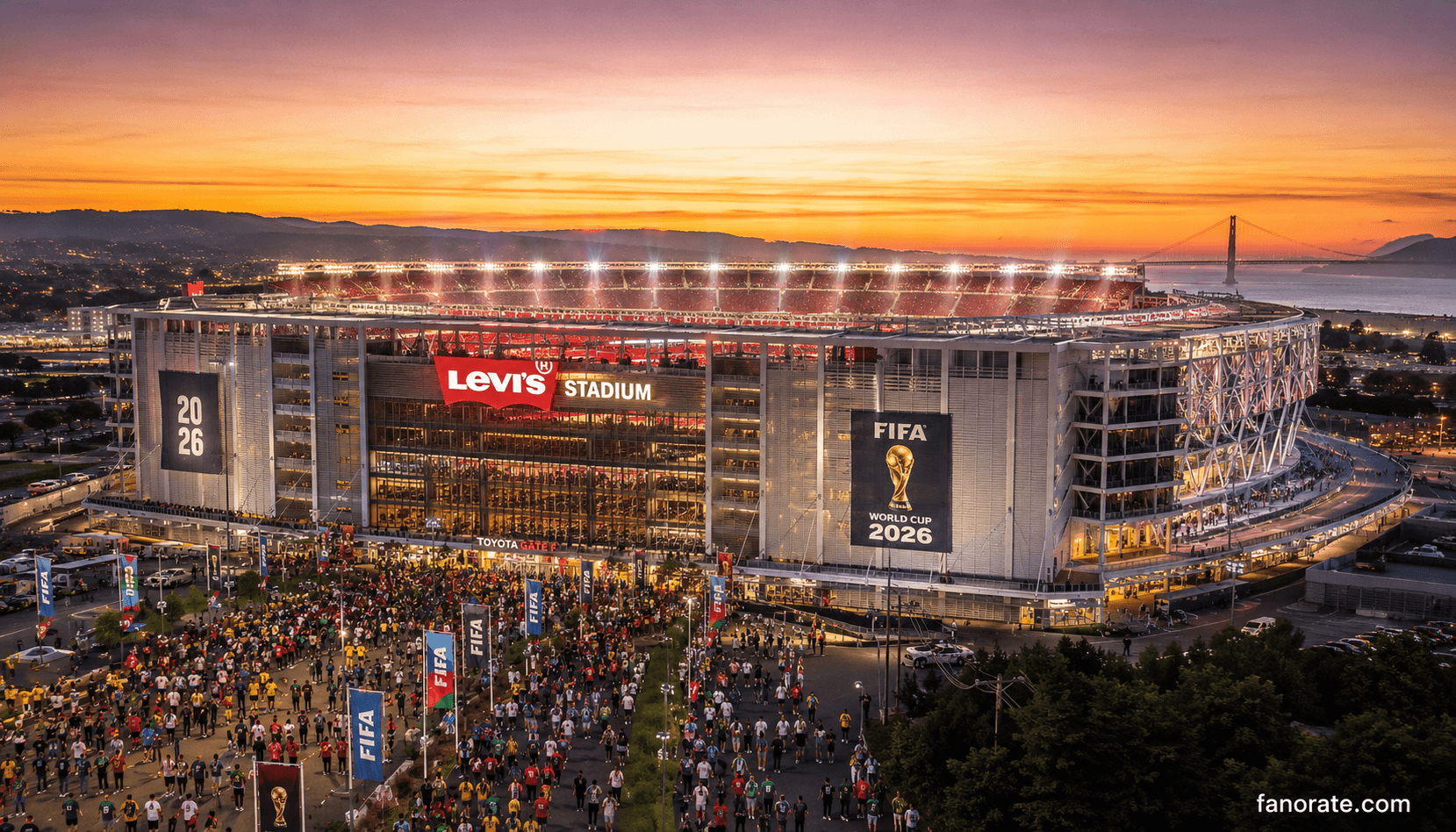
The irony of the situation is striking. Levi’s, without spending a dime on advertising, suddenly found itself at the center of a global conversation. Fans flooded social media with memes, jokes, and commentary, pointing out how the stadium’s silhouette gave away its identity even when stripped of logos. In a clever twist, Levi’s leaned into the moment by changing its social media profile picture to the covered logo itself, turning the act of censorship into a badge of pride. “When people still call your name even when you’re forced to disappear, that’s true brand power,” one marketing analyst observed. The move was hailed as a masterclass in turning adversity into opportunity, proving that authenticity and recognition can outshine official sponsorship rules.
For the Faithful, the passionate 49ers fanbase, the episode carried deeper meaning. Levi’s Stadium is more than just a venue; it is a symbol of identity and belonging. Fans quickly rallied around the idea that no matter what FIFA tried to cover, the stadium would always be theirs. “This will always be our house,” one supporter wrote, echoing a sentiment that spread across forums and feeds. The viral moment reinforced the bond between the team, its home, and its fans, showing that the essence of a place cannot be erased by corporate regulations. The incident became a rallying cry, a reminder that the stadium’s spirit lives in the hearts of those who fill its seats, not in the signage that adorns its walls.

The episode also highlights the tension between global governing bodies and local culture. FIFA’s strict sponsorship rules are designed to protect official partners, but in this case, they inadvertently elevated a brand they sought to suppress. Marketing experts have pointed out that Levi’s benefited from what is known as “earned media”—exposure generated organically rather than through paid campaigns. “This is the kind of publicity money can’t buy,” another analyst said. “Levi’s didn’t fight the ban; they embraced it, and in doing so, they won the internet.” The incident underscores how attempts to control narratives can backfire when fans and communities reclaim symbols in ways that transcend official messaging.
The broader implications extend beyond branding. By recognizing the stadium’s unique architecture, supporters turned a corporate maneuver into a cultural moment. It reflects the growing power of fan communities in shaping the meaning of sports spaces, often pushing back against attempts to sanitize or neutralize them. In this case, the Faithful transformed a restriction into a rallying cry, reinforcing their identity and amplifying their voice on a global stage. “You can cover the name, but you can’t cover the soul,” one fan wrote, capturing the essence of the moment. The incident demonstrates how fans are not passive consumers of sport but active participants in shaping its culture, reclaiming symbols and narratives in ways that resonate far beyond the field.

The story also speaks to the resilience of place and memory. Levi’s Stadium, despite being stripped of its branding, remained instantly recognizable because of its architecture and the emotional connection fans have built with it. This suggests that stadiums are more than commercial spaces—they are cultural landmarks, repositories of collective memory, and symbols of identity. The attempt to erase Levi’s branding only highlighted how deeply embedded the stadium is in the consciousness of its supporters. “You can’t hide a landmark,” one fan quipped online, and the viral spread of that sentiment showed how the stadium’s identity transcends logos and sponsorship deals.
The incident also raises questions about the future of sponsorship in global sports. As governing bodies enforce stricter rules to protect official partners, they may inadvertently create opportunities for non‑sponsors to gain visibility through cultural recognition and fan loyalty. Levi’s Stadium has shown that when a venue is deeply tied to a community, its identity cannot be erased by corporate mandates. This could encourage other brands to invest more in authentic connections with fans rather than relying solely on official sponsorship deals. “True sponsorship is built in the hearts of people, not in contracts,” a sports business expert noted, emphasizing the lesson that authenticity often trumps regulation.

As the story continues to circulate, Levi’s Stadium has become a case study in resilience and recognition. What began as an effort to erase a name ended up proving its strength. The viral wave has not only boosted Levi’s visibility but also reminded the world of the enduring connection between fans and their home ground. For the Faithful, the message is clear: no matter what is covered, Levi’s Stadium remains sacred territory. And for FIFA, the lesson may be equally clear—sometimes, in trying to control the narrative, you end up writing a chapter you never intended.
Levi’s Stadium, in the aftermath of this episode, stands as a reminder that identity in sport is not dictated by signage or official decrees but by the people who inhabit it. What began as an attempt to control perception ended up reinforcing the bond between a team and its supporters, proving that loyalty cannot be erased with paint or policy. The Faithful have shown that their connection to the stadium is deeper than branding, rooted in years of shared triumphs and heartbreaks. As one longtime fan put it, “You can cover the name, but you can’t cover the memories.” That sentiment captures the essence of why Levi’s endures: it is not just a building, but a living symbol of resilience, belonging, and the unshakable truth that some places become sacred because of the people who refuse to let them fade.