Aaron Judge’s Hidden Injury Shakes the New York Yankees — and Their Season Hangs in the Balance
NEW YORK — In a season defined by fragile momentum and unforgiving expectations, the New York Yankees have been forced into an uneasy silence. On Thursday afternoon, the organization confirmed what had been feared but not fully understood: Aaron Judge, their captain, their heartbeat, and their most dominant presence, has been diagnosed with a stress fracture of the first rib on the right side.
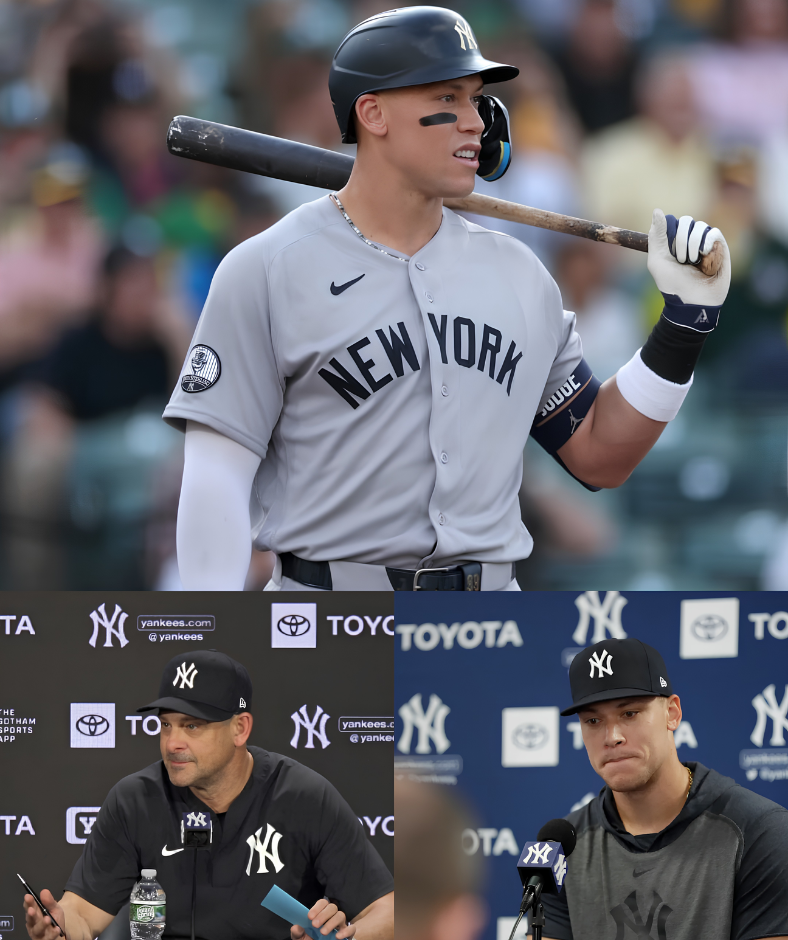
It is not the kind of injury that announces itself loudly. There was no dramatic collision at the wall, no violent swing that ended in immediate pain, no moment that television cameras could replay in slow motion. Instead, it crept in quietly, disguised as discomfort, lingering across weeks until it finally demanded attention.
What makes this development more alarming is not only the diagnosis itself, but the story of how it unfolded.
For nearly two weeks, Judge had been managing what was initially described as a minor bone bruise near his right rib cage. The New York Yankees, cautious but hopeful, believed it was something that could be handled with rest and monitoring. But as his swing began to lose its familiar authority and his timing showed subtle cracks, internal concern grew.
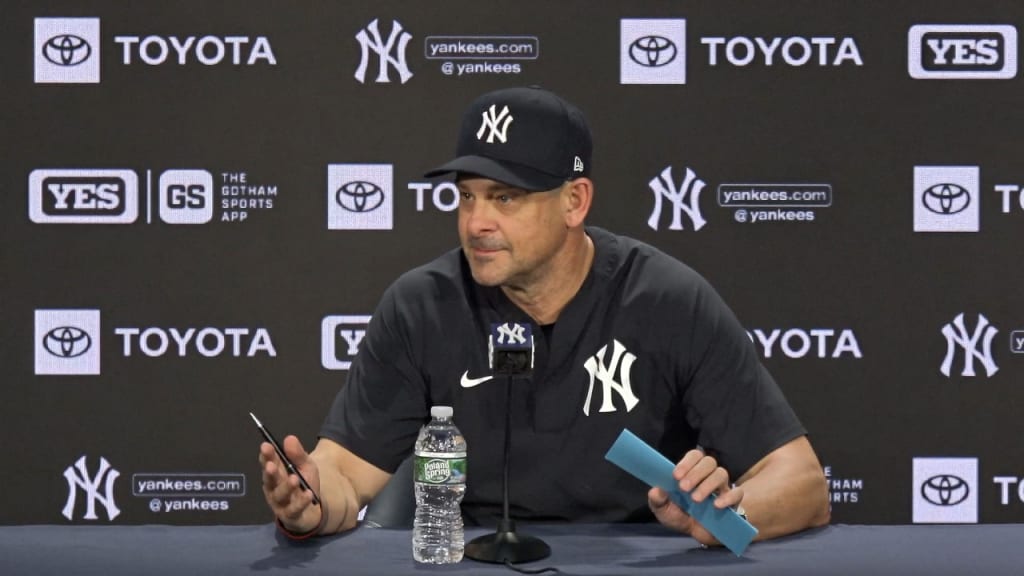
On Tuesday, Judge missed his first game of the season after reporting discomfort during the series against the Athletics in West Sacramento. Manager Aaron Boone later admitted that the captain had been dealing with soreness in his right shoulder “for the last couple of weeks,” though the pain surfaced primarily when swinging.
There was no single moment of injury. No clear explanation. Just a gradual decline in comfort that even Judge himself could not pinpoint.
That uncertainty led the Yankees to escalate testing.
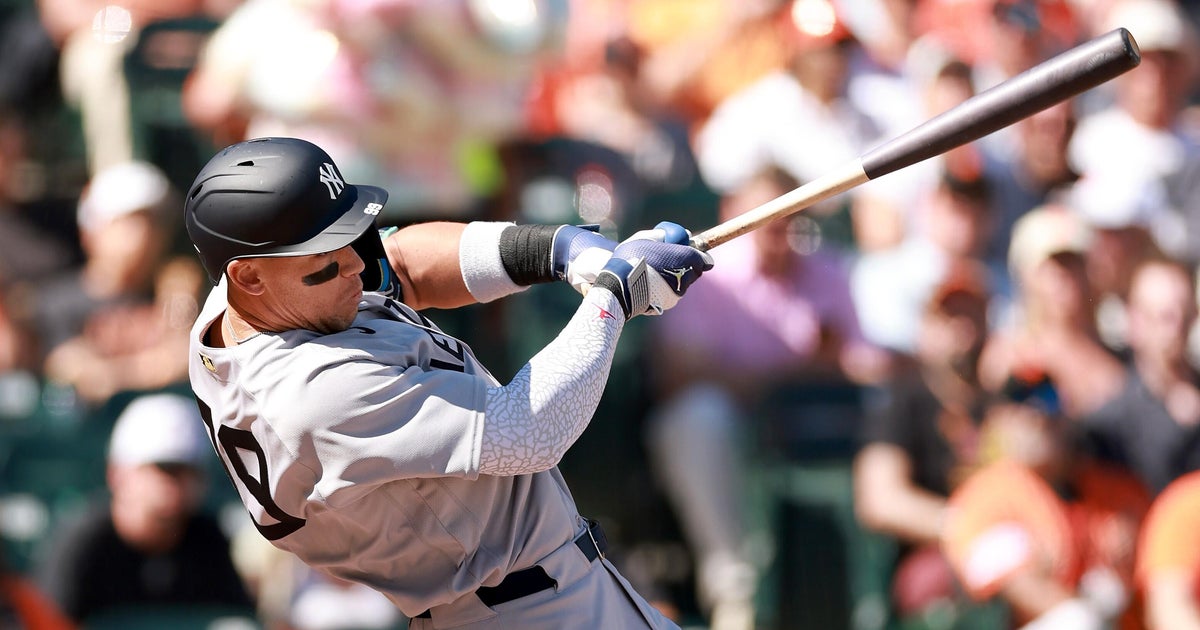
An MRI was performed under the guidance of Dr. Gregory J. Pearl, a Dallas-based specialist known for his expertise in thoracic outlet syndrome management in high-performance athletes. What followed was a diagnosis that reframed everything: a stress fracture of the first rib, the same area that once troubled Judge in 2019 during one of the most physically challenging stretches of his career.
Back then, the injury included a partially collapsed lung. This time, the Yankees are relieved that the situation appears less severe — but the concern remains unmistakable.
The team announced that Judge will undergo a period of rest and limited activity, with re-imaging scheduled in approximately four to six weeks to evaluate healing progress. While he is still expected to return at some point this season, there is no clear timeline, and in baseball, uncertainty can be as damaging as absence itself.
For the Yankees, this is more than a medical update. It is a structural shift.

Judge is not just the team’s most productive hitter. He is the gravitational center of their lineup, the presence that reshapes how opposing pitchers approach every inning. His 2025 season — .248/.375/.533 with 17 home runs and 38 RBIs in 59 games — reflects both his power and the rare patience that defines elite hitters even in less-than-perfect health.
But beneath the surface, something had been slipping.
Since May 11, Judge had gone 14-for-68 (.206) with just one home run, eight RBIs, and 19 strikeouts. The numbers suggested a player still dangerous, still disciplined, but not fully himself. In hindsight, those struggles now read less like a slump and more like a signal.
For the Yankees, that realization arrives too late to prevent disruption.
Inside the clubhouse, Judge’s absence carries weight beyond statistics. Teammates speak of his consistency as a stabilizing force — the same presence whether the team is on a winning streak or fighting through adversity. His leadership is quiet, but constant: early arrivals, late exits, and a tone that rarely shifts regardless of circumstance.
That stability is now gone, at least for a stretch.
And the timing could not be worse.
The American League race remains tightly contested, with every series carrying postseason implications. The Yankees entered the summer believing they had the depth to withstand injuries, but few teams are equipped to replace a player who alters the geometry of an entire lineup.
In the short term, the burden falls on others — on a reshuffled batting order, on younger hitters asked to step into pressure they were not expected to shoulder this early, on a coaching staff forced to reconstruct offensive identity midstream.
But the deeper concern is psychological.
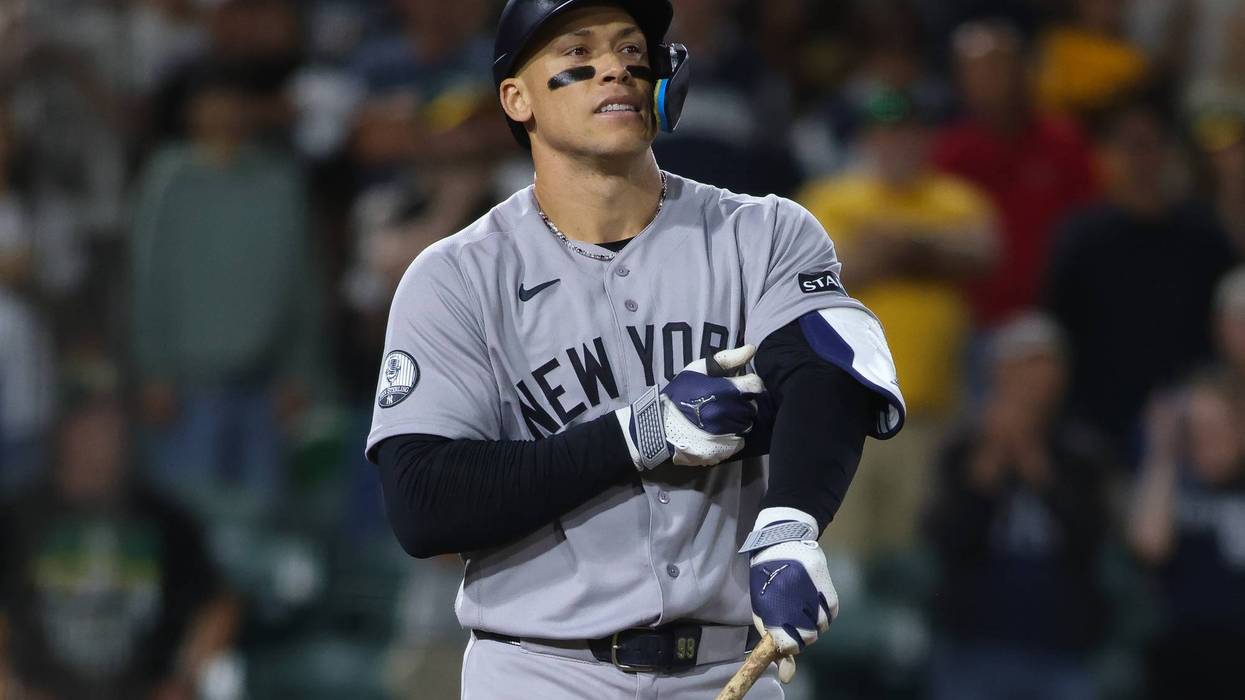
Baseball seasons are not defined solely by talent. They are shaped by rhythm, continuity, and belief. When a player like Judge disappears, even temporarily, it forces a team to recalibrate not only strategy, but expectation.
There is also history to consider.
In 2019, Judge endured a similar injury to the same rib area, an experience that included a stress fracture and complications that lingered far longer than initially anticipated. While the Yankees insist this current diagnosis is being managed proactively and detected earlier, the memory of that previous setback lingers uncomfortably in the background.
For now, the organization is choosing caution over urgency.
Judge is expected to return this season. That much remains unchanged. But the path back is no longer linear, and every checkpoint — every scan, every swing, every response to increased workload — will determine whether that expectation holds.
In a sport that often measures value in daily performance, the Yankees must now learn patience.
And for Aaron Judge, a player defined by physical dominance and towering presence, the challenge is no longer about overpowering pitchers.
It is about stillness.
Rest.
And time.
As the Yankees move forward without their captain, one truth lingers over Yankee Stadium and beyond: the season has not been lost, but it has undeniably changed.
And whether it changes for better or worse may ultimately depend on how Aaron Judge’s rib — and his body — respond in the weeks that follow.
For now, the Yankees wait.
And hope that their season’s defining force is not gone — only paused.