The Idea That Shook the League: Why a Luka-for-Giannis Trade Tests the Lakers’ Identity

In the NBA, some trade ideas are laughed off instantly. Others linger uncomfortably, not because they are likely, but because they force franchises to confront who they really are. Bill Simmons’ recent proposal — a straight-up swap of Luka Dončić for Giannis Antetokounmpo involving the Los Angeles Lakers and Milwaukee Bucks — belongs firmly in the second category.
At first glance, the idea sounds almost reckless. Dončić is 26 years old, a generational offensive engine, and widely viewed as the future face of the Lakers. Antetokounmpo, though still elite and a proven champion, is approaching his thirties and currently sidelined with a calf strain. Trading youth and long-term control for immediate dominance is the kind of gamble that has haunted franchises for decades.
And yet, the proposal refuses to die because of one unavoidable reality: LeBron James is still in Los Angeles, and time is running out.
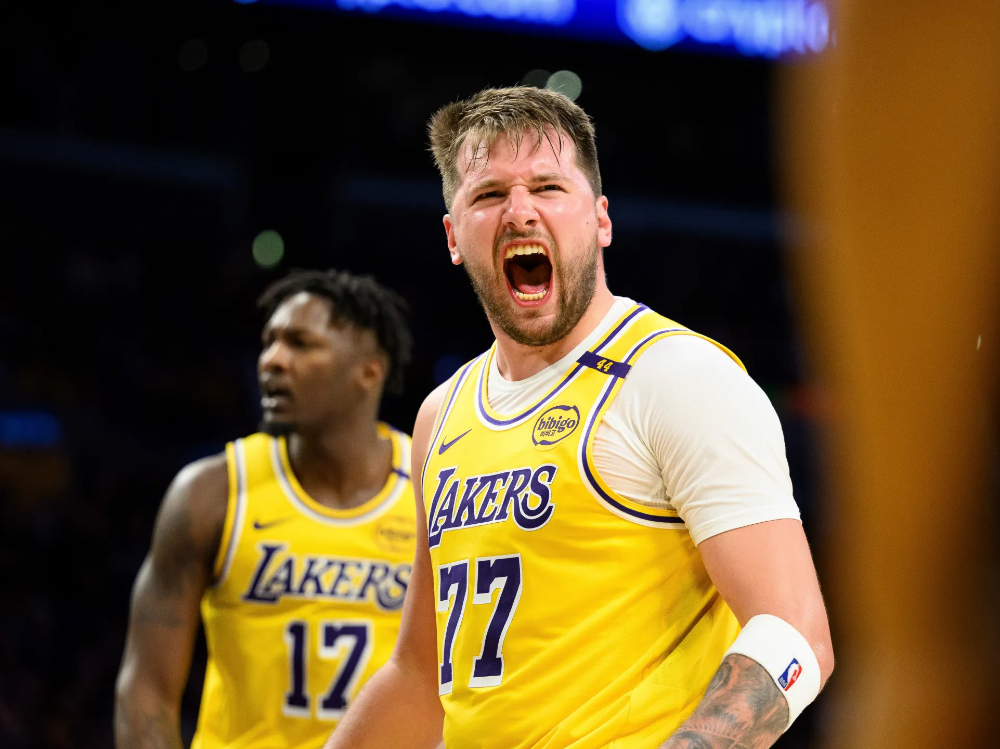
The Lakers exist in a perpetual tension between honoring the present and safeguarding the future. With LeBron, every season is treated as a closing window. Pairing him with Giannis would instantly create the most physically overwhelming duo in the league, one capable of bending defenses and playoff series through sheer force. From a pure “win-now” standpoint, the appeal is obvious.
But the cost is staggering.
Dončić is not merely a star; he is an ecosystem. He controls tempo, space, and scoring in ways few players in NBA history ever have. Moving him would signal that the Lakers are willing to mortgage the next decade for one last push at a title. For an organization built on dynasties rather than brief peaks, that philosophy cuts against its DNA.
From Milwaukee’s perspective, the idea carries a different kind of logic. The Bucks are quietly facing questions about their long-term direction. If a rebuild is looming, flipping Giannis for a younger, franchise-defining centerpiece like Dončić could reset the clock instantly. It would be painful, controversial, and seismic — but also brutally pragmatic.

Still, pragmatism does not erase risk. Dončić’s defensive limitations are real. Antetokounmpo’s recent injury history cannot be ignored. And chemistry, especially in high-stakes environments, is never guaranteed. Championships are not won on spreadsheets alone.
What makes Simmons’ idea so unsettling is not that it will happen, but that it exposes a philosophical fault line. Do the Lakers believe their future is something to protect, or something to spend? Is Luka Dončić the foundation of the next era, or merely the most valuable chip on the table?
These are questions franchises hate answering publicly, yet must confront privately.
In all likelihood, the trade will remain hypothetical — another provocative thought experiment in a league built on imagination. But history shows that the NBA’s biggest moments often begin as ideas everyone dismissed as impossible.
Sometimes, the most dangerous trades are not the ones that happen, but the ones that make teams realize what they might be willing to sacrifice.
And once that line is crossed, there is no turning back.