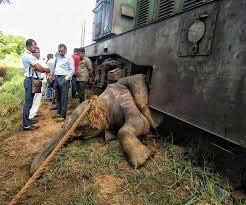
It was a quiet morning in Habarana, where the mist still clung to the trees and the forest was just beginning to stir. Then came the sound that shattered everything — the screech of metal, the crash of impact, and the cries that followed. A speeding train had struck a herd of elephants crossing the tracks near Hathares Kotuwa, killing one instantly and leaving two others fighting for their lives. The force of the collision was so powerful that the train from Batticaloa to Colombo derailed, sending panic through passengers and halting all railway traffic across the region.
Rescue teams, railway workers, and wildlife officers rushed to the scene, their hearts heavy as they worked through the wreckage. The sight was devastating — the injured elephants lay trembling beside the tracks, their bodies scarred and their herd scattered. Local villagers gathered in silence, some weeping, others helping however they could. These elephants were more than wild creatures to them; they were neighbors, part of the rhythm of their land.
As the forest fell quiet once more, only one question remained, echoing louder than the tragedy itself: how many more lives — both human and animal — must be lost before true coexistence is achieved? Until stronger protections and wildlife corridors are put in place, Sri Lanka’s majestic giants will continue to risk everything just to survive in the only home they’ve ever known.