Beneath the golden African sun — the same warmth that once welcomed them into life — hundreds of Zimbabwe’s elephants have fallen, their massive bodies scattered across the cracked earth. The land that once echoed with their trumpets is now silent, haunted by the weight of a drought so merciless that even the strongest giants could not survive.
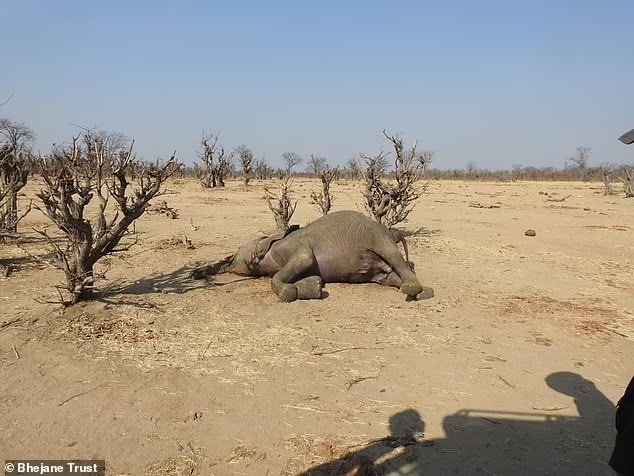
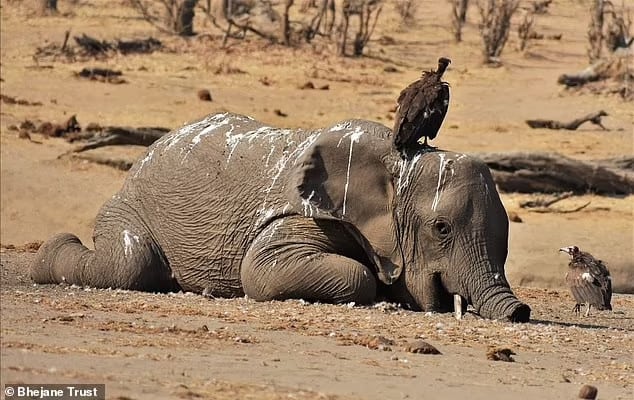
In Hwange National Park, where over 160 elephants perished in just weeks, the air still carries the scent of dust and death. Their great shadows no longer move across the plains; their tusks, once gleaming under the sun, now lie buried in dry soil. Photographs taken by rangers show calves clinging to lifeless mothers, vultures circling above — nature’s cruel reminder that life and death share the same horizon.
Between February and November 2023, the skies refused to rain. Rivers dried into scars, grass turned brittle and gray, and watering holes became traps of mud and despair. Even when the long-awaited rains finally arrived, they came too late — too late for the young ones who had already collapsed, too late for the herds that had wandered miles in vain.
“Their cries faded with the wind,” said Trevor Lane of the Bhejane Trust, who witnessed elephants too weak to rise, their ribs visible beneath skin scorched by the sun. “You could feel their suffering — and their silence.”
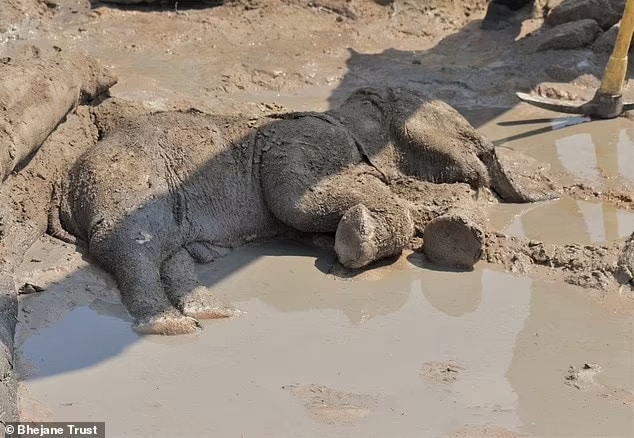
The drought has not only claimed lives, but also fractured the fragile balance of Zimbabwe’s ecosystem. Conservationists warn that if climate change continues unchecked, the plains of Africa may lose their most iconic inhabitants forever.
They died thirsty — but not forgotten.
Each fallen elephant is a plea to humanity: to protect the earth before its heart — and its giants — stop beating forever.