This happens all the time — but people are raising him to be big and strong.
Adun, a 2-week-old Bornean pygmy elephant, had managed to get himself trapped in a pond near a palm oil plantation. His feet were stuck in the pond’s muddy bottom, and the harder he tried to free himself, the weaker and more tired he became.
The Wildlife Rescue Unit (WRU) – an animal rescue group based in Sabah, a region in Malaysian Borneo – arrived at the scene. But instead of immediately helping the baby elephant, the teamwaited to see if Adun’s family would return and rescue him themselves. After all, remaining with his elephant family would be the best possible option for Adun.
The rescue team kept an eye on Adun, and waited for a few hours, hoping Adun’s family would come get him. But they never did.
At this point, the WRU stepped in. A team of people pulled Adun out of the pond, loaded him onto a vehicle and drove him to the elephant care unit at Sepilok Orangutan Rehabilitation Centre.
Elephant rescues are usually quite challenging because of the animals’ weight and size, even though Bornean “pygmy” elephants are smaller than other types of Asian elephants. As a result, they often need to be physically restrained or tranquilized. But this wasn’t the case for Adun.
“He was weak and severely dehydrated,” Laura Benedict, a veterinarian with the WRU, told The Dodo. “Not much effort was made to restrain the elephant during the whole process.”
Unfortunately, Adun’s story is far from unique. Since 2010, the WRU has had to rescue 27 baby Bornean elephants who lost their families.
As in Africa, elephant families in Borneo are often killed for their ivory. But Bornean elephants also face other threats – farmers will kill elephants who come onto their plantations and eat their crops. In the wild, Bornean elephants live in the forest, and they eat grasses, bamboo and fruit. But as more and more forest is torn down for palm oil plantations, elephants will resort to eating crops because they have nothing else.
“They don’t create much damage on mature plantations,” Benoit Goossens, director of the Danau Girang Field Centre, a research and training facility managed by the Sabah Wildlife Department and Cardiff University, told The Dodo. “They mainly eat young shoots, when the palms are newly planted.”
When they do eat crops on plantations, farmers often chase them away with bullets, even though elephants are a protected species in Sabah. Asian elephants, of which Bornean elephants are a subspecies, are classified as endangered.
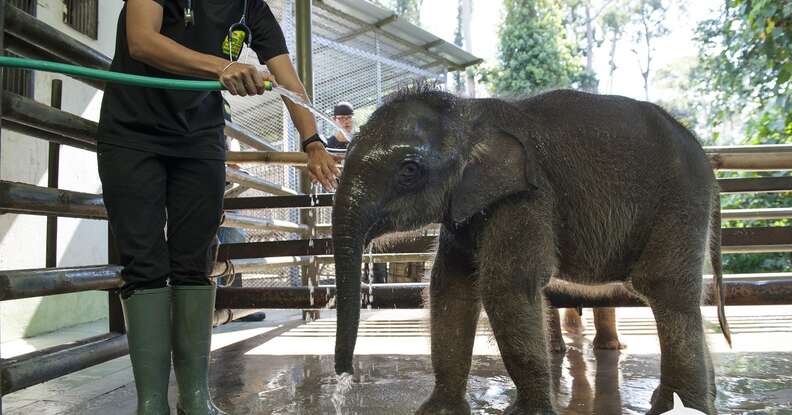
And when baby elephants lose their families, they often don’t last long on their own. A lot of times, the babies are terminally ill and they die shortly after rescue, Benedict explained. “We recently lost three babies to a deadly virus,” she said.
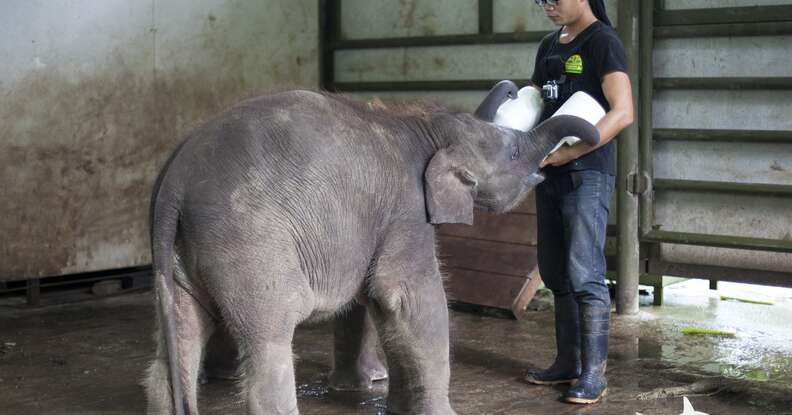
“In all cases, we find these orphans wandering alone without their mother or group,” Benedict said. “Most logical explanations would be that they were left by their group due to irresponsible or aggressive control measures by humans, or their mothers died due to gunshots.”
The WRU tries to help as many elephants as it can, but the Bornean elephants are facing huge challenges.
At present, there are only about 1,500 Bornean elephants left in Borneo, and 95 percent of them live in Sabah, according to Goossens. In fact, Bornean elephants are one of the most endangered subspecies of the Asian elephant, Goossens said, making them some of the rarest elephants in the world.
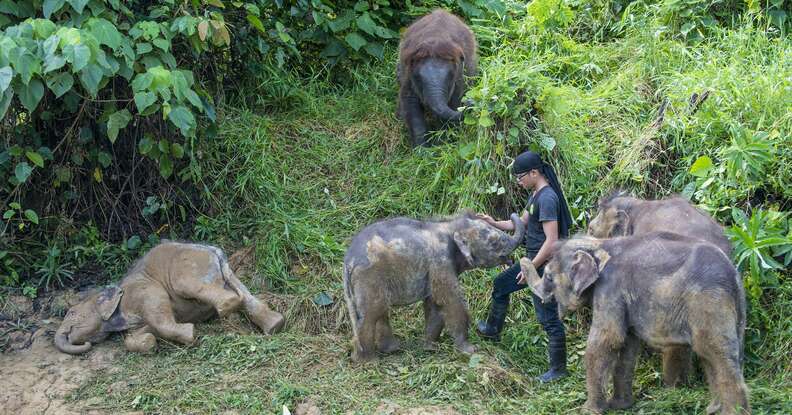
There are currently five orphaned elephants being cared for at the WRU’s elephant care unit at the Sepilok Orangutan Rehabilitation Centre – Adun, Budak, Tunku, Dumpas and Danum. Budak is the youngest at 11 months, and Danum is the oldest at 2 and a half years. Coincidentally, all five orphans are males.
But, no matter their ages, they need to be cared for like infants, Benedict said.
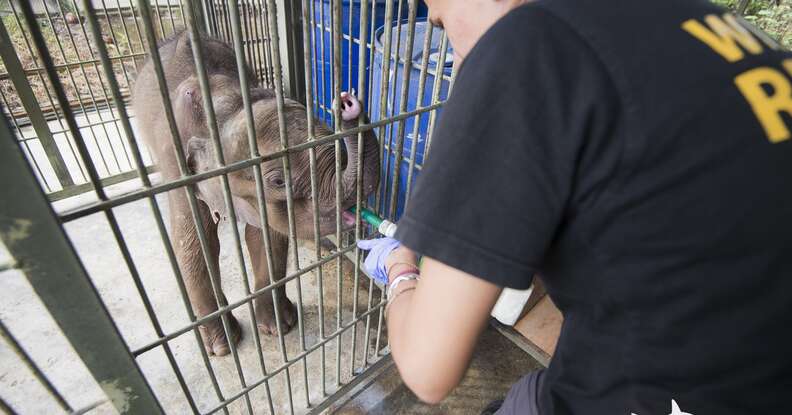
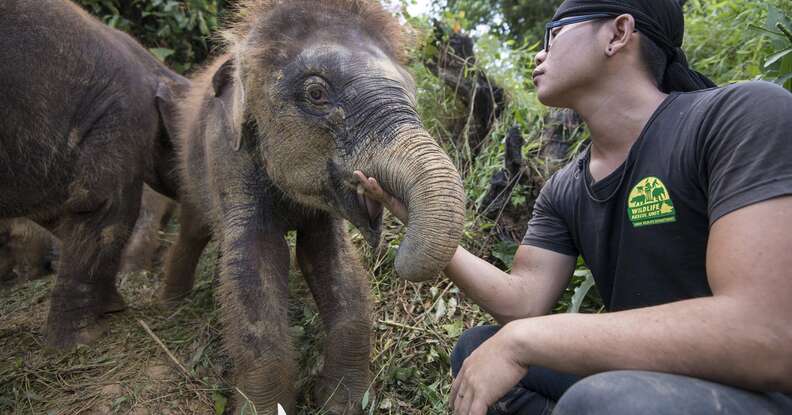
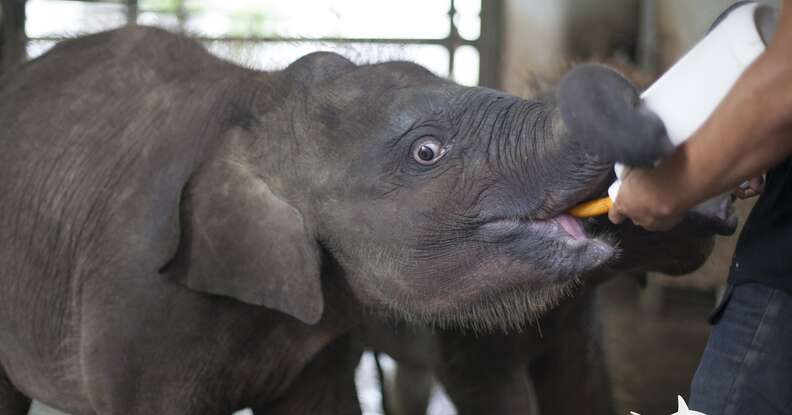
“This includes every two to four hours feeding with milk or with solid feed, exercise, health monitoring and cleaning of their enclosures,” Benedict explained. “The first three months following rescue is a very crucial time for these baby elephants, but we are lucky to have very dedicated and passionate rangers to be part of the Wildlife Rescue Unit team. They play the biggest role in the process, being the surrogate mothers to the orphans.”
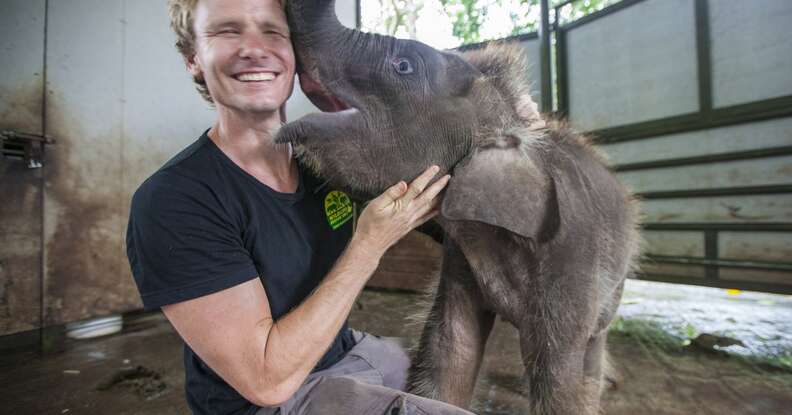
While the elephants feed, they’re kept inside an indoor enclosure, but they get to enjoy plenty of time outdoors.
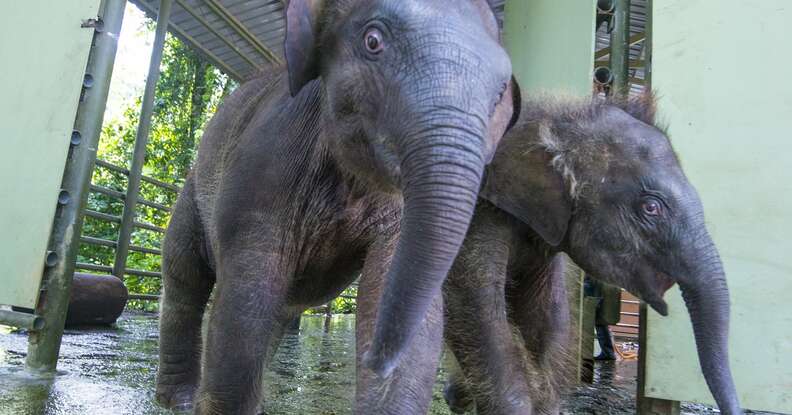
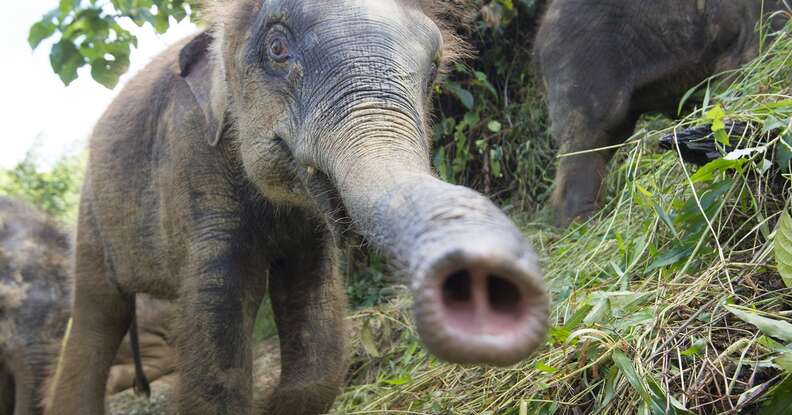
“Budak prefers to be on his own rather than playing with the rest of elephants,” Benedict said. “Tunku is the typical naughty boy who likes to get into all kinds of trouble. Meanwhile, Dumpas is a big bully who thinks he is the strongest because he is the biggest. Adun, on other hand, loves to seek attention from the rangers, thus we call him the ‘Attention Seeker.’ Danum acts more like a big brother of the group, being gentle towards the younger and smaller ones.”
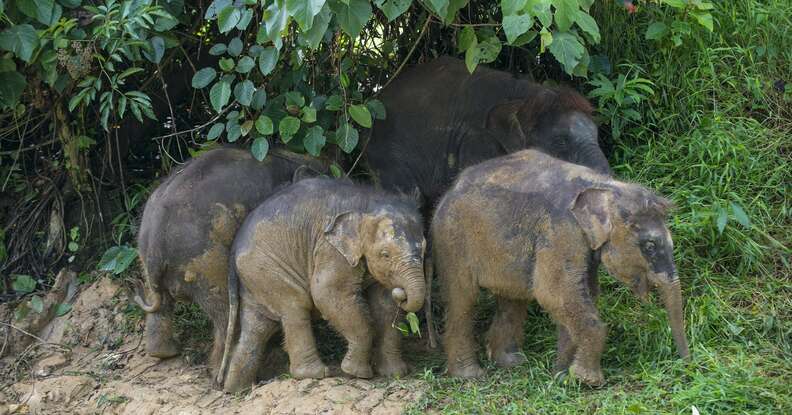
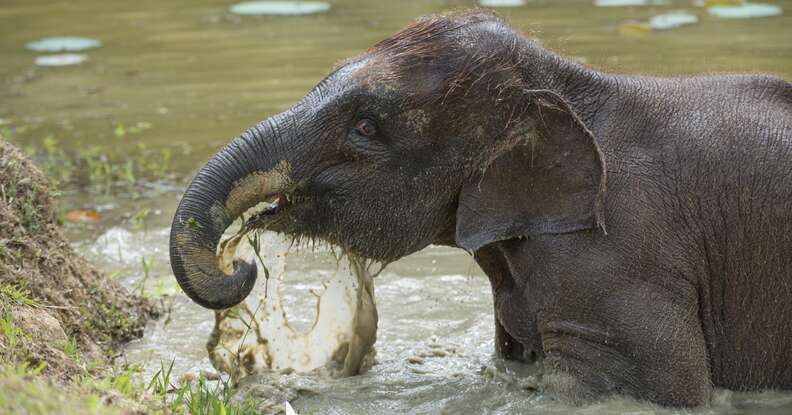
“They love rolling on the mud and playing by the pond,” Benedict added. “They slide inside [the pond] whenever it’s too hot or they’re tired playing on the ground.”
The orphans will spend several years in care, according to Benedict, and they’ll only be released when they demonstrate the ability to forage on their own, and are no longer dependent on people.