In a horrifying, gruesome accident, a speeding train that runs through a recognised elephant crossing corridor near the Corbett National Park in Uttarakhand collided with a passing herd of elephants, resulting in the death of an adult female elephant and injuring a 9-month-old calf. The calf, likely thrown by impact, was discovered paralyzed in a field beside the tracks.
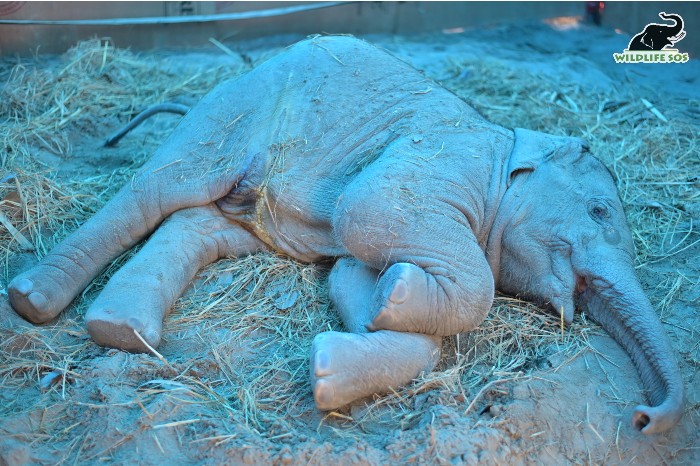
The calf had been found lying recumbent on her side, with numerous abrasion and open wounds on her body that were being treated. Her right hind limb showed no movement or sensation. The absence of tail movement was noted by the forest officials in the initial days, but the veterinarians from Wildlife SOS have observed a gradual return of the movement. Body functions, including feeding, defecation and urination, have been normal so far.
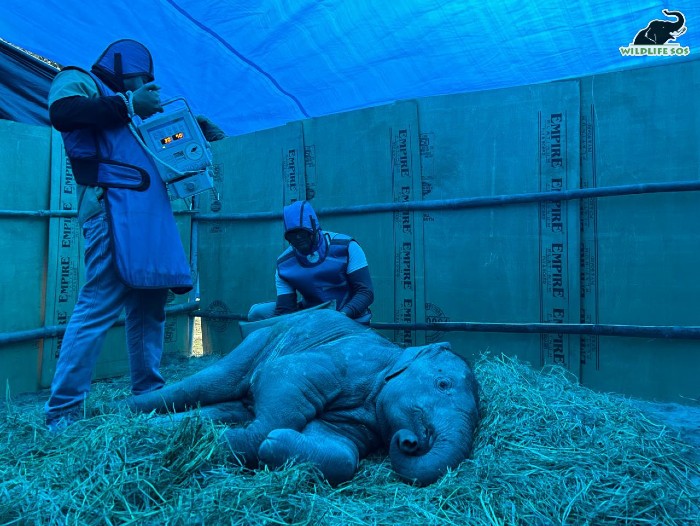
After recording these details, our team took X-rays of her limbs, spine, and hip girdle with the help of a portable X-ray machine to identify the cause behind her paralysis. Because the calf was in pain and night was setting in, thorough examinations have been postponed for the following day.
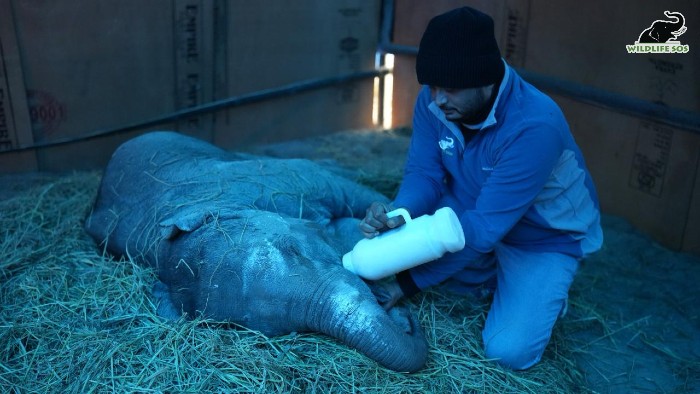
Following 14 days of on-site treatment, the decision to transfer the calf to the Elephant Hospital (EHC) in Mathura for specialised and urgent critical care has been taken. Necessary permissions from the Principal Chief Conservator of Forests and the Chief Wildlife Warden of the states of Uttarakhand and Uttar Pradesh have been obtained, and preparations for the journey were made to safely transport the baby elephant. The calf is now affectionately named Bani, after Mother Earth.
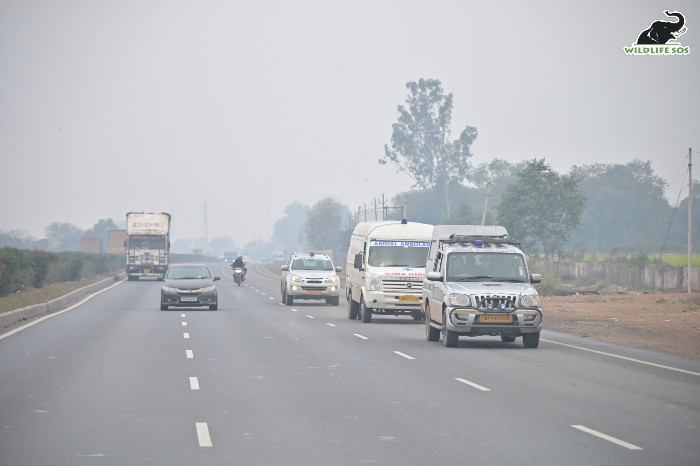
In preparation for her journey to us, our team in Mathura meticulously prepared the ambulance, prioritising every aspect of her well-being. The vehicle was layered with soft hay for cushioning and a cosy resting spot during the journey. Blankets ensured warmth, while hay-stuffed gunny sacks served as comfortable pillows for her legs. Treats, including sugarcane leaves, bananas, and papayas, were included. Water bottles and milk bottles were also provided to ensure that she stayed fed and hydrated throughout the journey.
Bani was initially apprehensive and highly alert, but she gradually settled down in the ambulance. The soothing touch of the veterinarians and caregivers contributed to calming her down. Offering her bananas, her favourite treat, proved to be a comforting factor during the trip. She showed limited interest in her fodder, but enjoyed munching on a few tender sugarcane leaves. Throughout the journey, Bani primarily consumed water and her milk mixture.

Our veterinarians come together to check up on Bani after her journey and to plan out the next course of action regarding her treatment. [Photo © Wildlife SOS/Mradul Pathak]
Bani is left to rest while her veterinarians formulate a plan for her further course of treatment. Photobiomodulation therapy and physiotherapy continues.
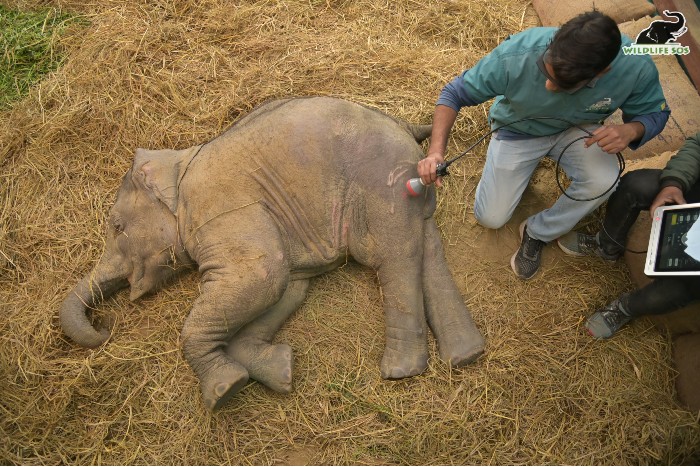
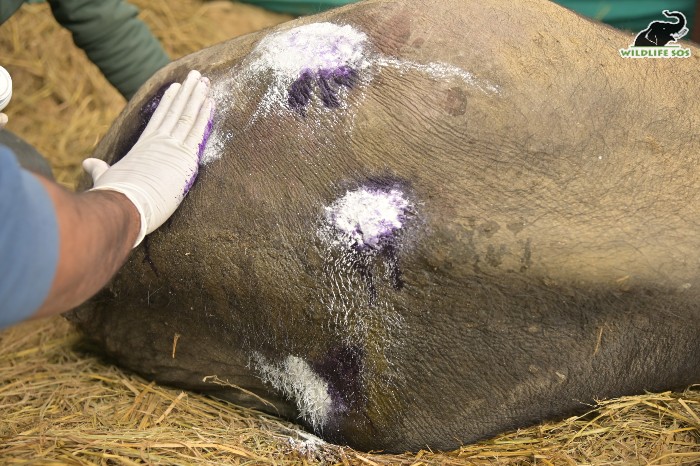
Adjusting to a new environment is a challenge for any elephant, especially if it is an orphan. Despite the fresh wounds on her body, Bani shows strength and bravery by responding to our treatment efforts. Our veterinarians are trying to devise ways to provide her some comfort despite her abrasive wounds. Only once they are healed can our team proceed with her treatment in the hydrotherapy pool at EHC using a sling for support. The team is also using soft cushions to provide her relief from the aching wounds between her legs.
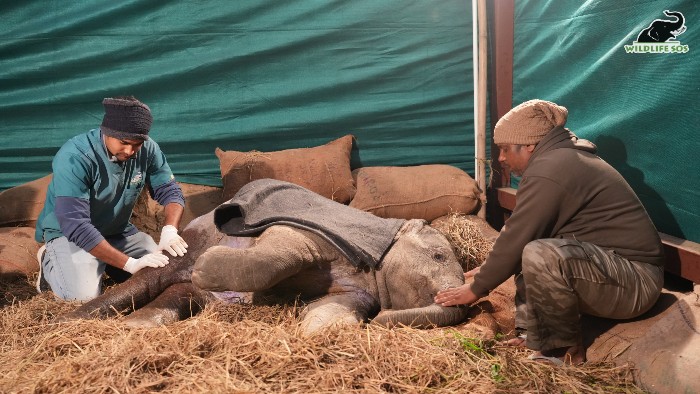
Bani undergoes regular physiotherapy and massage sessions. [Photo © Wildlife SOS/Mradul Pathak]
Her condition, although stable, is highly critical, as she has limited mobility that is affecting her organs. She presently has visible wounds on her body that are regularly being treated with medications. She is also being given laser therapy for joint pain and Trans-Cutaneous Electrical Nerve Stimulation (TENS) therapy for the nerves.
Kartick Satyanarayan and Geeta Seshamani, our co-founders, have been integral to Bani’s journey from the start. They are entirely focused on her well being and are spending valuable time by her side. They engaged in meaningful discussions with the veterinarians, and actively contributed to refining and enhancing Bani’s treatment plan.
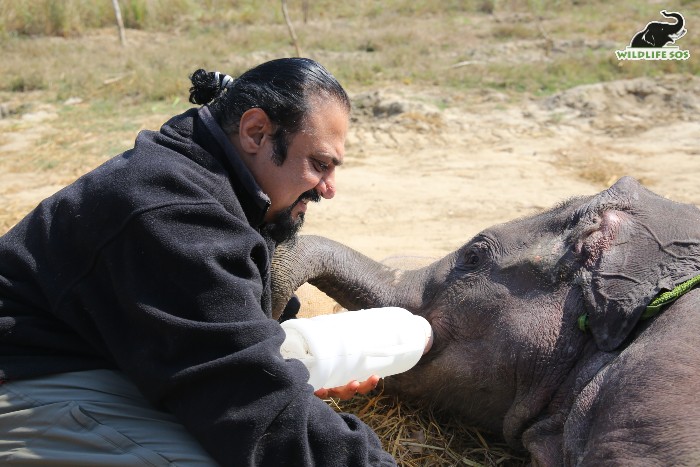
Co-founder Kartick Satyanarayan spend some quality time with Bani. [Photo © Wildlife SOS/Kunal Malhotra]
Furthermore, they discussed the upcoming construction of a new special nursery enclosure for Bani, located in the Elephant Hospital Campus. Reviewing the construction plans, they inquired with the team about any specific requirements or needs to ensure that Bani receives the best possible care.
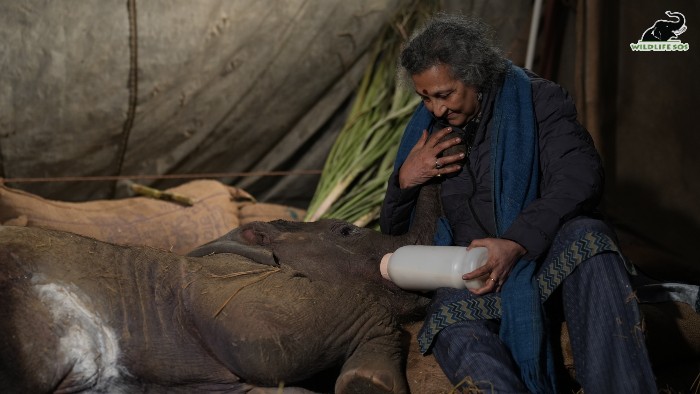
Co-founder Geeta Seshamani spend some quality time with Bani. [Photo © Wildlife SOS/Suryoday Singh Mann]
10 February 2024
After consulting with both foreign and resident expert doctors, as well as orthopedists, and reviewing multiple X-rays taken over time, our veterinarians have deduced that Bani is suffering from a neurological condition called spastic paraparesis.
To obtain precise X-rays of Bani’s limbs and hip joint, a crane-assisted sling was used to lift her into a standing position. Initially apprehensive, Bani was swiftly maneuvered through the procedure, ensuring minimal distress, and promptly returned to a comfortable lying position.
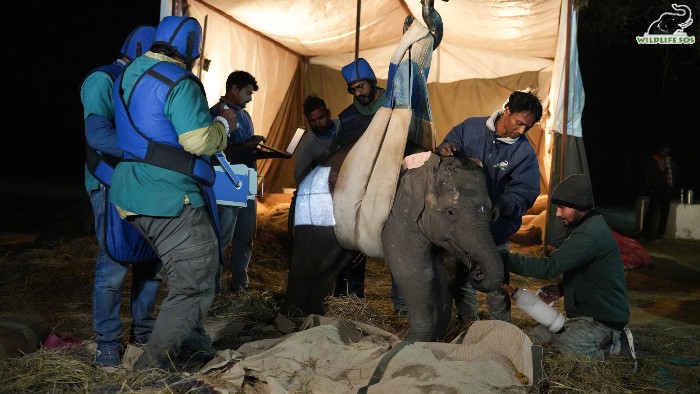
The veterinarians getting standing x-ray shots of Bani to get a clearer picture of the state of her hip joints. [Photo © Wildlife SOS/Shresatha Pachori]
The treatment plan remains consistent with what we have so far been following, with the addition of a course of fluid therapy that consists of intravenous administration of neural supplements. Having consulted skilled ayurvedic practitioners, Bani is also receiving regular massages with a blend of ayurvedic oils.
Discussions are also underway to gradually lift Bani for longer periods of time using the crane-assisted sling, enabling her to alleviate pressure on her sides and slowly exercise her legs. Additionally, plans are in progress to introduce Bani to the hydrotherapy pool as soon as she shows signs of improvement.
12 February 2024
While Bani’s condition continues to be critical, she is slowly showing signs of improvement. Regular physiotherapeutic massages, incorporating Ayurvedic oils, specifically target her hind limbs as part of her ongoing treatment. Since winter chill continues, Bani’s veterinarians and caregivers make sure to conduct her sessions outdoors in the sun. This allows her to bask in the sunlight, providing warmth and relaxation during these therapeutic sessions.

Bani undergoing ayurvedic oil massage under the sun. [Photo © Wildlife SOS/Mradul Pathak]
Her veterinarians are using a combination of manual techniques, gently folding and extending her legs to promote muscle and joint movement and a massage gun to soften her muscles. Although her hind limbs have not yet displayed the ability to bear weight and move, there is a significant reduction in muscle rigidity.
Massage guns are also used as part of her physiotherapy sessions. [Photo © Wildlife SOS/Mradul Pathak]
13 February 2024
We are thrilled to tell you that we’ve got Bani standing with assistance! She’s unsteady and can’t bear significant weight on her hind legs, but Bani is as excited as we are that she’s up! With a soft harness to support her, Bani managed to stand for 4 minutes on her first try.
But with round the clock care, treatment and support she’s receiving, Bani could stand up for about 40 minutes with the same assistance, after which she was given ample time to rest. This is a big milestone for the little elephant!
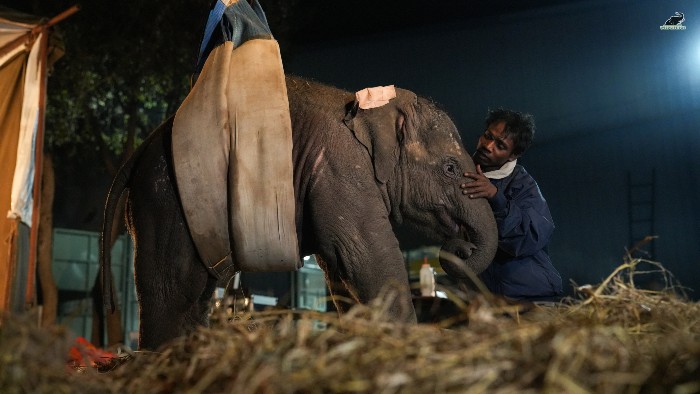
Bani being comforted by her caregiver as she is lifted onto her feet using a crane-assisted sling. [Photo © Wildlife SOS/Suryoday Singh Mann]
Bani has only been at our Elephant Hospital for 9 days now, but she is responding to treatment and showing us her determination to live. We have been worried because she has been on her side for weeks, and this has been very hard on her essential organs and blood circulation. Our caregivers have been working tirelessly on her hind legs in hopes of improving her movement and getting her to stand.
A New Nursery for Bani
Planning and construction for Bani’s new nursery enclosure are underway, with the selected area located right beside the Elephant Hospital. Groundbreaking has commenced, and the design involves creating a well-ventilated nursery with a spacious shed featuring a high roof and soft, elevated mud floors. These floors will later be generously covered with hay for added comfort and warmth. Discussions are also in progress to determine how to maintain her enclosure for comfort during changing seasons.
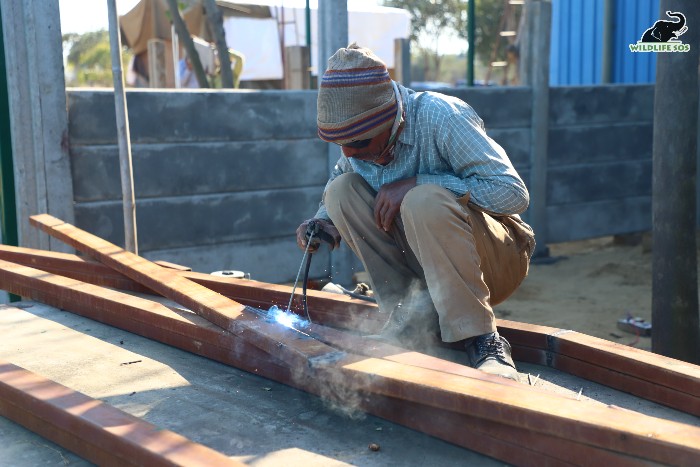
Construction for a new Baby Elephant Nursery has commenced. [Photo © Wildlife SOS/Kunal Malhotra]
Bani’s Antics
Bani is responding positively to our various treatment plans and is also showcasing her playful and mischievous sides. She enjoys lounging in the warm embrace of the winter sun, indulging in a relaxing dust bath. Bani is also becoming more dexterous with her trunk, slowly learning to use it skillfully and independently grabbing onto items.
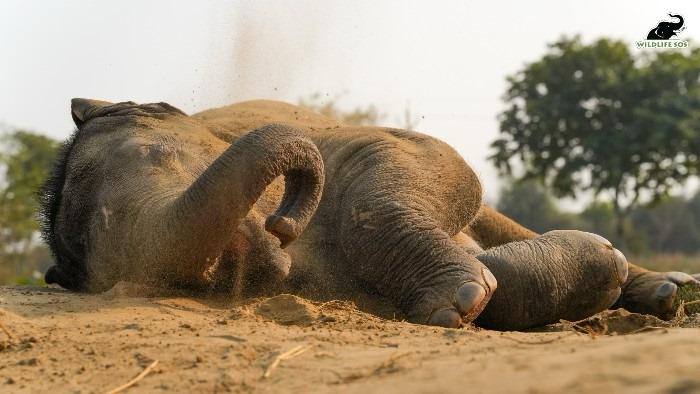
Bani enjoys taking dust baths. [Photo © Wildlife SOS/Mradul Pathak]
Additionally, she has demonstrated her preference of holding her milk bottle with her trunk — the milk bottle was earlier held by hand for her to feed on. Although her path to recovery is long and strenuous, the determination and strength displayed by this little elephant are truly inspiring.
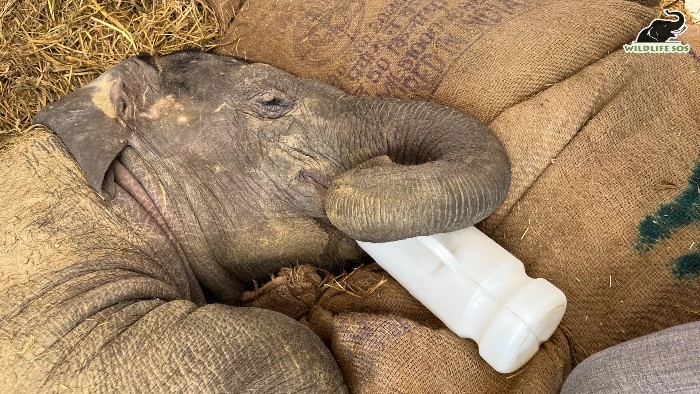
Bani prefers holding onto her milk bottle herself as she drifts off the sleep while drinking from it. [Photo © Wildlife SOS/Mradul Pathak]
Bani receives continuous care and treatment, with a dedicated caregiver and veterinarian by her side every moment of the day. Even during the night, a committed team ensures her well-being while she rests.
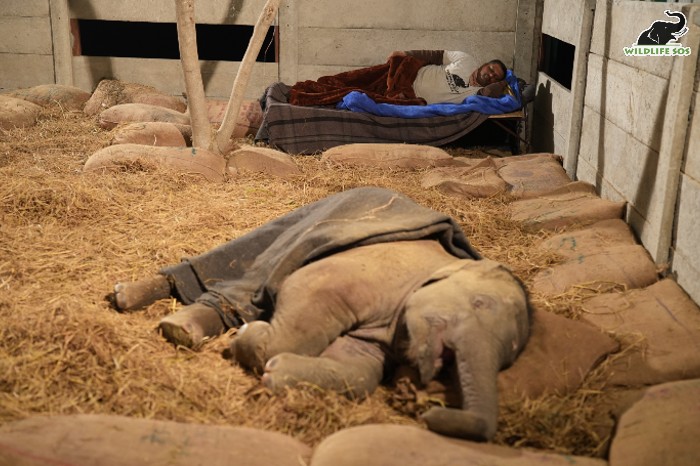
Bani’s always has atleast one caregiver beside her at all times. [Photo © Wildlife SOS/Mradul Pathak]
19 February 2024
Bani underwent another attempt at being lifted with a sling, which lasted for 30 minutes!
While she was hoisted up, she kept trying to walk forward. Her hind legs would drag and cause her to lose balance, but each time, she would not give up trying. At this tender age, Bani inspires us all with her bravery.
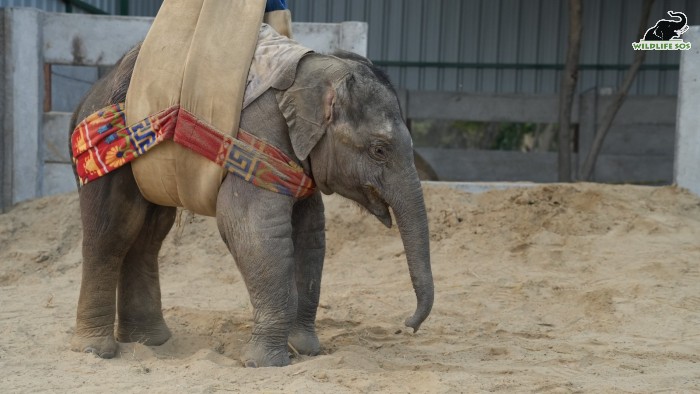
Bani slowly attempts to walk in the sling, while dragging her hind limbs along. [Photo © Wildlife SOS/Mradul Pathak]