An elephant calf in Lake Kariba has been abandoned by her herd as she struggles through the rugged vegetation with a crude wire snare wrapped tightly around her leg, slowly ripping through her flesh as it tightens by the hour.

The calf – believed to be under two years of age – was spotted by a Zimbabwe Parks ranger who quickly reported the situation to our partner, Kariba Animal Welfare Fund Trust (KAWFT). They turned to us with a plea: they desperately need our support in helping to dart the animal and get her treated and relocated to an elephant orphanage, where she can heal in peace.

Laid by heartless poachers who care little for the agony they cause helpless animals, snares can be lethal – and they are particularly dangerous for young animals like this elephant calf. Slowed and hampered by the cruel contraption, they are often abandoned by their herds as they simply cannot keep up.
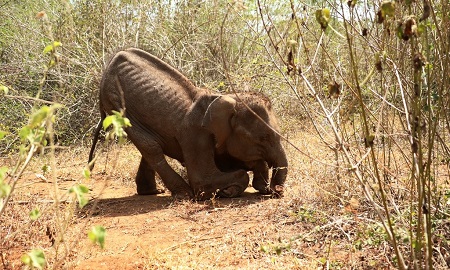
This is what appears to have happened to this vulnerable little calf, who faces death as a result. Without intervention, she will either succumb to her injuries, or grow weak and starve as a result of being abandoned.
Elephants form close bonds with the members of their herd and mourn the deaths of other elephants. Usually, when an elephant is injured – especially a calf – the herd slows down to accommodate them. These intelligent, empathetic animals have even been seen trying to help dying loved ones by lifting them up with their trunks and tusks, bellowing in distress when they fail.
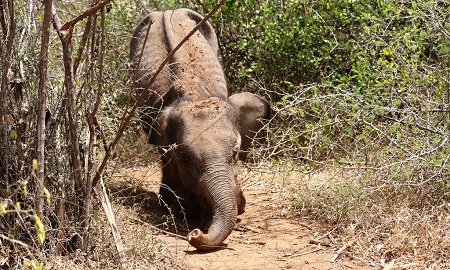
We weren’t there when the herd was forced to abandon this calf, but we can only guess at the heartbreaking reality of that painful situation.

We are preparing emergency supplies, including milk, drips, treatment and appropriate transportation for the badly injured animal, so we can hit the ground running as soon as we raise the necessary funds.
But rescue operations like this are challenging, time-sensitive and very expensive. Our team must travel over difficult and dangerous terrain for approximately 2.5 hours to reach the calf. Once located, they will dart, treat, rehydrate and stabilize her.
Ultimately, our team will relocate her to an elephant orphanage where she will receive the long-term care she needs to survive. Elephant calves are reliant on their mothers until they are around three years old, normally staying with them until they are 10. Females stay with their herds for life.