For 55 long years, he worked without rest. Seven days a week, from sunrise to sunset, the old elephant hauled tourists, heavy logs, and the weight of a lifetime he never chose.
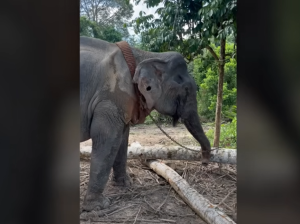
His back bore deep scars from the saddle. His legs, once strong and proud, were worn thin by chains that cut into his flesh day after day. His eyes, dulled by time and torment, held stories of pain no creature should endure.
They called him Gajraj—“King of Elephants”—but he lived like a prisoner.
Each morning, he was prodded awake with sticks. He stood still for hours, even in rain or blistering sun, swaying from side to side—not in joy, but from trauma. His chains allowed only a few steps. He hadn’t walked freely in decades. He hadn’t felt kindness in longer.
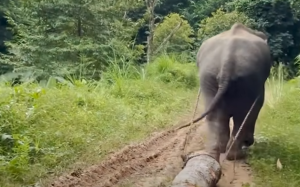
But then, the day came.
Rescuers from a wildlife sanctuary arrived, their hearts aching at the sight of him. Slowly, gently, they cut the chains. For the first time in 55 years, the metal fell from his ankles. Gajraj hesitated. Could he even walk without pain? Could he trust these strangers?
Then, one step. A trembling one. Then another.
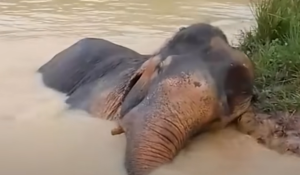
And when he reached the soft earth of the sanctuary, he lifted his trunk—not in fear, but in a low, soulful trumpet that seemed to say, “I’m still here.”
Now, Gajraj will never work another day. He will never again feel the bite of a chain or the crack of a stick. In place of orders, he hears songs. In place of pain, he feels water on his skin, grass under his feet, and love in every gentle touch.
After 55 years of silent suffering, Gajraj is finally free. And for the first time, he’s not just surviving—he’s living.