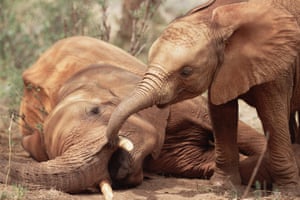
To mark World Elephant Day, the David Sheldrick Wildlife Trust has released behind-the-scenes pictures of efforts to save orphaned baby elephants in Africa, where up to 35,000 animals are killed for their tusks each year.
As elephant populations suffer losses from poaching, habitat destruction and human conflict, the charity travels across Kenya to treat injured adults and care for orphaned infants at its nursery.
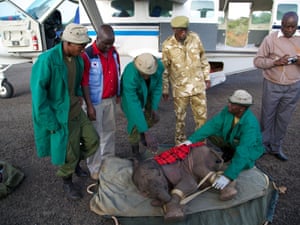
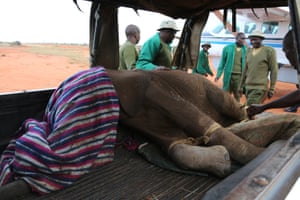
Malnourished and wounded, emergency treatment is provided at the scene of the rescue. Photograph: Courtesy of DSWT
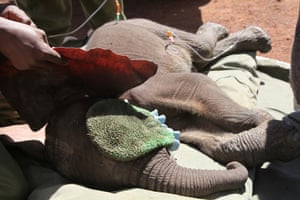
An elephant with a leg wound is prepared for an X-ray. Photograph: Courtesy of DSWT
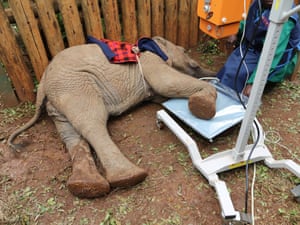
A team transports an elephant in northern Kenya. They will undertake a rescue when elephants are orphaned by poaching, habitat destruction and human conflict; they are often malnourished, dehydrated and weak and can have a multitude of injuries caused by bullets, snares, machetes and even spears. Photograph: Courtesy of DSWT
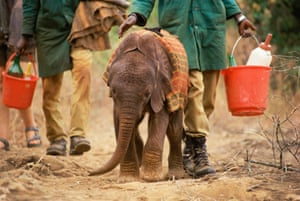
Natumi, four weeks old, being walked by keepers. The first few weeks after a rescue are critical. Many orphans arrive extremely weak, emaciated and in a state of shock. Photograph: Gerry Ellis/Corbis
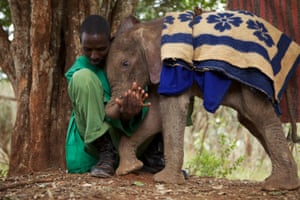
Wasin is approximately two weeks old. Carers replicate an orphaned elephant’s lost family with a human equivalent, providing 24-hour care. This includes regular milk feeds, travelling with them as a group during the day and sleeping in a stable with them at night to provide reassurance. Photograph: Michael Nichols/NG/Corbis
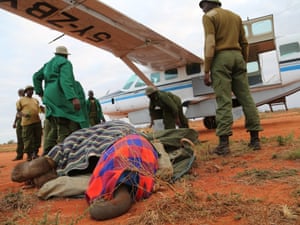
Depending on where an orphaned elephant is found, an aeroplane is usually needs to be chartered to move the elephant to the nursery. Photograph: Courtesy of DSWT
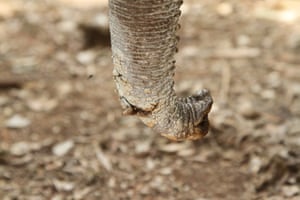
An rescued elephant’s trunk. Trapped in a man-made well, this orphan had been attacked by predators during the night before it was spotted and rescued. Photograph: Courtesy of DSWT
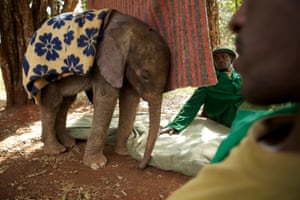
Wasin is approximately two weeks old. For the youngest of rescues, blankets serve to mimic a mother elephant’s undercarriage during milk feeds. Several young elephants will not feed without their blankets which provide a sense of security and comfort. Photograph: Michael Nichols/NG/Corbis
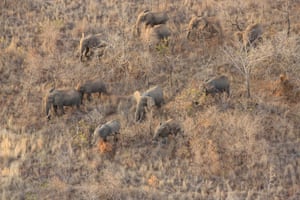
Aerial surveillance ensures herds with calves can be better protected against poaching activities, and any lone elephant calves can be spotted and rescued. Photograph: Courtesy of DSWT
This year the charity has rescued six orphaned elephants. Director Rob Brandford said: “In 2003, we rescued 11 orphans. Last year we rescued 48 orphans, an unusually high number and the majority victims of poaching, but even that number is likely only a fraction of those out there.” Photograph: Courtesy of DSWT
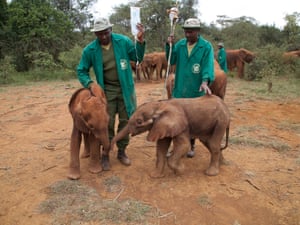
Two-month-old orphaned baby elephant Ajabu is given a dust-bath in the red earth after being fed milk from a bottle by a keeper. Photograph: Ben Curtis/AP
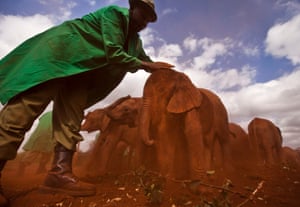
Orphaned baby elephants play. For elephants that have witnessed their mothers being killed, the company of other elephants and being able to play is one part of essential to overcoming trauma. Photograph: Simon Maina/AFP/Getty Images
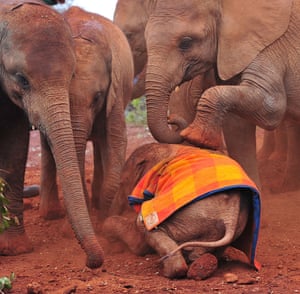
Orphans Edie and Imenti play. Photograph: Gerry Ellis/Corbis