Miley Cyrus is no stranger to reinvention. Over the years, she’s been everything from a squeaky-clean teen idol to a rebellious provocateur, a vulnerable singer-songwriter to a towering pop icon. But with Something Beautiful, her brand-new visual album released internationally in theaters today, she’s making what may be her boldest move yet—handing over the full scope of her artistic world to fans in a format many weren’t expecting.
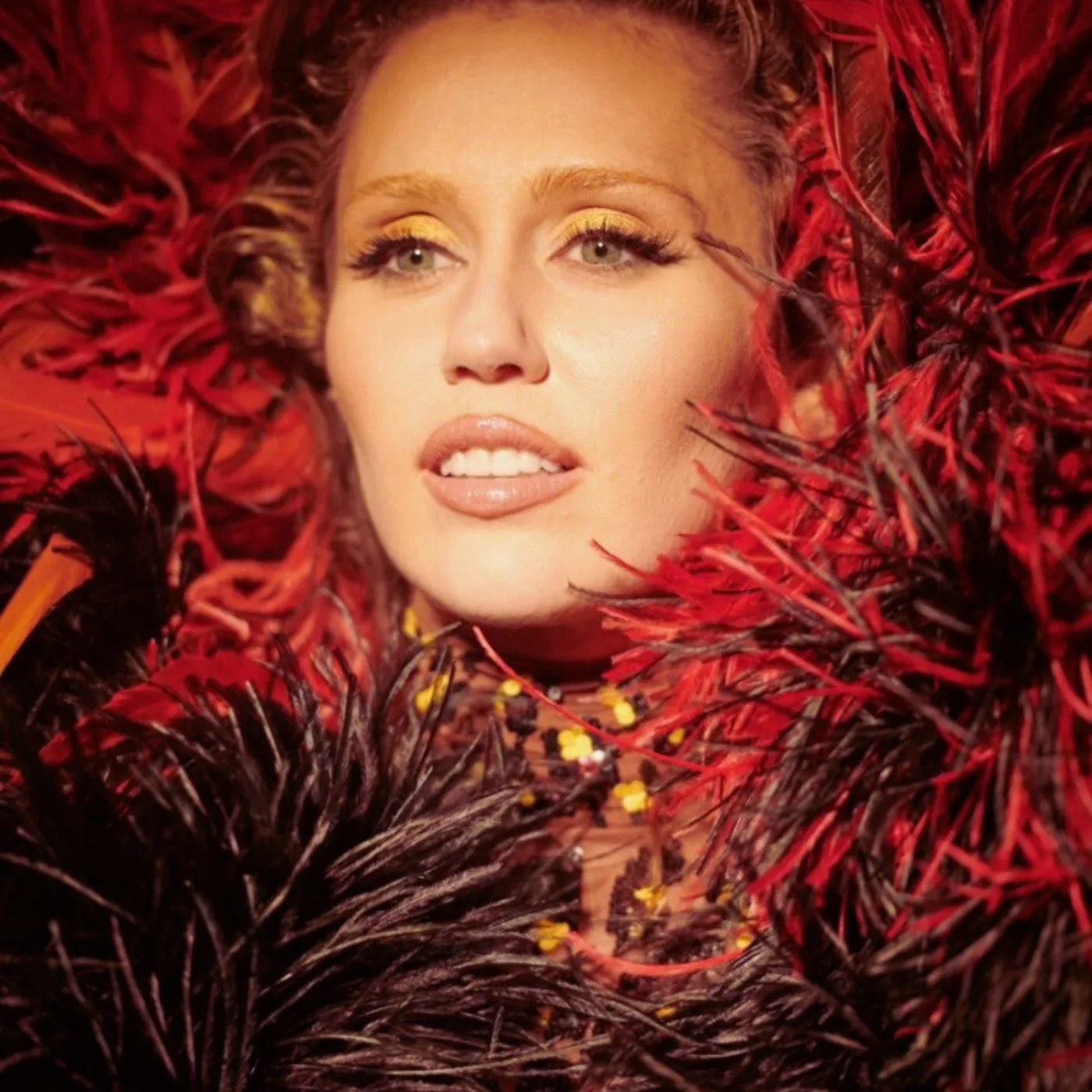
Something Beautiful is not just another album drop. It’s a visual album experience, designed to be seen on the big screen, consumed in one intense sitting, and discussed, debated, and dissected long after the credits roll. As Miley herself announced: “Something Beautiful has been my world and now I’m honored to offer it into yours.”

That simple sentence might sound gracious. But if you’re paying attention to how people are talking about it online, you know it’s far more loaded than it seems.

The Visual Album Gamble
Miley Cyrus is betting on something risky. In an age where streaming dominates, singles top charts in 30-second TikTok bursts, and attention spans are fragmented, she’s asking people to buy tickets, sit in a dark room, and give her full control of the screen.
Something Beautiful isn’t an album to skim. It’s an immersive art piece. It’s cinematic, curated, at times claustrophobic. And that’s exactly how Miley wants it.
Insiders say this release strategy is part grand artistic statement, part test of loyalty. After years of shifting personas and genres, Miley is effectively saying: If you really want to know me, watch this. All of it. No skipping.
What’s Actually in It?
Early reviewers who caught advanced screenings describe Something Beautiful as an unfiltered chronicle of Miley’s personal and creative struggles, loaded with imagery that’s haunting, jarring, occasionally serene—but always personal.
Expect intimate closeups of Miley in the studio, onstage, at home. Stark transitions between grainy, handheld realism and lush, stylized sequences. Lyrics that read like diary entries. Vocal takes that sound raw enough to be from demo sessions.
In short, this isn’t pop-star polish. It’s more like the journal she’s spent years pretending didn’t exist.
Fan Expectations vs. Reality
If you scan Facebook or X, you’ll see reactions that are as messy as the album itself.
Some fans are swooning over the vulnerability, calling it Miley’s most authentic era yet. Comments read:
“I’ve never felt closer to her. This is what music is supposed to be.”
Others are genuinely confused—or angry.
“This is pretentious. I just wanted music, not a therapy session.”
“She’s lost the plot. Why would I pay movie theater prices for this?”
What’s striking is how polarizing the reaction is. Miley Cyrus has always had a devoted core of fans who love her chaos, but Something Beautiful seems to be testing even them.
She’s asking a lot of them: time, money, emotional bandwidth. She’s not offering easy singles or clean radio edits. She’s offering what she calls “her world”—but it’s clear not everyone wants in.
Art or Ego Trip?
That’s the conversation playing out across social media.
Is Something Beautiful a brave, uncompromising act of artistry in an industry addicted to algorithms? Or is it a self-indulgent spectacle—a pop star making everything about herself and expecting us to applaud?
That question is why this release is trending so hard.
It’s not just that Miley Cyrus has dropped an album. It’s that she’s forced fans to choose sides in a debate about what music should even be in 2024.
The Theatrical Experience Twist
One of the biggest points of debate is the choice to premiere Something Beautiful in theaters internationally.
Music releases almost never do this. Even visual albums—think Beyoncé’s Lemonade or Janelle Monáe’s Dirty Computer—were primarily streaming experiences, with optional cinema events for superfans.
Miley Cyrus flipped that script.
She required the theatrical rollout. You can stream the album now, but the visuals were meant for theaters first. Miley wants people in seats, lights off, eyes on her for the entire runtime.
Industry insiders call it risky but genius. It immediately separates casual listeners from the diehards. It also builds mystique: if you didn’t see it in theaters, did you even really see it?
It’s a flex. It’s also potentially alienating.
Because let’s be honest: not everyone wants to schedule time to watch an album in a cinema. Not everyone can afford it. Miley knows this—and went ahead anyway.
Her Most Personal Era? Or Her Most Calculated?
Another layer to the drama is Miley’s marketing approach.
By describing Something Beautiful as her entire world, she’s effectively saying “This is me. Take it or leave it.” It’s authentic, sure. But it’s also a kind of ultimatum.
“She’s so real,” some fans gush.
“She’s so manipulative,” others fire back.
It’s the oldest tension in pop music: is confessional art inherently honest, or just another way to sell records?
The Miley Narrative
What makes this so fascinating is how well it fits Miley’s long-running narrative.
She’s been the rebel who shocked Disney parents. The country girl who went urban. The heartbreak balladeer. The rock-and-roll wild child.
But through all of it, she’s claimed to be transparent—even when she was clearly performing.
With Something Beautiful, the performance is the transparency itself. Miley is packaging her rawness. She’s marketing vulnerability. She’s selling people the illusion of no illusions.
It’s genius. It’s also the definition of divisive.
Industry Reaction
Label execs are reportedly split on whether this is a stroke of brilliance or a career misstep.
Streaming-friendly pop singles are the easiest, most profitable route. Miley’s refusing that. She’s leaning into long-form storytelling, cinematic visuals, and emotional discomfort.
Some see it as a blueprint for aging pop stars who want artistic respect. Others see it as commercial suicide.
Miley’s Own Words
For her part, Miley Cyrus isn’t backing down.
Her promotional posts are clear. She’s calling Something Beautiful her world, and offering it without apology.
“Something Beautiful has been my world and now I’m honored to offer it into yours. I love you.”
It’s a sweet sentiment. But there’s an edge to it. Because make no mistake: Miley Cyrus knows exactly how polarizing this will be.
She’s daring her audience to accept her on her own terms. Or to walk away.
Fan Loyalty on Trial
This is what makes the release so fascinating from a cultural perspective.
We talk all the time about parasocial relationships, the idea that fans feel like they know celebrities. But Something Beautiful is pushing that relationship to its limits.
It’s asking fans to accept Miley not as a brand that gives them what they want, but as a person who might give them what they don’t.
It’s a test of loyalty. A loyalty that, judging by early reactions, is far from guaranteed.
The Broader Impact
Regardless of how Something Beautiful performs commercially, there’s no question it’s changing the conversation about what artists owe their audiences.
Does a pop star have to be accessible, relatable, digestible? Or can they demand attention on their terms?
By pushing her visual album into theaters, Miley Cyrus isn’t just selling music. She’s selling an experience that can’t be skipped, fast-forwarded, or half-watched while scrolling your phone.
She’s forcing fans to slow down. To pay attention. To choose her, fully, or not at all.
Final Thoughts
Miley Cyrus has always been good at making people talk. With Something Beautiful, she’s doing it again—perhaps more effectively than ever.
She’s giving the world a gift. But it’s not an easy one.
It’s messy. Emotional. Sometimes boring. Sometimes brilliant.
It’s a mirror she’s holding up to her audience—and daring them to look.
Whether fans embrace it or reject it, Something Beautiful proves one thing beyond doubt:
Miley Cyrus isn’t here to please everyone. She’s here to be seen.
And for better or worse, the world is watching.