Basketball courts—whether in raucous high school gyms or the shining arenas of the WNBA—have always been cauldrons for athletic drama. They’re where skill, swagger, and psychology collide under the public’s relentless gaze. But recently, in a season already boiling with controversy over referee decisions, physical play, and discourse swirling around Caitlin Clark, a single play between Marina Mabrey and rookie sensation Paige Bueckers has reignited debate about karma, performance, and a league at a crossroads.
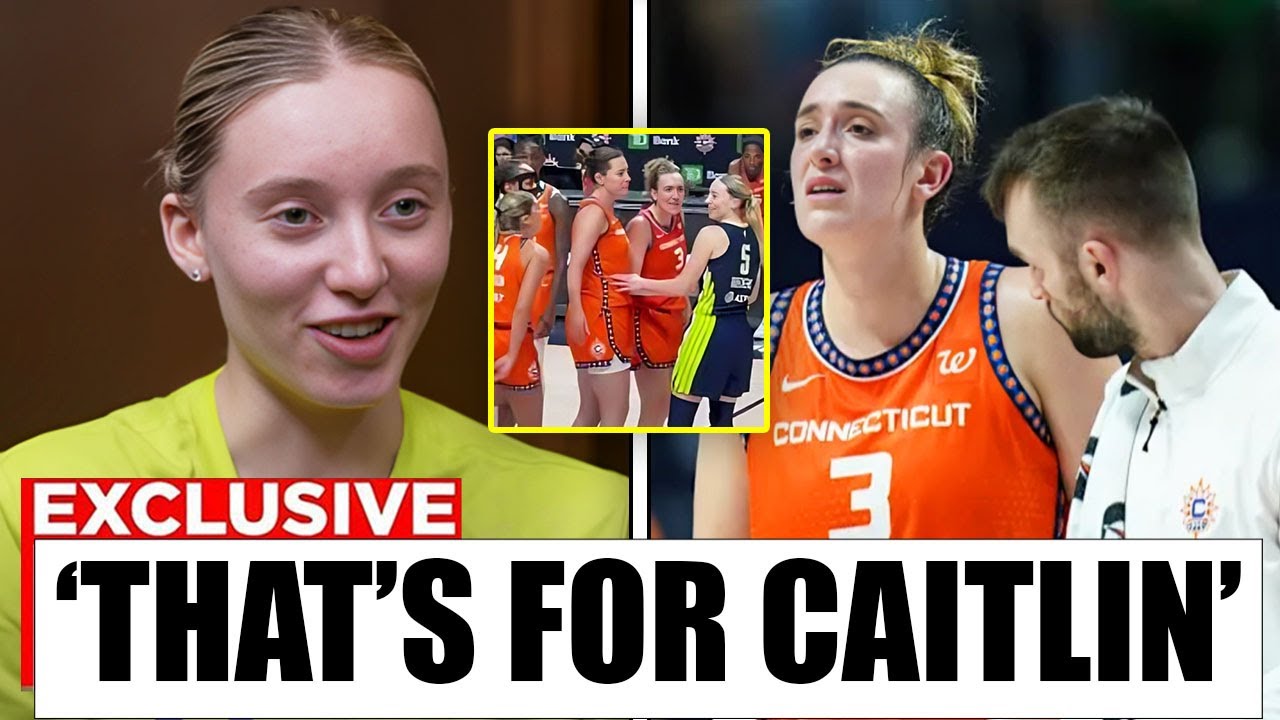
The Play Heard ‘Round the League
During a recent game, as Marina Mabrey—a player never shy about flexing her bravado—matched up with Bueckers, a sequence unfolded that basketball fans quickly dubbed “karma on hardwood.” Mabrey, known as much for trash talk as for a streaky jump shot, found herself guarding Paige Bueckers. The result? A dazzling move that left Mabrey sprawled, ankles twisted—payback, some claimed, from the “basketball gods” themselves.
While no serious injury resulted and Mabrey returned, the incident instantly became fodder for fan channels, YouTube breakdowns, and Twitter threads. The schadenfreude was palpable: “When trash talk meets twisted ankles,” as one viral summary quipped, “karma’s crossover is undefeated.”
When Performance and Persona Collide
It’d be easy to dismiss these moments as run-of-the-mill basketball banter. After all, the league is littered with bigger names, louder braggadocio, and flashier highlights. Yet Mabrey’s “karma moment” resonated as much for what happened as for what followed. She’s been a player whose career is, as one commentator snarked, “a masterclass in mediocrity… not the charming kind,” bouncing from team to team, her potential perpetually described as untapped.
Against the likes of Bueckers and Sophie Cunningham—players whose on-court intelligence and poise stand in sharp contrast—the flaws in Mabrey’s game stand out even more. It’s a harsh spotlight, but in professional sports, the narrative can turn on a single play. For some, Mabrey is the eternal puzzle piece who never quite fits—her trash talk and drama now overshadowing flashes of her actual skill.
The Rise of the “Culture War” in Women’s Hoops
But what’s most revealing about the Mabrey-Bueckers moment isn’t just the athletic spectacle. It’s the wave of heated discourse that follows. Fans gleefully roast Mabrey—some for her perceived attitude, others for her play, and, troublingly, some in ways that touch on race, sexuality, and identity. Social media, always eager to amplify drama, mixes real analysis with tribal posturing and outright toxicity.
The league’s current climate only adds jet fuel. Caitlin Clark—the most hyped rookie in league history—has become both a symbol of hope and a lightning rod for criticism, with every foul, hard hit, and social media clip dissected through the lens of wider societal divides. Some see her as unfairly targeted, others as overprotected, and an unhealthy number of fans use every incident to grind political axes.
The Officiating, or Lack Thereof
Underlying it all is a refereeing crisis that many say has pushed the game from competitive to chaotic. “It’s like they spin a wheel labeled ‘Call or Nah’ before every whistle,” one fan laments. When egregious fouls go ignored and minor gestures draw technicals, frustration boils over for players and spectators alike. In this morass, the line between spirited play and outright animosity blurs.
The league knows it. Players know it. Coaches are left with “the permanent look of having made a huge mistake three plays in.” Spectators, meanwhile, pay for League Pass only to cringe as games devolve into grudge matches. Calls for Commissioner Cathy Engelbert and her team to address the “circus” of inconsistent officiating and on-court antics are growing louder.

Is This Entertainment, or Is Something Broken?
What the WNBA is facing is more than a simple “villain of the week” narrative. It is, in many ways, a crisis of identity. As one YouTuber put it: “The league has one job—protect the integrity of the game. And right now, that integrity is face down somewhere near half court.”
For every Paige Bueckers or Sophie Cunningham dazzling with skill, vision, and leadership, there’s a clip of a bench-clearing shove, or a trending moment of avoidable violence. As the highlight reels fill up with elbows, cheap shots, and post-whistle skirmishes, the skill that once defined the league risks being overshadowed by viral chaos.
The Fallout: Fans and Future
The great irony is that the league’s talent pool has never been deeper. Names like Paige, Caitlin, Sabrina Ionescu, A’ja Wilson, and Sophie Cunningham are not just global ambassadors for the game but the future of women’s basketball. The WNBA sits atop a goldmine—but if the public face of the league is more “turf war in sneakers” than “clinic in team basketball,” it risks losing the very viewership it so desperately wants to grow.
Parents once brought their kids to WNBA games to see sportsmanship, teamwork, and strategy. Increasingly, they now have to prepare those same kids for scenes more suited to a WWE promo than a family night out. The audience is speaking: subscriptions are dropping, viewership is wavering, and some say the league is in danger of chasing clicks over cultivating respect and talent.
Time for a Cultural Reset?
The narrative can still change. Paige Bueckers, for all her rookie nerves, is “universally liked,” praised for her humility and hunger. Her technical foul for clapping at a referee—a far cry from more serious altercations—was handled with grace, her postgame interview an exercise in honesty.
Contrast that with players whose egos outweigh their contributions and it’s clear which archetype fans want to cheer for. The league must decide: will it reward artistry, teamwork, and resilience—or let chaos, inconsistency, and culture wars erode its golden opportunity?
Conclusion: The Real Karma
In the end, karma may not “blow through the arena” with the force of a swooping cross-over and a twisted ankle. The real reckoning is slower—the slow burn of reputation and relevance earned or lost over seasons, not seconds. For players, coaches, referees, and the league itself, every decision now weighs heavier than ever.
Will the WNBA return to its roots of skill, integrity, and trailblazing competition, or will it let the noise drown out the signal? The basketball gods are watching—but so are the fans, and their patience, like karma, eventually comes due.