Life is full of beautiful things, but few things can compare to the sight of babies taking their first steps into this new world in which they were born. That is especially true when the babies we talk about are little elephant calves.
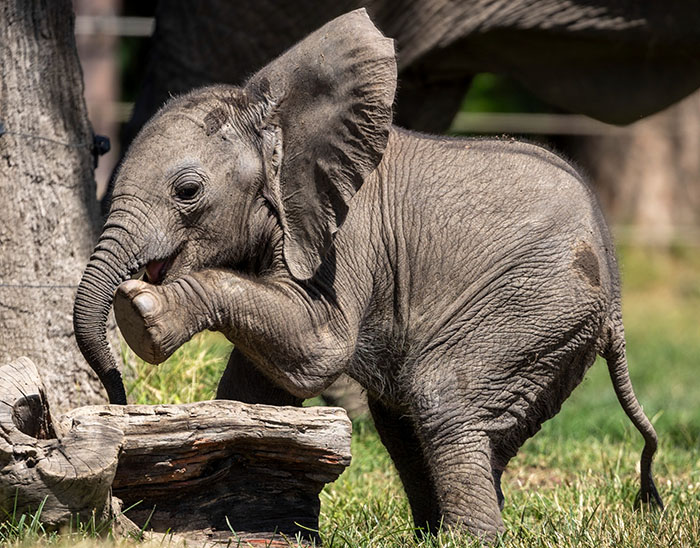
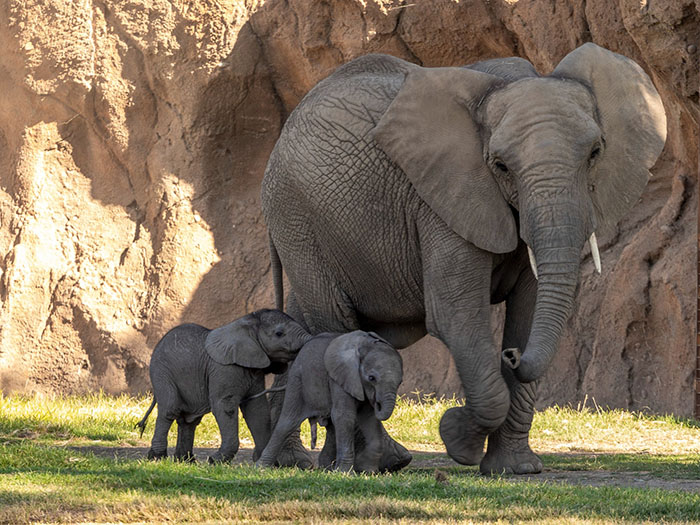
Even though Fresno Chaffee Zoo has been around for close to 90 years, it still manages to bring joy to our everyday lives through simple yet naturally beautiful things. For example, just last month, the staff on the zoo’s Facebook page shared about the birth of 2 wonderful baby elephants, instantly improving every person’s day who came in contact with this news.
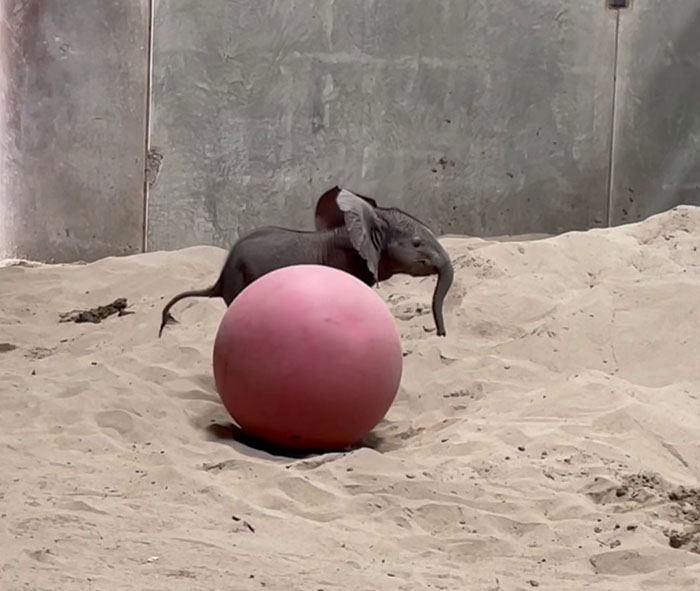
Image credits: Fresno Chaffee Zoo (TikTok)
The little baby was running around the ball in his enclosure, trying to push it and otherwise play with it. Of course, due to not yet being completely used to running on his own 4 feet, the elephant eventually tripped and fell backward into the sand.
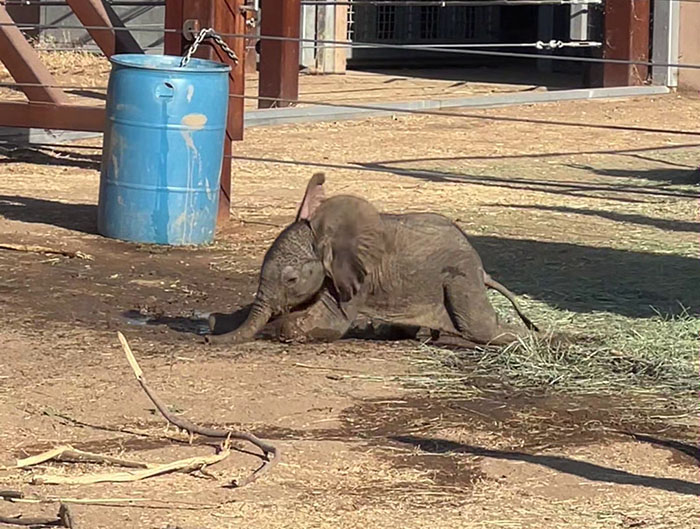
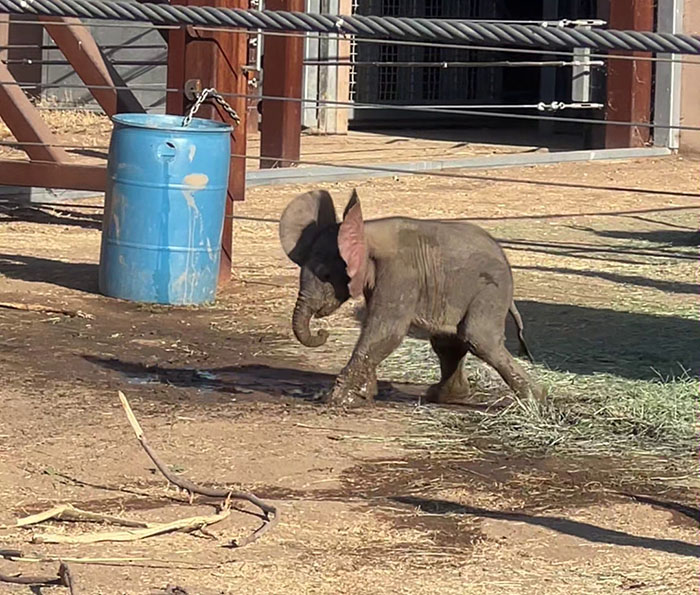
This sight made people online fall in love with him almost instantly. Everyone was melting over how the calf didn’t seem to know what to do with his trunk or how he held his ears out as wide as he could, which is not something you’d see a grown elephant do.
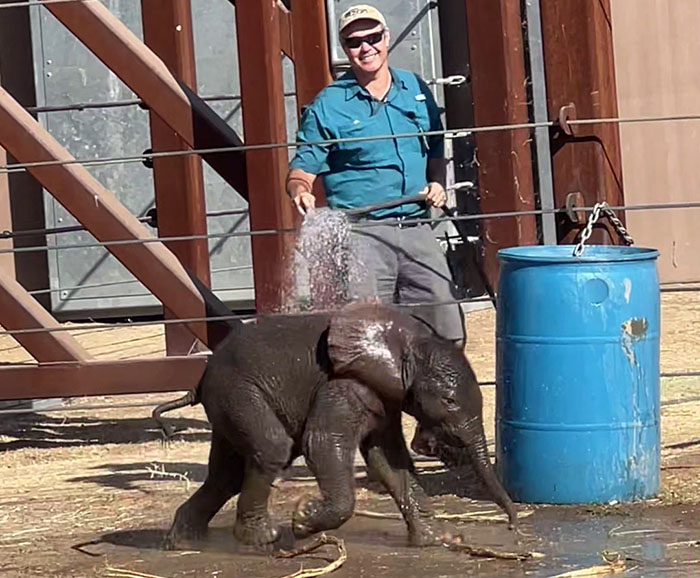
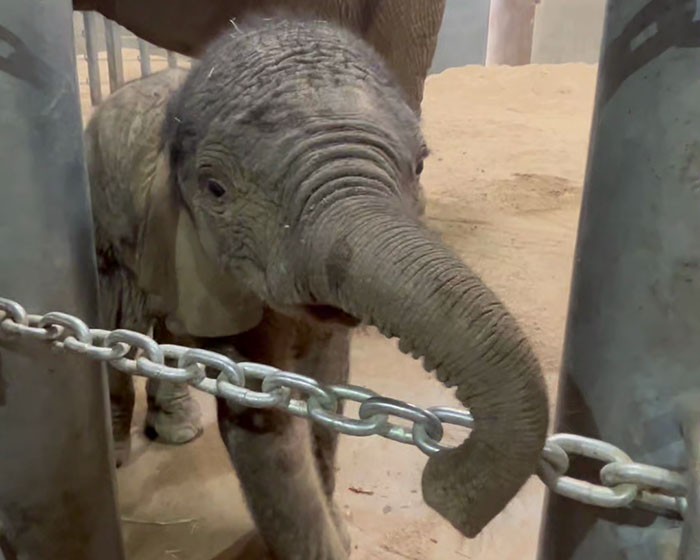
In many ways, the zoo’s newborns appear to be just like human children. Putting aside the fact that they’re already over 3 feet tall and weigh a good couple of hundred pounds, they’re just as clumsy, playful, curious, vulnerable, and adorable. Unlike humans, they might be able to walk almost immediately after birth, but they suck on their trunks to calm themselves down, just like human babies suck on their thumbs.
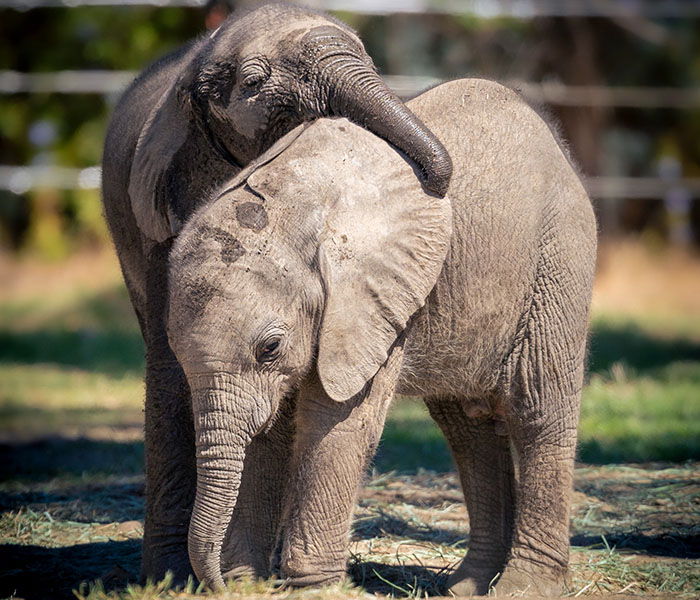
Image credits: Fresno Chaffee Zoo (Facebook)
According to Nobel prize-winning Austrian academic Konrad Lorenz, it seems that we’re tricked by an evolved response that we have to human children, which naturally require our care to survive, which, in the long term, helps ensure the human race’s survival.
Now, since many animals possess plenty of features that are shared by human babies, like large eyes, a bulging forehead and retreated chin, we tend to transfer our reaction to the same features in other mammals.
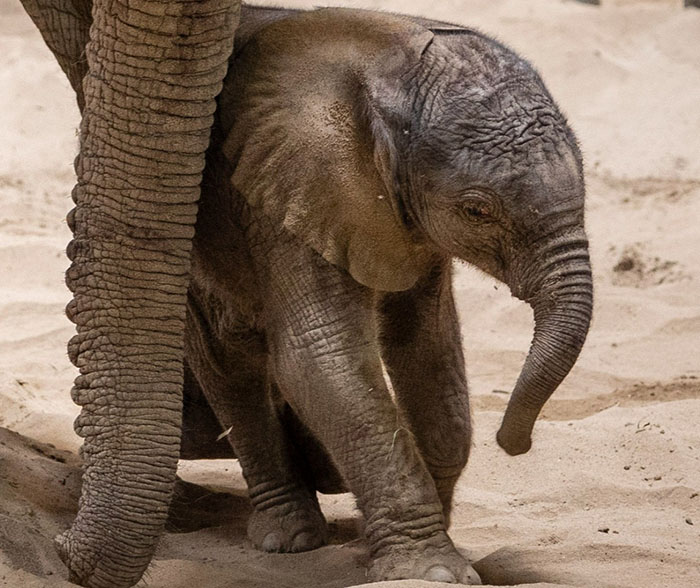
Image credits: Fresno Chaffee Zoo (Facebook)
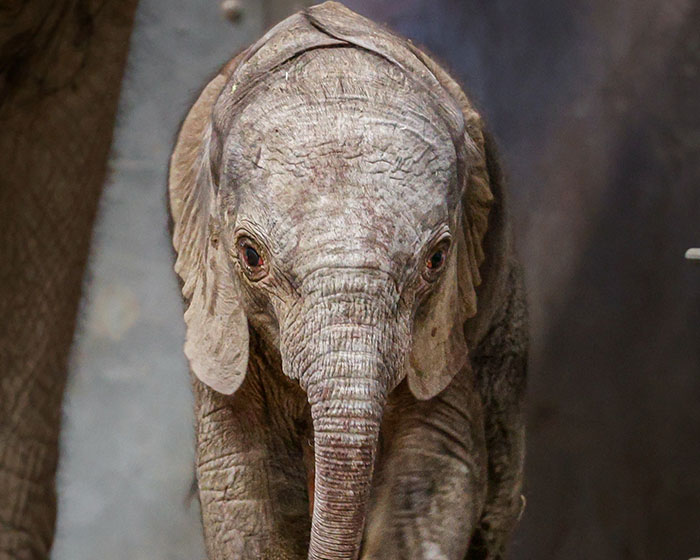
It seems that we judge the appearance of other animals using the same criteria that fit our own babies, even if that judgment is often quite inappropriate when looking at the evolutionary context.
For example, like elephants, most babies of other species are a lot more capable right after they’re born than humans. Our offspring, on the other hand, are not only unable to walk but can’t do almost anything by themselves.
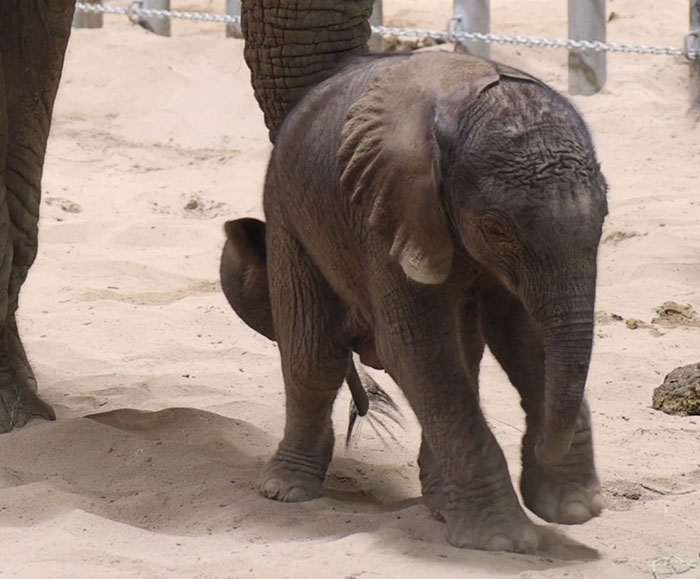
Image credits: Fresno Chaffee Zoo (TikTok)
This, of course, doesn’t mean that we can confuse a human child with, say, an elephant calf. But even though we understand the difference, the impulse to care for that cute little creature is strong nonetheless, and we often are unable to try and resist it.